
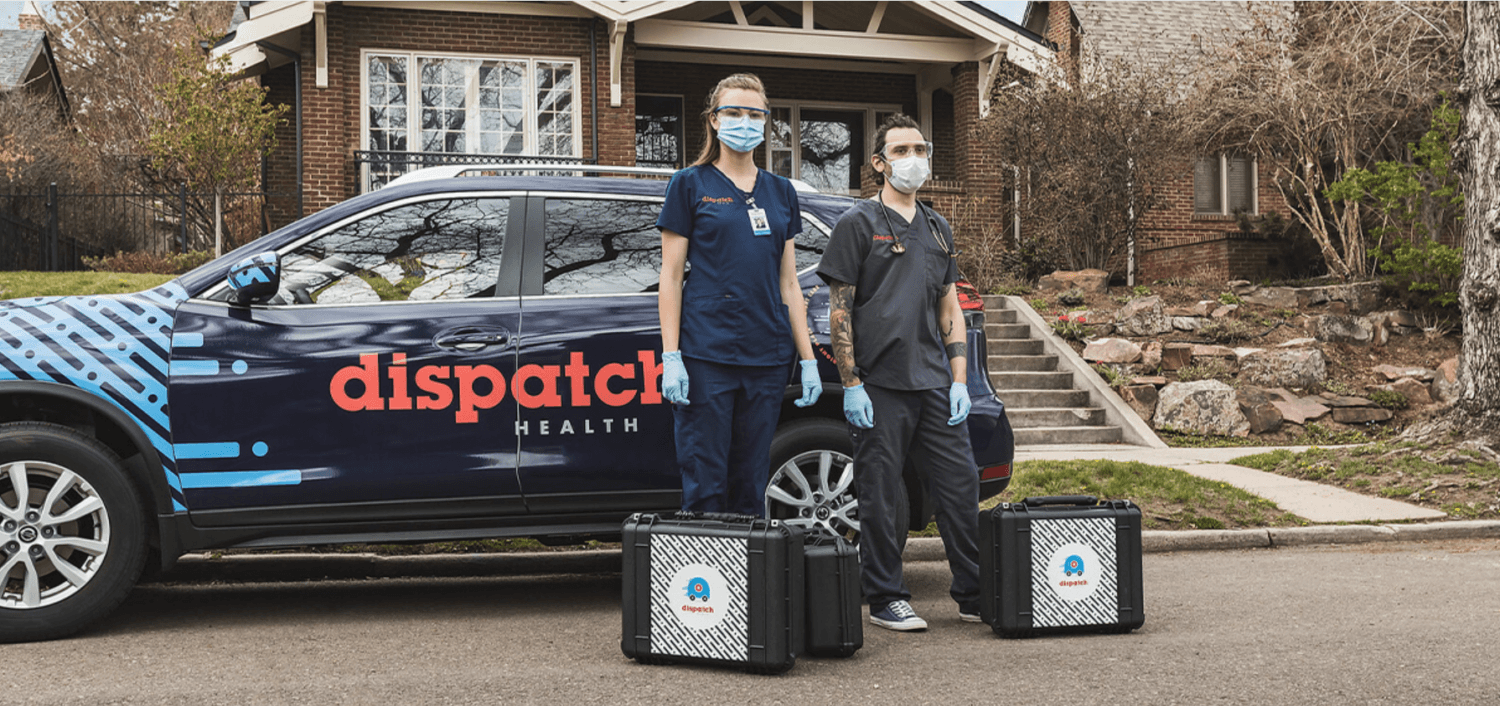
What You Should Know
– Today DispatchHealth announced the closing of $135.8 million growth capital financing led by Optum Ventures and included participation from existing and new strategic investors.
– The additional funding enables DispatchHealth to continue to provide in-home medical care to even more vulnerable, high-needs patients by growing its existing 19 markets, expanding to new markets, and launching additional services.
– Many health systems, including Renown Health and MultiCare, are working with DispatchHealth to help keep ER’s clear during the pandemic and keep patients at home.
DispatchHealth (formerly known as True North Health Navigation), a Denver, CO-based provider of on-demand in-home care, today announced it has raised $135.8M in growth capital financing led by Optum Ventures. The financing also included participation from existing investors Alta Partners, Questa Capital, Echo Health Ventures, new investors Oak HC/FT, Humana Inc., and additional strategic investors.
Founded in 2013 by two mobile health executives, DispatchHealth’s team of board-certified caregivers delivers on-demand treatment with a call, click or tap of an app to a patient’s home, senior community or office without the expense, inconvenience and time requirements associated with traditional acute care delivery.
“Approximately a third of the cost of the U.S. health care system is devoted to facility-based care delivery, such as emergency rooms, hospitals, and post-acute facilities,” said Dr. Mark Prather, CEO, and Co-Founder of DispatchHealth.
How DispatchHealth’s On-Demand In-Home Care Model Works
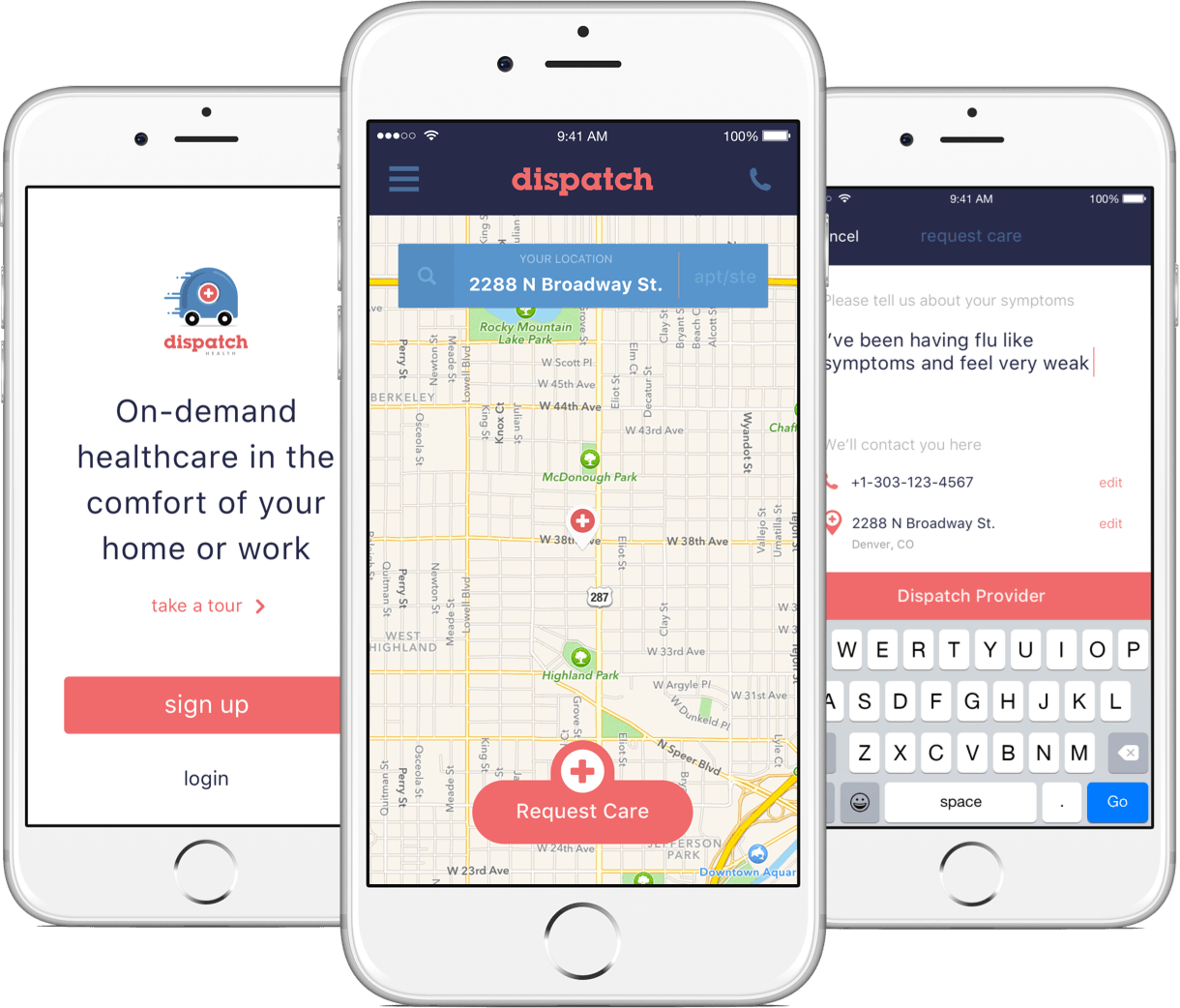
Patients and their care partners can request DispatchHealth medical care via phone, mobile app, or website, and a medical team arrives within two hours equipped with tools and equipment needed to perform high-acuity medical care. Whether a patient is dehydrated and requires IV fluids, has a laceration needing repair, or requires higher-level interventions for asthma, chronic obstructive pulmonary disease, or congestive heart failure exacerbations, DispatchHealth arrives prepared to handle a wide array of high-acuity cases. The service is covered by insurance, and accessible to the uninsured, too.
After treatment, each medical team sends timely and detailed notes back to a patient’s primary care physician, senior living community (if applicable), and the patient directly to ensure all parties are kept informed and connected. Among the hundreds of patients seen each day throughout the country, DispatchHealth is able to collect valuable data to spot trends in care needs among different age demographics and identify important social determinants of health.
Pricing & Insurance Coverage
DispatchHealth partners and collaborates with many large health systems across the country, such as Baystate Health, Bon Secours Richmond, MultiCare, and Texas Health, to provide exceptional care for patients in a lower-cost setting. DispatchHealth also works with most major insurers and handles billing directly with those companies, including Medicare, Medicaid, Medicare Advantage plans, Managed Medicaid plans, Anthem/Blue Cross Blue Shield, United Healthcare, Aetna, Humana, and Cigna. DispatchHealth is available seven days a week from 8:00 a.m. to 10:00 p.m. local time in most locations.
On average, most patients pay $25-$50 after insurance for DispatchHealth. The cost of care varies and is determined by the complexity of care provided, any procedures performed, and supplies required. If the patient does not have any health insurance, DispatchHealth accepts a flat rate of $275 at the time of treatment. Payment methods include credit, debit, health savings account (HSA), health reimbursement account (HRA), and flexible spending account (FSA) payments.
Traction/Milestones
“For seven years, our care model and technology platform have demonstrated lower costs and improved outcomes by delivering care safely in the home. Adoption has consistently grown, and our Net Promoter Score of 95 across our first 160,000 patient visits indicates high satisfaction. We appreciate the support of investors, and look forward to working with them to continue executing on our transformational vision,” said Dr. Mark Prather, CEO, and Co-Founder of DispatchHealth.
The additional funding enables DispatchHealth to continue to provide in-home medical care to even more vulnerable, high-needs patients by growing its existing 19 markets, expanding to new markets, and launching additional services.
Many health systems, including Renown Health and MultiCare, are working with DispatchHealth to help keep ER’s clear during the pandemic and keep patients at home. To date, DispatchHealth has seen nearly 4,000 patients with COVID-19 like symptoms since March 1, including the first known COVID-19 positive patient in one of its larger markets, and has seen a 90% increase in total visits compared to this time last year.
Availability
DispatchHealth offers acute, extended, and advanced care services to treat simple to complex injuries and illnesses in more than 19 cities from coast to coast and is rapidly expanding to new cities across the country. DispatchHealth is open seven days a week, 365 days a year, including holidays.
