
What You Should Know
- ChatGPT for Clinicians is a new, free version of ChatGPT designed specifically for verified physicians, NPs, PAs, and pharmacists in the U.S. to support documentation, research, and care consults.
- The platform utilizes GPT-5.4, which currently outperforms human physicians, base GPT-5.4, and major external models on the new HealthBench Professional benchmark.
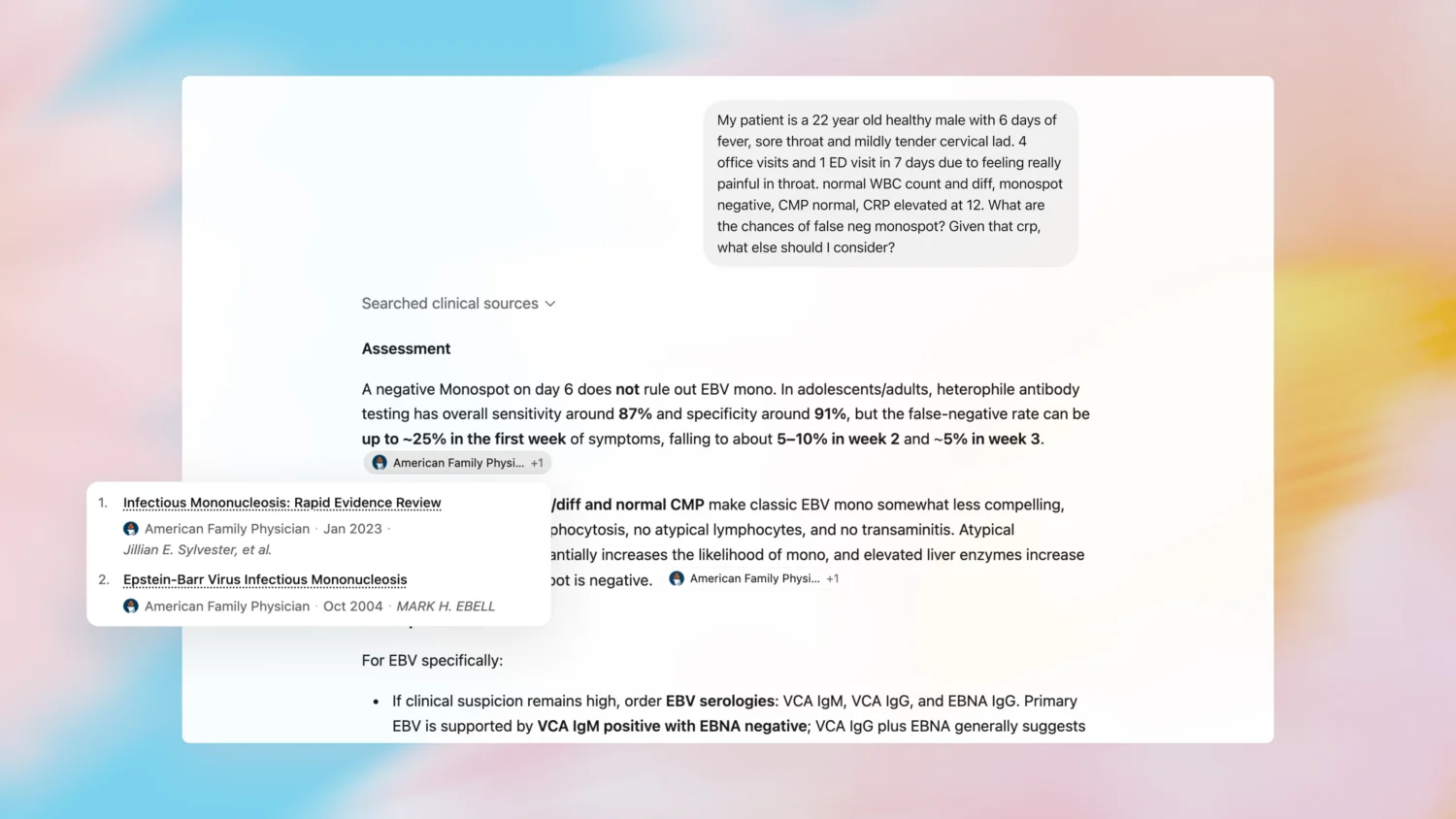
- Key features include trusted clinical search with real-time citations from peer-reviewed sources, automated CME credit tracking for evidence reviews, and customizable workflow skills for tasks like prior authorizations.
- Security and privacy are prioritized through a no-training policy on conversations, and eligible accounts can access HIPAA compliance support via a Business Associate Agreement (BAA).
- Clinical safety is rigorously validated, with physician advisors rating 99.6% of model responses as safe and accurate across nearly 7,000 tested conversations.
The U.S. healthcare system is currently facing a critical juncture characterized by a rapidly expanding body of medical research and mounting administrative demands. In response, OpenAI has launched ChatGPT for Clinicians, a specialized workspace designed to alleviate these pressures by automating repetitive tasks and streamlining complex research. This move follows a massive surge in AI adoption; according to the American Medical Association, 72% of physicians now use AI in clinical practice, a significant jump from 48% just one year ago.
This version of ChatGPT is not merely a general-purpose model but a tool refined through a multi-stage collaboration with hundreds of physician advisors. These experts have reviewed over 700,000 model responses to ensure high-quality reasoning and safety. The goal is to provide a support partner that handles the “cognitive load” of documentation and literature review, allowing medical professionals to return their primary focus to direct patient care.
Advanced Capabilities and Real-World Benchmarking
At the heart of ChatGPT for Clinicians is the GPT-5.4 model, which has set new records for clinical performance. In the newly introduced HealthBench Professional—an open benchmark evaluating care consults, documentation, and research—GPT-5.4 in the clinical workspace achieved a top score of 59.0. This score not only surpasses other frontier models but also outranks human physicians who were given unbounded time and web access to complete the same tasks.
The workspace is equipped with specific “skills” that allow clinicians to delegate repeatable workflows. For example, a user can train the model to follow specific institutional steps for drafting referral letters or patient instructions, ensuring consistency every time the task is performed. Furthermore, the tool’s deep research capabilities allow it to compile comprehensive reports from trusted medical journals in minutes, significantly reducing the time clinicians spend on manual literature reviews.
A Rigorous Foundation of Safety and Privacy
OpenAI has addressed the inherent risks of clinical AI through extensive “red teaming” and ground-truth validation. Before the release, physician advisors tested thousands of conversations, finding that the model cited correct medical sources more frequently than human physicians in specific ground-truth scenarios. Despite these high marks, the system is explicitly designed to support, rather than replace, the judgment and expertise of a human clinician.
Privacy and data security remain central to the platform’s architecture. By default, conversations within the clinician workspace are not used to train OpenAI’s models, and multi-factor authentication is required to protect sensitive information. For organizations that handle Protected Health Information (PHI), the platform offers the necessary compliance controls through BAAs, aligning the tool with the strict regulatory requirements of the U.S. healthcare landscape.
Why This Matters
The launch of ChatGPT for Clinicians represents a paradigm shift in how AI is distributed within healthcare. For health system leaders, this tool offers a low-barrier way to address the burnout crisis. However, the true test will be the responsible integration of these tools into daily workflows. OpenAI’s release of a “Health Blueprint” alongside this product suggests they are aware of the regulatory and ethical complexities ahead.
