
What You Should Know
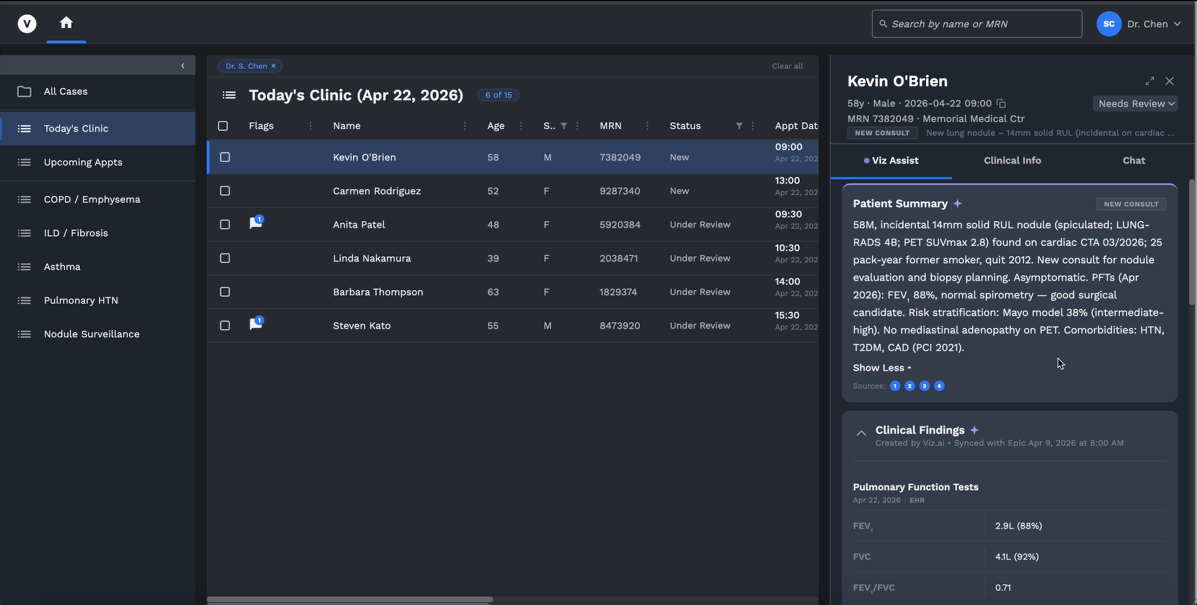
- Viz.ai has introduced the Viz Pulmonary™ Suite, an integrated AI solution designed to manage acute and chronic pulmonary conditions in a single platform.
- The suite targets three major pulmonary challenges: Chronic Obstructive Pulmonary Disease (COPD), lung nodules, and pulmonary embolism (PE).
- Clinical Impact: In a single-center study, the integrated Viz PE tool reduced time to treatment from 1.75 days to 0.56 days and lowered in-hospital mortality among high-risk patients.
- System Efficiency: The platform addresses the 55%–65% of in-network referrals lost to health system leakage by improving patient retention and continuity of care.
- The “Recognition Gap”: Currently, up to 71% of clinically significant lung nodules go without appropriate follow-up, and 79% of incidental PE cases are missed on initial imaging.
Pulmonary care is often defined by fragmentation. Patients frequently move between the ER, imaging departments, and acute care visits, and critical findings—though identified—are often not acted upon in time. Viz.ai is addressing this “Coordination Gap” by embedding AI-enabled workflows directly into existing Electronic Health Record (EHR) systems to ensure patients receive guideline-directed care.
Tim Showalter, MD, Chief Medical Officer of Viz.ai, noted that pulmonary care breaks down not for a lack of treatments, but because patients are lost between “moments of care”.
Solving the Silent Crisis in Pulmonary Follow-Up
The Viz Pulmonary Suite is designed to catch the high volume of clinically significant findings that historically go unaddressed:
- Incidental Embolism: While 79% of incidental pulmonary emboli are missed on initial imaging, research shows that 67% of those missed cases are clinically significant.
- COPD Readmissions: Nearly half of COPD patients hospitalized for acute exacerbations are currently readmitted within 30 days, highlighting a need for better follow-through.
- Lung Nodule Management: The suite provides specialized tools to ensure that the 71% of patients with significant nodules receive the appropriate longitudinal follow-up.
Integrated Intelligence Layer
By combining context-aware patient summaries with automated guideline surfacing, the suite allows clinicians to intervene earlier and with greater consistency. This “clinician-in-the-loop” model ensures that identification and coordination happen in real-time, reducing the administrative burden on teams that are already navigating complex care pathways.
Lakshman Swamy, MD, Chief Pulmonologist at Monogram Health, emphasized that these connected workflows help clinical teams identify potential patients earlier and act more efficiently across the entire care continuum.
