

Healthcare organizations have spent the last several years exploring AI to address mounting operational and financial pressures—from staffing shortages to rising patient expectations for always-on digital access.
Now, the conversation has shifted. The question is no longer whether AI can help, but whether it can be deployed in a way that is scalable, governed, and capable of delivering measurable value in production environments.
Across health systems, specialty groups, and multi-location
Read More
Health IT | News, Analysis, Insights - HIT Consultant
DUOS Acquires Linkwell Health to Expand AI-Powered Health Plan Performance Footprint
What You Should Know
Health plan performance infrastructure pioneer DUOS has announced its acquisition of consumer engagement specialist Linkwell Health to create an end-to-end member activation system. Financial details of the acquisition were not disclosed. The transaction expands DUOS’ commercial footprint to more than 20 national health plans, extending its digital and clinical reach to one in five adults across the United States.The combined platform targets the costly
Read More
Ambience Healthcare Unveils AI-Native Inpatient Nursing Suite to Reduce Cognitive Burden

What You Should Know
Clinical AI pioneer Ambience Healthcare has announced a major expansion of its inpatient intelligence platform with the launch of Nursing Summary and Ambient Flowsheet Documentation.Combined with its previously released Chart Chat for Nursing, the new applications establish a single, comprehensive system of intelligence supporting bedside nurses from pre-shift preparation through post-intervention charting.The expanded platform targets the severe cognitive load and
Read More
Why Venture Building Is The Only Answer to AI-Driven Disruption in Healthcare

AI is accelerating everything, from how fast an individual can make a grocery list to the speed at which drug discovery timelines play out for pharmaceutical manufacturers. However, many in the healthcare industry are clinging to the old R&D playbook, and legacy strategies will no longer cut it in the time of automation and machine learning. The shift is structural, so it can’t be gradual. Those who remain slow and steady will not win this race.
As AI and personalized medicine reshape the
Read More
Adonis Launches AI-Powered Revenue Cycle Orchestration in Epic Connection Hub
What You Should Know
AI-driven revenue cycle management (RCM) pioneer Adonis has officially launched its platform in the Epic Connection Hub, enabling health systems to deploy its intelligence layer directly over their native Epic environments.The strategic deployment addresses severe operational strain inside health system billing offices, where teams are frequently left to reactively mine thousands of disjointed, legacy administrative work queues.Instead of replacing foundational systems of
Read More
The Financial Pressure on Hospitals is Real — Here’s One Place to Find Relief

Hospital finance leaders don’t need a report to tell them things are difficult, but the American Hospital Association’s latest “Costs of Caring” report does something extremely useful: it puts concrete numbers behind pressures that have been building for years and shows just how much they’ve compounded.
The picture the report paints is one of mounting strain across the industry. Total hospital expenses grew 7.5% in 2025, more than twice the rate of growth in hospital
Read More
Thoreau Enters Definitive Agreement for Strategic Growth Investment in Ensemble Health Partners

What You Should Know
Revenue cycle managed services leader Ensemble Health Partners has announced a definitive agreement for a strategic growth investment from Thoreau, the healthcare investment platform founded by veteran private equity executive Matt Holt.The transaction values Ensemble at an estimated $12 billion, positioning the newly launched, Apollo Global Management-backed Thoreau platform at the epicenter of scaled healthcare administrative outsourcing.Legacy institutional
Read More
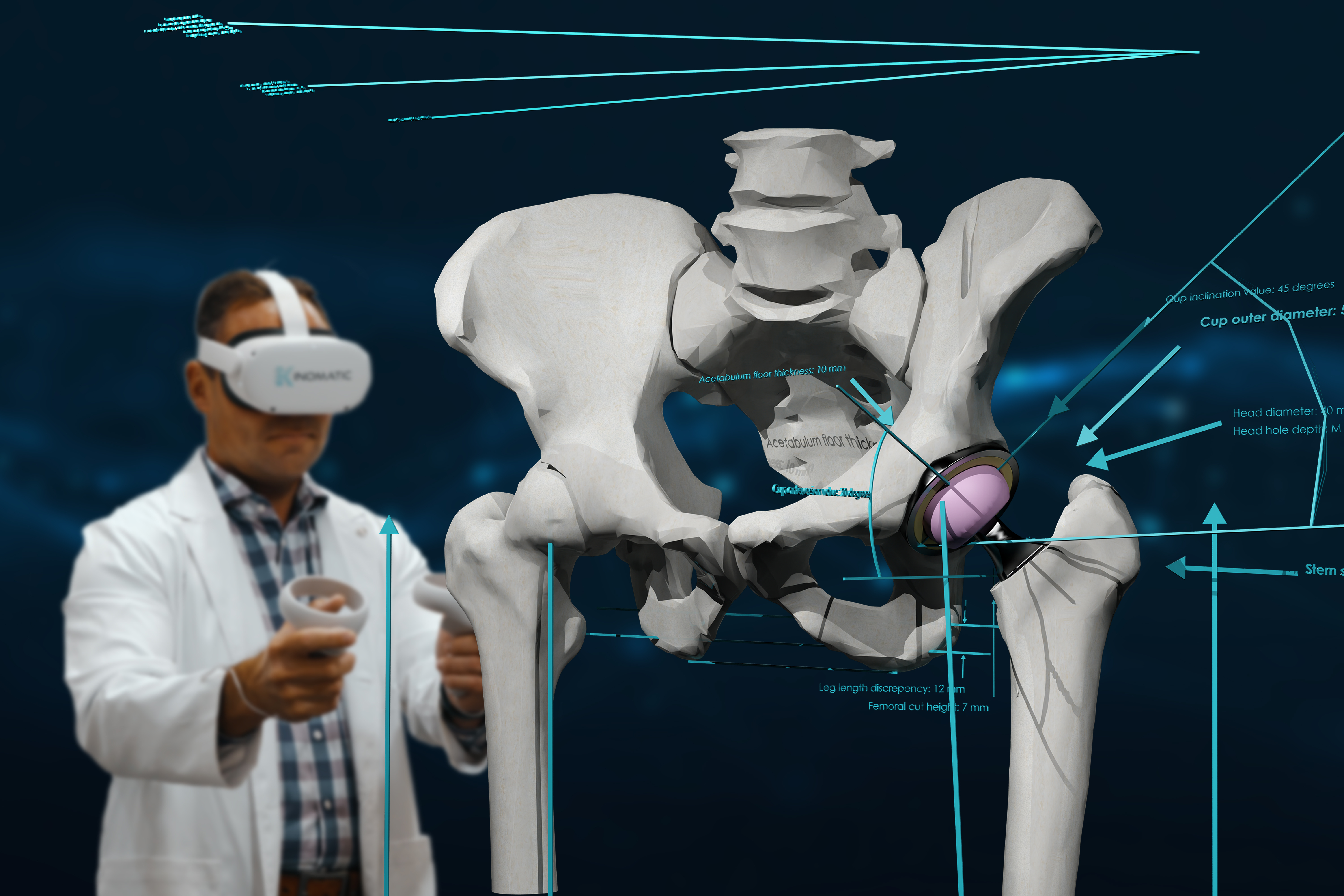
Kinomatic Secures $4M to Expand AI-Enabled Surgical Planning Platform
What You Should Know
Orthopedic technology innovator Kinomatic has successfully finalized a $4M seed funding round led by healthcare-focused venture firm Waterline Ventures.The company has demonstrated significant commercial scale, documenting 7x revenue growth over four years, a 5x expansion in regional provider networks, and a world-class Net Promoter Score (NPS) of 85.Renowned orthopedic specialist and opioid-reduction advocate Dr. Andrew B. Wickline, MD, FAAOS, joins the executive
Read More
Marathon Health and Lantern Partner to Launch Integrated Primary and Specialty Care Model

What You Should Know
Advanced primary care leader Marathon Health and premier specialty care platform Lantern have formalized a strategic commercial partnership targeting skyrocketing employer specialty healthcare spend.The collaborative model integrates Marathon's value-based, on-site and virtual primary care networks directly with Lantern’s specialist "Network of Excellence" and bundled payment workflows.An early adopter pilot program focused on musculoskeletal and orthopedic care yielded
Read More
Opmed and Mayo Clinic Unveil Multimodal AI Platform at ACC.26 to Optimize Surgical Capacity

What You Should Know
Healthcare operations AI pioneer Opmed has announced the results of a multi-year collaborative study with the Mayo Clinic aimed at optimizing operating room (OR) efficiency.Presented at the ACC.26 (American College of Cardiology Expo), the study proves that Opmed's multimodal deep learning platform reduces cardiovascular (CV) procedure scheduling errors by approximately 50%.Traditional scheduling methods rely on historic human averages, generating an inaccurate status quo
Read More
