
• Skip to main content
  • Skip to secondary menu
  • Skip to primary sidebar
  • Skip to secondary sidebar
  • Skip to footer

  • Opinion
  • Health IT
    • Behavioral Health
    • Care Coordination
    • EMR/EHR
    • Interoperability
    • Patient Engagement
    • Population Health Management
    • Revenue Cycle Management
    • Social Determinants of Health
  • Digital Health
    • AI
    • Blockchain
    • Precision Medicine
    • Telehealth
    • Wearables
  • Life Sciences
  • Investments
  • M&A
  • Value-based Care
    • Accountable Care (ACOs)
    • Medicare Advantage

AiZtech Labs Launches iSelfie BioSignals in U.S. to Automate Intake and Digital Biomarker Detection

by Fred Pennic 04/30/2026 Leave a Comment

  • LinkedIn
  • Twitter
  • Facebook
  • Email
  • Print
AiZtech Labs Launches iSelfie BioSignals in U.S. to Automate Intake and Digital Biomarker Detection
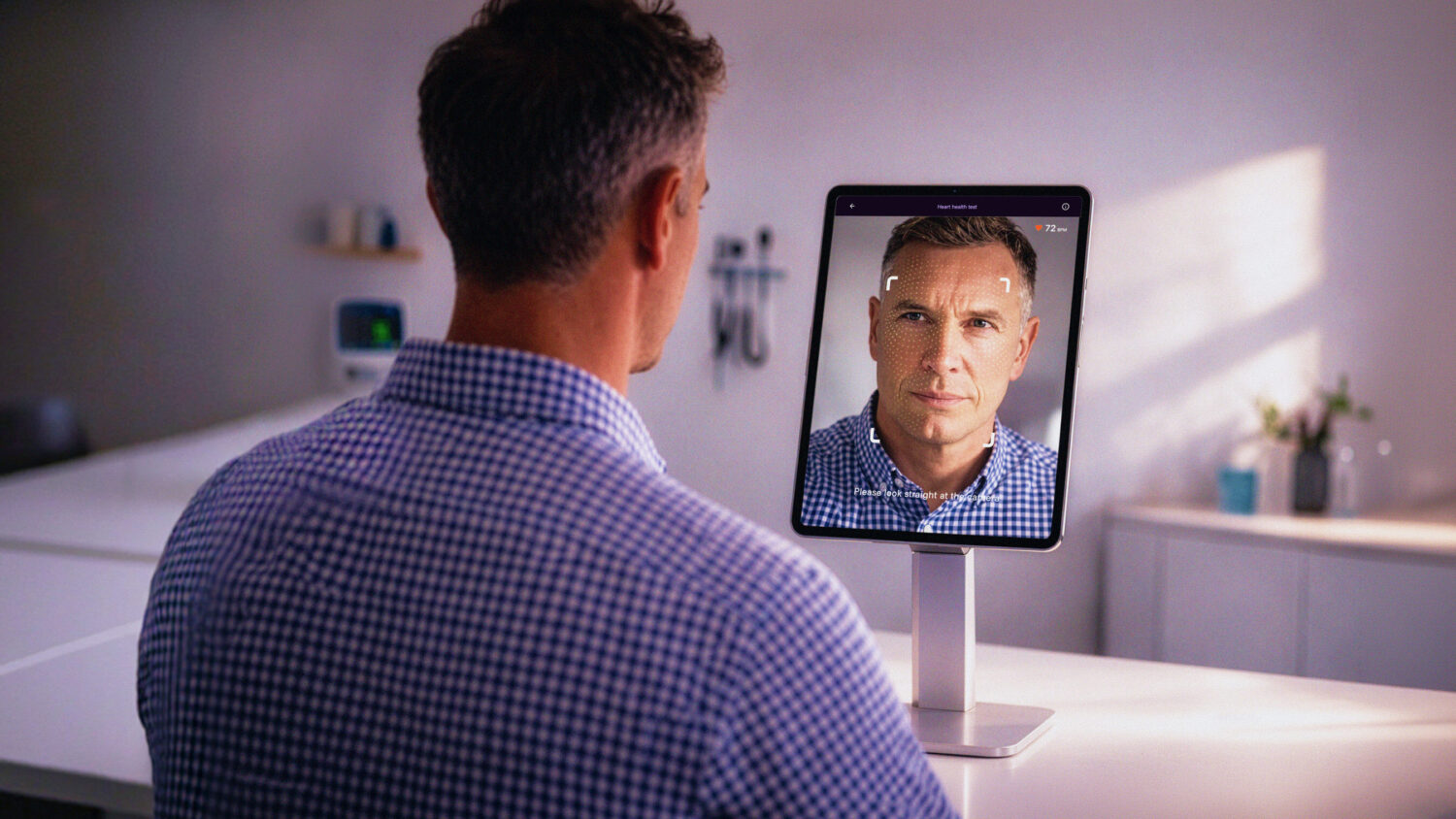
Using a standard selfie-camera interaction to detect digital biomarkers from the eye and surrounding skin, iSelfie BioSignals is designed to generate clinically meaningful measurements in approved settings that can help care teams prioritize patients faster, act earlier, and reduce dependence on device-heavy front-end workflows.

What You Should Know

  • AiZtech Labs has officially launched iSelfie BioSignals in the U.S., a smartphone-based platform that detects digital biomarkers using a standard selfie-camera interaction.
  • The platform is designed to generate clinically meaningful measurements from the eye and surrounding skin, helping care teams prioritize patients faster and reduce reliance on device-heavy hardware.
  • Clinical validation includes data from over 5,000 human participants across six studies in the U.S., Canada, and international markets, covering cardiovascular and respiratory use cases.
  • International deployment data showed the technology reduced traditional intake workflows from 7 minutes to 2 minutes, generating an estimated $4.8 million in annual savings for one hospital cluster.
  • The technology holds regulatory approval from the Saudi Food and Drug Authority (SFDA) for measuring heart rate, blood oxygen saturation (SpO2), and calibrated blood pressure.

The U.S. healthcare system is currently facing a “triple threat” of acute nursing shortages, the high cost of expanding traditional care models, and mounting delays in patient access. AiZtech Labs is moving to address these bottlenecks with the U.S. debut of iSelfie BioSignals. By transforming the ubiquitous smartphone into a sophisticated diagnostic tool, the company aims to upgrade the traditional “clinical signals layer”—the manual process of taking vitals that often clogs care delivery before treatment even begins.

Unlike traditional triage, which requires scarce human resources and expensive, bulky equipment, iSelfie BioSignals allows for early assessment through a low-friction “selfie” interaction. This Vision AI infrastructure is designed to help providers quickly determine who requires immediate intervention and who can be safely routed to lower-acuity care paths, effectively acting as a force multiplier for overstretched clinical teams.

Clinical Rigor and International Success

The U.S. launch is supported by a foundation of rigorous clinical work. The platform has been validated in controlled settings involving more than 5,000 participants. Notably, operational use by the Ministry of Health in Saudi Arabia—including deployment during the high-volume Hajj 2025 event—demonstrated the technology’s ability to perform in high-pressure, real-world environments.

In the Makkah Al-Mukarramah Health Cluster, the technology was benchmarked against medical-grade ground-truth measurements. The results were significant: the intake process was slashed by five minutes per patient, dramatically improving throughput and reducing the administrative burden on nursing staff. Mohamed Sheta, co-founder and CEO of AiZtech Labs, noted that this “Vision AI infrastructure layer” is intended to replace the human-machine bottlenecks that have gated access to clinical decision-making for decades.

Scaling Access Beyond the Physical Exam Room

Following a strong reception at HIMSS 2026, where more than 40 U.S. health systems expressed early interest, AiZtech Labs is focusing its initial U.S. efforts on partnerships with providers, population health organizations, and care-delivery leaders. The goal is to deploy iSelfie BioSignals in settings where organizations are seeking scalable alternatives to hardware-heavy workflows.

By moving clinical signals from specialized machines to the patient’s own device, iSelfie BioSignals offers a path toward earlier intervention and continuous monitoring that extends beyond the walls of the hospital. As health systems look for new ways to engage patients and manage risk at scale, this low-burden approach provides a critical tool for building a more responsive, data-driven front end for modern healthcare.

Why This Matters

AiZtech Labs is tackling the “First Mile” problem in healthcare. While the industry has spent billions on Electronic Health Records (EHRs), the actual process of getting data into the record remains analog, manual, and slow. iSelfie BioSignals is effectively attempting to “digitize” the physical exam itself.

  • LinkedIn
  • Twitter
  • Facebook
  • Email
  • Print

Tap Native

Get in-depth healthcare technology analysis and commentary delivered straight to your email weekly

Reader Interactions

Primary Sidebar

Subscribe to HIT Consultant

Latest insightful articles delivered straight to your inbox weekly.

Submit a Tip or Pitch

Featured Insights

Aligning IT & Clinical Teams: How to Reduce Friction and Improve Communication

Most-Read

OpenAI Launches ChatGPT for Clinicians: Free AI Documentation and Research Tool for Verified Physicians

OpenAI Launches ChatGPT for Clinicians: Free AI Documentation and Research Tool for Verified Physicians

IKS Health Acquires TruBridge for Rural EHR and RCM Solutions Expansion

IKS Health Acquires TruBridge for Rural EHR and RCM Solutions Expansion

UT Austin is Building the Nation's First 'AI-Native' Hospital, Backed by $750M

Why UT Austin is Building an ‘AI-Native’ Hospital from Scratch

The Medtech Pitch Deck Casino: Why Hype Still Wins, and How Scrutiny Could Improve Everyone’s Odds

The Casino Model: Why Medtech VCs Are Betting Billions on Unproven AI

Oracle Lays Off 539 Kansas City Employees as Focus Shifts to AI Data Centers

Oracle Lays Off 539 Kansas City Employees as Focus Shifts to AI Data Centers

SAMHSA and ONC Invest $20M in Behavioral Health IT Initiative

HHS Reverses 2024 Tech Reorganization: Why HHS Just Stripped AI and Cyber Operations Out of the ONC

How Small Medical Practices Can Build HIPAA-Aligned DevSecOps Without Enterprise Budgets

How Small Medical Practices Can Build HIPAA-Aligned DevSecOps Without Enterprise Budgets

Insilico Medicine and Eli Lilly Form $2.75B AI Drug Discovery Collaboration

Insilico Medicine and Eli Lilly Form $2.75B AI Drug Discovery Collaboration

Microsoft Copilot Health, Integrates Apple Health, Oura, and 50,000 EHRs in New AI Push

Microsoft Launches Copilot Health, Integrates Apple Health, Oura, and 50,000 EHRs in New AI Push

Health Recovery Solutions (HRS) Acquires Rimidi for Chronic Care Management and RPM Integration

Health Recovery Solutions (HRS) Acquires Rimidi for Chronic Care Management and RPM Integration

Secondary Sidebar

Footer

Company

  • About Us
  • 2026 Editorial Calendar
  • Advertise with Us
  • Reprints and Permissions
  • Op-Ed Submission Guidelines
  • Contact
  • Subscribe

Editorial Coverage

  • Opinion
  • Health IT
    • Care Coordination
    • EMR/EHR
    • Interoperability
    • Population Health Management
    • Revenue Cycle Management
  • Digital Health
    • Artificial Intelligence
    • Blockchain Tech
    • Precision Medicine
    • Telehealth
    • Wearables
  • Startups
  • Value-Based Care
    • Accountable Care
    • Medicare Advantage

Connect

Subscribe to HIT Consultant Media

Latest insightful articles delivered straight to your inbox weekly

Copyright © 2026. HIT Consultant Media. All Rights Reserved. Privacy Policy |