

What You Should Know:
– Amidst what it calls an “interruption crisis” in healthcare, Phrase Health released its first Cranky Index Report, analyzing millions of clinician comments on Electronic Health Record (EHR) alerts to pinpoint patterns of frustration and identify opportunities to improve clinician well-being and patient safety.
– The report, based on data from over 65 hospitals throughout 2024, suggests that poorly designed or implemented EHR alerts contribute significantly to clinician burden and potential risks.
The EHR Alert Overload Problem
Healthcare professionals face constant disruptions from calls, consultations, and digital notifications, threatening focus and efficiency. The report highlights EHR alerts – often imposed by the health system itself – as among the most avoidable interruptions. Clinicians can encounter over 100 such alerts daily. While some alerts provide critical information, many are frequently overridden – one study cited found nearly 75% of drug alerts were overridden.
This leads to “alert fatigue,” where important warnings might be missed, increasing patient safety risks. The cumulative time spent dismissing alerts (estimated at 8 seconds per alert) and the associated frustration contribute to clinician burnout and reduced productivity. One anonymous comment captured in the data starkly stated, “For f%cking sake. Today is my last day as a nurse and these notifications are the reason why.”.
Report Methodology: Mining “Cranky Comments” for Insights
Phrase Health analyzed over 5.5 million comments left by end-users within customized EHR alerts (excluding generic system alerts like drug-drug interactions) across more than 65 hospitals during 2024. Using a proprietary sentiment analysis algorithm, the team identified comments indicating frustration or dissatisfaction – termed “cranky comments” – which constituted 0.49% of the total comments analyzed. The more than 27,000 identified cranky comments were then mapped across dimensions like time of day, day of the week, medical specialty, and provider role, normalizing for varying comment volumes to identify significant patterns.
Key Findings: When and Where EHR Frustration Flares
The Cranky Index revealed distinct patterns in EHR alert frustration:
- Day vs. Night Shifts: Clinicians expressed significantly more frustration during day shifts (7 a.m. – 7 p.m.), with a 13% higher rate of cranky comments compared to night shifts (0.52% vs. 0.46%, p<0.001). This is likely attributable to higher patient volumes, more complex workflows, increased administrative demands, and more frequent interruptions during daytime hours.
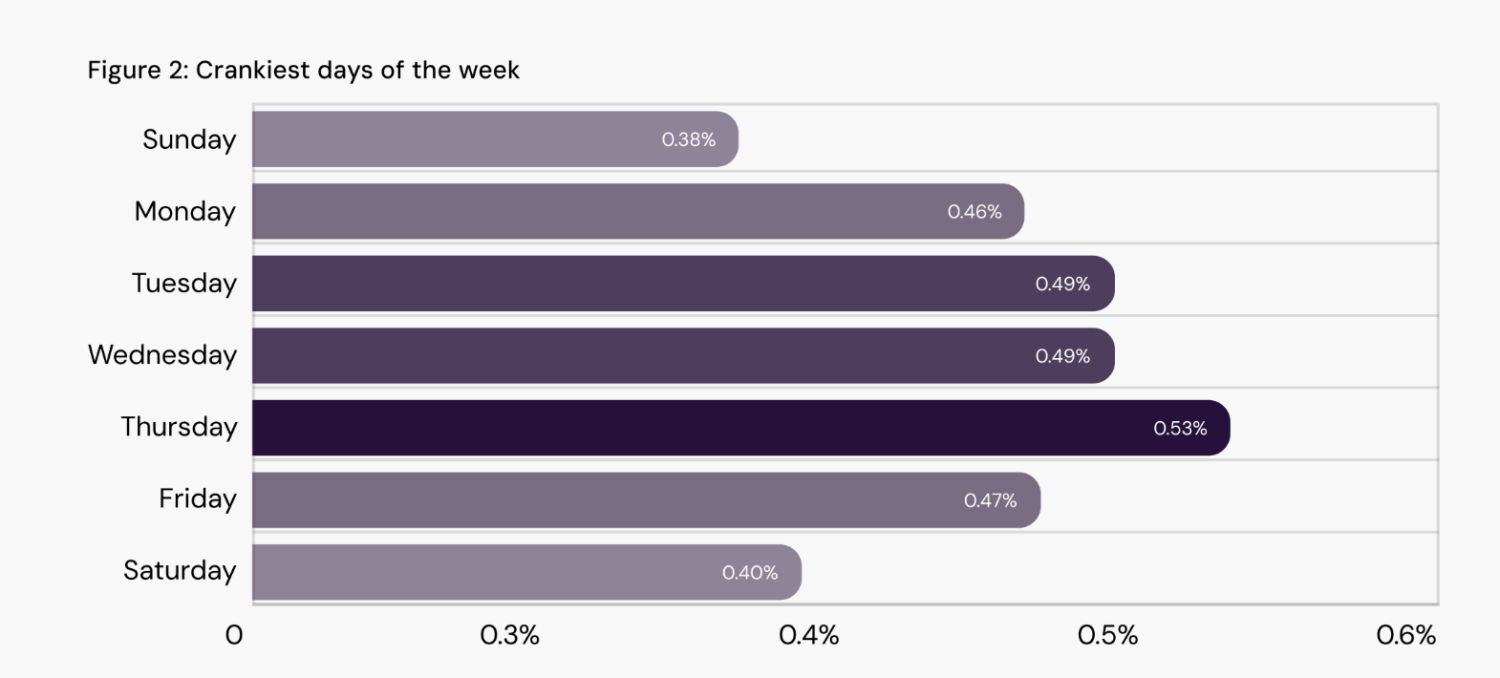
- Weekly Patterns: Frustration follows a weekly rhythm, lowest on weekends (Sunday 0.38%, Saturday 0.40%) and climbing to peaks midweek. The data showed peaks on Tuesday (0.49%) and Thursday (0.53%), potentially reflecting accumulated workload and fatigue.
- Specialty Disparities: Frustration levels varied dramatically by medical specialty. Laboratory medicine professionals exhibited the highest cranky rate at 3.70%, nearly 20 times higher than pediatricians, who showed the lowest rate at 0.19% (p<0.001). Other specialties with notably high rates included Podiatry (3.10%) and Occupational Therapy (1.57%). The report suggests these differences may relate to how various specialties interact with the EHR and their level of involvement in the design of clinical decision support alerts.
- Role Hierarchy: Administrative and support staff registered the highest level of frustration by far (6.76%), nearly triple the rate seen among physicians (2.60%). This finding suggests that alert design may disproportionately overlook or negatively impact non-clinical staff workflows. Behavioral health professionals (4.36%) and registered nurses (3.12%) also showed elevated frustration levels, with nurses reporting higher rates than physicians – a concerning finding given nurses’ large workforce presence and reported burnout levels.
Implications for Well-being and Patient Safety
The patterns identified in the Cranky Index underscore the connection between EHR usability, particularly alert management, and clinician well-being. High levels of frustration contribute to burnout, while alert fatigue directly impacts patient safety by increasing the likelihood that critical warnings will be missed. Understanding who is most frustrated (admin staff, nurses, specific specialties) and when (midweek, day shifts) provides targeted opportunities for intervention.
Optimizing EHRs to Reduce Friction
Phrase Health positions the Cranky Index report as a tool to illuminate clinical blind spots and guide improvements. By analyzing direct user feedback embedded within the EHR, healthcare organizations can gain actionable insights to optimize alerts and workflows. Addressing the root causes of alert failures – such as poor alignment with clinical needs, redundancy, or lack of trust – can reduce interruptions, combat burnout, and ultimately enhance patient safety. Phrase Health, founded by physician clinical informaticists, offers a platform designed to help hospitals use their EHR data to achieve such improvements
