

• Skip to main content
  • Skip to secondary menu
  • Skip to primary sidebar
  • Skip to secondary sidebar
  • Skip to footer

  • Opinion
  • Health IT
    • Behavioral Health
    • Care Coordination
    • EMR/EHR
    • Interoperability
    • Patient Engagement
    • Population Health Management
    • Revenue Cycle Management
    • Social Determinants of Health
  • Digital Health
    • AI
    • Blockchain
    • Precision Medicine
    • Telehealth
    • Wearables
  • Life Sciences
  • Investments
  • M&A
  • Value-based Care
    • Accountable Care (ACOs)
    • Medicare Advantage

Study: Veterans Prefer Telehealth Visits Post Surgery

by HITC Staff 09/25/2015 Leave a Comment

  • LinkedIn
  • Twitter
  • Facebook
  • Email
  • Print

Telehealth Services_Telehealth Visits_Telehealth Video Calls

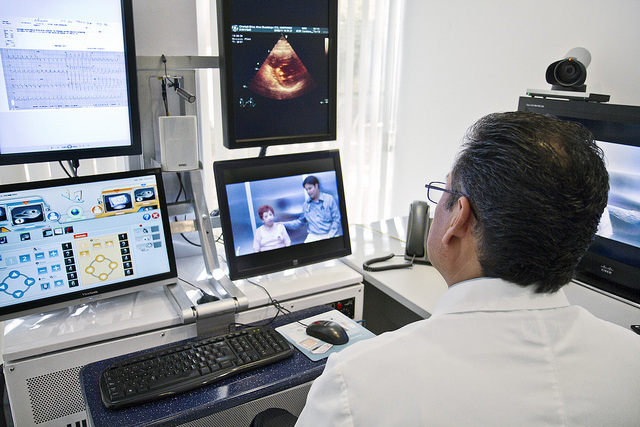
69 percent of veterans preferred telehealth visits over in-person followup visits for post surgery, according to a study published in JAMA Surgery, Reuters reports (Seaman, Reuters, 9/23). The project conducted by researchers from Tennessee Valley Healthcare System, Vanderbilt University and the Department of Veterans Affairs Medical Center in Nashville evaluated data collected between May 2014 and June 2014 from 23 veterans examines preferences of veterans with regard to telephone, video, and in-person postoperative visits. 

Prior research has focused on the role of telehealth in the management of chronic conditions, although more recent work has demonstrated a role for telehealth in the preoperative and postoperative care of general surgery patients. The aim of this project was to measure the quality of the visits and the preferences for postoperative general surgical care among veterans with regard to telephone, video, and in-person postoperative visits.

Key Findings

For the purpose of the study, each veteran participant was evaluated at 3 different visit settings:

– telephone visits (considered a telehealth visit)

– in-person visit 

-Video (also considered a telehealth visit)

Each type addressed general recovery, follow-up needs, wound care needs and complications. 

Overall, 69 percent of the veteran participants stated they preferred a telehealth visit over the traditional in-person visit. It is important to note that the veterans that did prefer telehealth visits lived much further away from the hospital than those who would prefer to just come in for the traditional in-person visit. The researchers concluded that no post-operation infections were missed during the video or telephone visits.

“These kinds of methods are really important in the climate we’re in now,” said lead author Dr. Michael Vella, of Vanderbilt University Medical Center in Nashville. “So I think anything you can do to save money, see more patients and improve access to care is really important. “I think (the study) challenges the paradigm that we need to see all patients back for visits”

Dr. Vella did warned that the study was small and stated they cannot determine if telehealth visits won’t miss problems.

 

  • LinkedIn
  • Twitter
  • Facebook
  • Email
  • Print

Tagged With: Telehealth Visits

Tap Native

Get in-depth healthcare technology analysis and commentary delivered straight to your email weekly

Reader Interactions

Primary Sidebar

Subscribe to HIT Consultant

Latest insightful articles delivered straight to your inbox weekly.

Submit a Tip or Pitch

Featured Research Report

2026 Best in KLAS Awards: The Full List of Software & Services Winners

Most-Read

The "Platform" Squeeze: Epic Releases Native AI Charting, Putting Venture-Backed Scribes on Notice

The “Platform” Squeeze: Epic Releases Native AI Charting, Putting Venture-Backed Scribes on Notice

Analysis: Oracle Cerner’s Plans for a National EHR

Oracle May Cut 30k Jobs and Sell Cerner to Fund $156B OpenAI Deal

The $1.9B Exit: Why CommonSpirit is Insourcing Revenue Cycle and Tenet is Betting Big on Conifer AI

The $1.9B Exit: Why CommonSpirit is Insourcing Revenue Cycle and Tenet is Betting Big on Conifer AI

KLAS 2026 Rankings: Aledade and Guidehealth Named Top VBC Enablement Firms

KLAS 2026 Rankings: Aledade and Guidehealth Named Top VBC Enablement Firms

Beyond the Hype: New KLAS Data Validates the Financial and Clinical ROI of Ambient AI

Beyond the Hype: New KLAS Data Validates the Financial and Clinical ROI of Ambient AI

Anthropic Debuts ‘Claude for Healthcare’ and Opus 4.5 to Engineer the Future of Life Sciences

Anthropic Debuts ‘Claude for Healthcare’ and Opus 4.5 to Engineer the Future of Life Sciences

OpenAI Debuts ChatGPT Health: A ‘Digital Front Door’ That Connects Medical Records to Agentic AI

OpenAI Debuts ChatGPT Health: A ‘Digital Front Door’ That Connects Medical Records to Agentic AI

From Genes to Hackers: The Hidden Cybersecurity Risks in Life Sciences

From Genes to Hackers: The Hidden Cybersecurity Risks in Life Sciences

Utah Becomes First State to Approve AI System for Prescription Renewals

Utah Becomes First State to Approve AI System for Prescription Renewals

NYC Health + Hospitals to Acquire Maimonides in $2.2B Safety Net Overhaul

NYC Health + Hospitals to Acquire Maimonides in $2.2B Safety Net Overhaul

Secondary Sidebar

Footer

Company

  • About Us
  • 2026 Editorial Calendar
  • Advertise with Us
  • Reprints and Permissions
  • Op-Ed Submission Guidelines
  • Contact
  • Subscribe

Editorial Coverage

  • Opinion
  • Health IT
    • Care Coordination
    • EMR/EHR
    • Interoperability
    • Population Health Management
    • Revenue Cycle Management
  • Digital Health
    • Artificial Intelligence
    • Blockchain Tech
    • Precision Medicine
    • Telehealth
    • Wearables
  • Startups
  • Value-Based Care
    • Accountable Care
    • Medicare Advantage

Connect

Subscribe to HIT Consultant Media

Latest insightful articles delivered straight to your inbox weekly

Copyright © 2026. HIT Consultant Media. All Rights Reserved. Privacy Policy |