
I want to be direct about something: the denial problem in U.S. healthcare is not complicated to understand. It is complicated to fix, but the basic dynamic is straightforward. Hospitals deliver medically appropriate care, submit claims, and then watch a meaningful portion of those claims get denied. Most of those denials are never challenged. Revenue disappears. And somewhere along the way, we collectively decided this was just how things work.
It isn’t. And we need to stop treating it like it is.
I spent years as a Chief Medical Officer and Medical Director of Case Management before co-founding Authsnap. In those roles, I sat in the middle of this problem every single day, watching clinicians re-justify care they had already delivered, watching revenue cycle teams triage which denials they had bandwidth to fight, and watching recoverable revenue get written off because the math on appealing a $400 claim didn’t make sense when it took three hours of staff time to pursue. I understood why those decisions were made. I also understood what they were costing us.
The Numbers Are Worth Sitting With
About 15% of all hospital claims are denied. Across the industry, that adds up to roughly $262 billion in unpaid claims annually. Hospitals then spend approximately $19.7 billion a year just on the administrative work of contesting those denials, chart review, documentation assembly, appeal drafting, and payer follow-up. And after all of that, a significant portion of denied revenue is still never recovered.
Here’s the part that gets me: around 70% of appealed claims can be successfully overturned. The denials aren’t mostly legitimate. Many of them are wrong. The care was appropriate. The documentation was there. But the appeal never got filed, because the team didn’t have time, or the filing window closed, or someone made a judgment call that the claim wasn’t worth the effort.
That gap between what could be recovered and what actually gets recovered is not a clinical failure. It is a workflow failure. A capacity failure. And, increasingly, it is a technology failure.
Why This Has Gotten So Much Harder
When I started in hospital administration, denials were manageable as exceptions. You had a team, you had a process, and while it wasn’t elegant, you could keep up. That is genuinely no longer true for most health systems, and I think it’s worth being honest about why.
Payer policies are not just more complex; they change more frequently, with less notice, and with greater specificity than they did even five years ago. Medicare Advantage, which now covers more than half of all Medicare beneficiaries, has brought a new layer of utilization management scrutiny that many organizations are still trying to get their arms around. Prior authorization requirements have expanded into services that were once routinely approved. And the documentation bar for medical necessity has been raised in ways that put real pressure on already-stretched clinical teams.
At the same time, the workforce capable of managing this complexity is shrinking. It takes years to develop a skilled appeals specialist. Turnover in revenue cycle roles is high. And the cognitive demand of the work is not trivial — effective appeals require reading clinical documentation carefully, interpreting payer-specific criteria, and building a structured, evidence-based argument. That is genuinely hard. The quality of an appeal written at the end of a long Friday looks nothing like one written fresh on Monday morning.
Meanwhile, most hospitals are navigating all of this with fragmented technology, manually toggling between EHR systems, PDFs, and payer portals that were not designed to talk to each other. The tools haven’t kept up with the complexity.
What’s Actually at Stake
I want to make the downstream consequences concrete, because I think they get abstracted away in conversations about revenue cycle.
When a hospital consistently loses revenue it legitimately earned, the effects are real and visible. Capital investment gets deferred. Services get reduced or eliminated. Staffing decisions get made under financial duress rather than based on patient need. The American Hospital Association reports that 149 hospitals have closed in the past decade due to financial pressures. Those closures have consequences for communities, particularly in rural and underserved areas where access is already limited.
There is also a direct toll on the clinical workforce. Clinicians who spend hours re-documenting care they already delivered, re-justifying decisions they already made, dealing with prior auth delays for treatments their patients need now, that friction accumulates. It is a real contributor to burnout, and it pulls physicians and nurses away from what they actually came to do.
And patients bear costs too. Delayed authorizations mean delayed care. Denied claims generate confusing bills and unexpected financial exposure. For patients managing serious illness, administrative uncertainty on top of clinical uncertainty is its own burden.
The Shift That’s Starting to Happen
The health systems making real progress on this problem have made one fundamental reframe: they stopped treating denial management as a staffing problem and started treating it as a data and workflow problem. That reframe matters because it changes what solutions are even on the table.
If you think the problem is that you don’t have enough appeals specialists, your solution is to hire more appeals specialists. And you will perpetually lose that race, because the volume and complexity of denials is growing faster than any organization can staff against it.
If you think the problem is that the work is too manual, too inconsistent, and too dependent on individual capacity at any given moment, you start looking at how to systematize it. You look at where AI can take on the extractive, repetitive labor, ingesting clinical records, mapping documentation against payer criteria, generating structured appeal arguments, so that the clinical expertise in your organization can be applied to judgment, oversight, and the cases that genuinely require human reasoning.
The goal is not to remove clinicians from the process. Appropriate clinical judgment matters enormously in appeals, and bad claims shouldn’t be appealed just because automation makes it easy to do so. The goal is to stop asking skilled professionals to do work that does not require their skill, and to stop writing off legitimate revenue because the team didn’t have capacity on a given Tuesday.
What Forward-Looking Organizations Are Doing Differently
The health systems getting this right share a few things in common that go beyond technology adoption.
They treat denial data as operational intelligence, not just a report. They track denial patterns by payer, by service line, by physician, by reason code, and they use that data to drive prevention upstream, before claims are submitted. A denial that never happens is better than a denial that gets appealed and overturned.
They’ve built feedback loops between revenue cycle and clinical operations. When documentation gaps are causing denials, the people generating the documentation need to know — specifically, consistently, and without it feeling like a compliance audit. That connection between clinical and administrative functions is often missing, and it is expensive when it is.
And they have stopped accepting inconsistency as inevitable. The quality of denial management should not vary based on who is available, how tired they are, or whether it’s the end of the month. Consistency requires process, and increasingly, it requires tools that enforce that process at scale.
A Final Word
None of this is any easy. Changing how denial management works inside a health system requires organizational will, cross-functional coordination, and a willingness to challenge assumptions that have been baked in for a long time. I have been in those rooms. I know how hard those conversations are.
But I also know what it costs to leave this problem unaddressed. The revenue is real. The operational burden is real. The impact on staff and patients is real. And the tools to do better exist right now.
We owe it to our institutions, our clinicians, and our patients to stop treating $262 billion in denied claims as an unavoidable cost of doing business, and start treating it as a solvable problem.
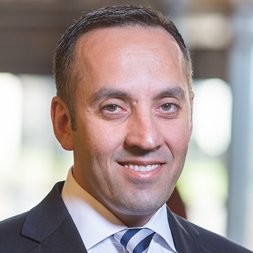
About Dr. Wael Khouli, MD, MBA
Dr. Wael Khouli, MD, MBA is a physician executive and healthcare innovation leader. He has served as Chief Medical Officer at multiple health systems and as Medical Director of Case Management, with a career focused on clinical operations, utilization management, and healthcare technology. He is co-founder and Chief Medical Officer of Authsnap.
