
• Skip to main content
  • Skip to secondary menu
  • Skip to primary sidebar
  • Skip to secondary sidebar
  • Skip to footer

  • Opinion
  • Health IT
    • Behavioral Health
    • Care Coordination
    • EMR/EHR
    • Interoperability
    • Patient Engagement
    • Population Health Management
    • Revenue Cycle Management
    • Social Determinants of Health
  • Digital Health
    • AI
    • Blockchain
    • Precision Medicine
    • Telehealth
    • Wearables
  • Life Sciences
  • Investments
  • M&A
  • Value-based Care
    • Accountable Care (ACOs)
    • Medicare Advantage

The Medicaid Maternity Cliff: 84% of Health Plan Leaders Expect Major Care Disruption in 2026

by Jasmine Pennic 05/05/2026 Leave a Comment

  • LinkedIn
  • Twitter
  • Facebook
  • Email
  • Print
Sage Growth Partners Releases "The Medicaid Maternity Cliff" Report: Half of Medicaid Mothers Anticipate Coverage Loss
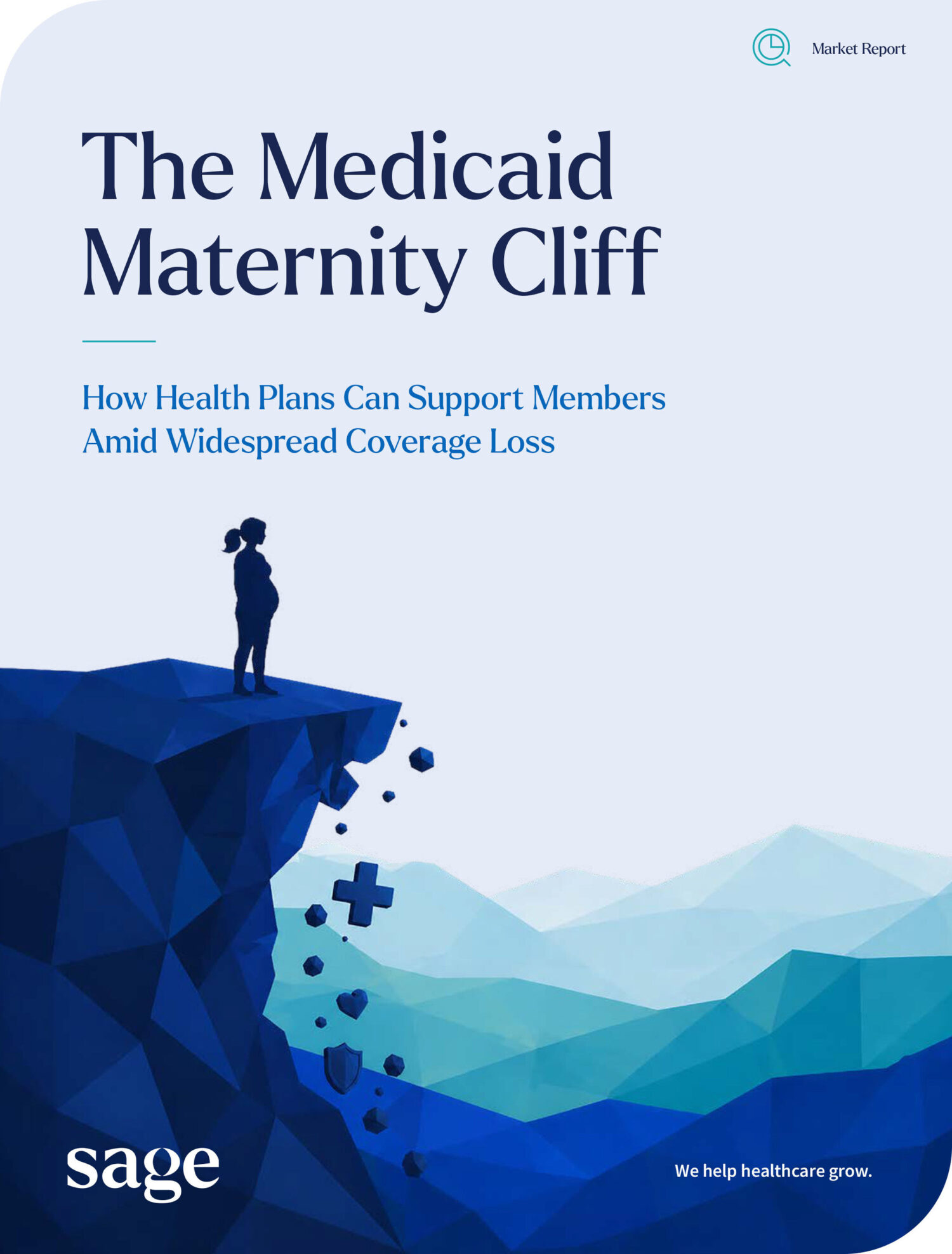
Sage Growth Partners (Sage), a national healthcare growth strategy and marketing firm, has released a new research report, The Medicaid Maternity Cliff. The report reveals a looming crisis in maternal healthcare, as more than half of pregnant women on Medicaid anticipate losing coverage due to eligibility redeterminations.

What You Should Know

  • Sage Growth Partners has released its Q1 2026 report, “The Medicaid Maternity Cliff,” identifying a looming crisis in maternal and infant healthcare access.
  • 52% of Medicaid-enrolled mothers expect to lose their coverage due to eligibility redeterminations, while 84% of health plan leaders anticipate moderate to severe care disruption.
  • The report identifies significant clinical risks, with 72% of leaders citing delayed or avoided prenatal and postpartum care as a primary concern.
  • Vulnerable populations—including rural families, postpartum mothers beyond 60 days, and NICU families—are expected to be disproportionately impacted by coverage churn.
  • In response, 68% of health plan leaders are increasing member education and outreach efforts to mitigate the “emotional and behavioral” impact of potential loss.

For the millions of women relying on Medicaid for maternal care, the administrative process of eligibility redetermination is increasingly becoming a clinical hurdle. According to the first report in Sage Growth Partners‘ State of Maternal & NICU Care 2026 series, the U.S. is facing a “Medicaid Maternity Cliff.” As federal policy changes increase the frequency of eligibility reviews, more than half of pregnant and recently pregnant women on Medicaid anticipate losing their healthcare access mid-journey, threatening the continuity of care required for safe maternal and infant outcomes.

The findings underscore that this is not merely an administrative issue but a public health crisis in the making. When coverage disappears, the established relationship between a mother and her care team often dissolves, leading to fragmented care and increased financial barriers that can have lasting consequences for both mother and child.

Clinical Consequences of the “Coverage Cliff”

The survey of 50 health plan leaders and 300 mothers reveals a stark alignment between member fear and executive concern. Health plan leaders are sounding the alarm on the downstream effects of coverage loss, specifically:

  • 72% cite delayed or avoided prenatal and postpartum care.
  • 66% point to breakdowns in care continuity.
  • 64% anticipate increased financial barriers for families.

Dan D’Orazio, CEO of Sage Growth Partners, notes that “when coverage disappears mid-journey, so does continuity.” This gap is particularly dangerous for high-risk populations, such as those in rural areas with limited provider options or families navigating the complexities of the NICU, where any interruption in care management can be catastrophic.

Health Plan Response: Bridging the Gap

Despite the significant scale of the challenge—with 80% of leaders expecting at least 10% of their members to lose coverage—health plans are proactively moving to stabilize their populations. Nearly seven in 10 plans are increasing outreach and member education to help navigate the “fear and uncertainty” driving member concern.

Beyond education, plans are strengthening partnerships with local providers and community organizations to ensure that even if a member’s status changes, they remain connected to essential services. D’Orazio emphasizes that proactive outreach and smarter care management will be the critical “safety nets” needed to keep members from falling off the cliff.

Why This Matters

The “Maternal Cliff” is a warning shot for the healthcare industry’s push toward health equity. If 52% of the most vulnerable mothers in the system are “on the edge of the precipice,” the gains made in maternal mortality and infant health over the last decade are at risk of being erased.

It is far more expensive to manage a late-stage complication resulting from avoided care than it is to invest in the “smarter care management” Sage recommends. In 2026, the successful health plan won’t just process redeterminations; they will treat coverage stability as a core clinical metric.

  • LinkedIn
  • Twitter
  • Facebook
  • Email
  • Print

Tap Native

Get in-depth healthcare technology analysis and commentary delivered straight to your email weekly

Reader Interactions

Primary Sidebar

Subscribe to HIT Consultant

Latest insightful articles delivered straight to your inbox weekly.

Submit a Tip or Pitch

Featured Insights

Aligning IT & Clinical Teams: How to Reduce Friction and Improve Communication

Most-Read

Aidoc Secures $150M to Accelerate Enterprise-Scale Clinical AI Across 2,000 Hospitals

OpenAI Launches ChatGPT for Clinicians: Free AI Documentation and Research Tool for Verified Physicians

OpenAI Launches ChatGPT for Clinicians: Free AI Documentation and Research Tool for Verified Physicians

IKS Health Acquires TruBridge for Rural EHR and RCM Solutions Expansion

IKS Health Acquires TruBridge for Rural EHR and RCM Solutions Expansion

UT Austin is Building the Nation's First 'AI-Native' Hospital, Backed by $750M

Why UT Austin is Building an ‘AI-Native’ Hospital from Scratch

The Medtech Pitch Deck Casino: Why Hype Still Wins, and How Scrutiny Could Improve Everyone’s Odds

The Casino Model: Why Medtech VCs Are Betting Billions on Unproven AI

Oracle Lays Off 539 Kansas City Employees as Focus Shifts to AI Data Centers

Oracle Lays Off 539 Kansas City Employees as Focus Shifts to AI Data Centers

SAMHSA and ONC Invest $20M in Behavioral Health IT Initiative

HHS Reverses 2024 Tech Reorganization: Why HHS Just Stripped AI and Cyber Operations Out of the ONC

How Small Medical Practices Can Build HIPAA-Aligned DevSecOps Without Enterprise Budgets

How Small Medical Practices Can Build HIPAA-Aligned DevSecOps Without Enterprise Budgets

Insilico Medicine and Eli Lilly Form $2.75B AI Drug Discovery Collaboration

Insilico Medicine and Eli Lilly Form $2.75B AI Drug Discovery Collaboration

Microsoft Copilot Health, Integrates Apple Health, Oura, and 50,000 EHRs in New AI Push

Microsoft Launches Copilot Health, Integrates Apple Health, Oura, and 50,000 EHRs in New AI Push

Secondary Sidebar

Footer

Company

  • About Us
  • 2026 Editorial Calendar
  • Advertise with Us
  • Reprints and Permissions
  • Op-Ed Submission Guidelines
  • Contact
  • Subscribe

Editorial Coverage

  • Opinion
  • Health IT
    • Care Coordination
    • EMR/EHR
    • Interoperability
    • Population Health Management
    • Revenue Cycle Management
  • Digital Health
    • Artificial Intelligence
    • Blockchain Tech
    • Precision Medicine
    • Telehealth
    • Wearables
  • Startups
  • Value-Based Care
    • Accountable Care
    • Medicare Advantage

Connect

Subscribe to HIT Consultant Media

Latest insightful articles delivered straight to your inbox weekly

Copyright © 2026. HIT Consultant Media. All Rights Reserved. Privacy Policy |