
Founder and CEO, Robert Herzog of eCaring describes how patients and home aides using remote patient monitoring can save up to $4000 per year in reduced ER visits and readmissions.

While much has been made of the myriad devices and wearables, including the much anticipated Apple iWatch in April, coming to market in 2015, to have a real impact on the cost of health care in the US will require getting access to the Internet, and practical tools to utilize it, for many of the 9 million American seniors qualifying for both Medicare and Medicaid assistance. Making it possible will be forward-thinking payors, plans and providers that see the benefit of investing in technology in the one place where the patient will spend most of their time – the home.
Focusing on the home and key demographics, such as 8,000 Baby Boomers turning 65 every day, are essential if we are to drive down the costs of healthcare associated with ER visits, hospitalizations and readmissions. How? Using technology to record data in the home makes sense because it is the one place where the patient will spend the most significant part of their lives and where so many significant, potentially costly events as part of long-term care occur.
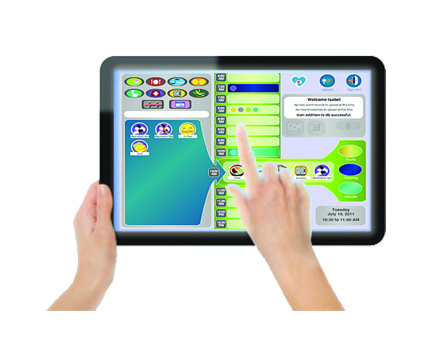
Remote patient monitoring technology that can be quickly accessed by patients, caregivers, and home health aides alike, to record critical information such as a patient’s vital signs, physical and mental state, eating patterns, and medication adherence. That data can be quickly uploaded and shared with all members of the care team, including care managers, physicians and family members. With the right system, hundreds of important data points per patients per month can be recorded. Algorithms can quickly filter that information into alerts and notifications, based on pre-set parameters so that timely interventions are possible.
Recent case studies have shown that remote monitoring can lead to a return on investment of 400% or more. Here’s how:
1. Focusing on the 9 million Americans who qualify for both Medicare and Medicaid support can lead to significant savings for plans, payors, and providers.
Patients who qualify for both Medicare and Medicaid, known as “dual eligibles,” often live on low incomes, have several co-morbidities, and need the help of home aides. The “dual eligible” population may only be 5% of an insurance company’s patient base but studies have shown that they may account for up to 65 to 70 percent of the healthcare costs, and collectively around $300 billion in healthcare costs. Measured on an individual or managed plan level, the savings generated by remote patient monitoring in the home have proven to be significant.
2. Early intervention is essential to a patient’s recovery.
Remote patient monitoring, focusing on clinical vital signs with pre-set triggers, can ensure that small problems don’t become big ones by facilitating quick intervention.
For example an 82-year old dual eligible woman with diabetes with a blood sugar crashing at 70 would usually end up in the emergency department (ED). Average costs for an ED average hospital visit are $2,500 per visit. Statistics show that one in six ED visits lead to hospitalization, which can costs $9,000 to $25,000 per episode. In this case, the home aide quickly input the clinical data which generated an alert that was transmitted and evaluated by a care manager, who called into the home and suggested that the patient drink some orange juice. Within 30 minutes, the patient’s sugar level rose to 110 and an ED visit was averted.
Using remote monitoring technology to reduce ED visits and readmissions can save over $4,000 per patient per year elderly, chronically ill populations. When an alert is established, it begins a thread from the initial information to the intervention that can be codified to note the outcome enabling all members of the patient’s care team to review the issues and enhance future care for the patient.
3. More holistic approach are now possible with remote monitoring technology.
The Affordable Care Act accelerated a process towards a more holistic managed care approach that connects the traditional silos of health care, including the doctor’s office, hospital and other institutions, that has dominated healthcare delivery. Remote monitoring technology now enables the care management team to have a clearer understanding of the whole patient and to provide better services, all with the goal of reducing costs of service. An estimated $25 to $45 billion in healthcare costs due to lack of care coordination could be saved by taking a more holistic approach. Roughly 11% of the estimated 36 million hospitalization visits per year could be avoided.
4. Shifting from pro-rata services to capitated rates is made easier by remote monitoring.
If providers cannot manage costs within fixed ceilings, then the ceilings will crash down on them.
Continue reading…
