

• Skip to main content
  • Skip to secondary menu
  • Skip to primary sidebar
  • Skip to secondary sidebar
  • Skip to footer

  • Opinion
  • Health IT
    • Behavioral Health
    • Care Coordination
    • EMR/EHR
    • Interoperability
    • Patient Engagement
    • Population Health Management
    • Revenue Cycle Management
    • Social Determinants of Health
  • Digital Health
    • AI
    • Blockchain
    • Precision Medicine
    • Telehealth
    • Wearables
  • Life Sciences
  • Investments
  • M&A
  • Value-based Care
    • Accountable Care (ACOs)
    • Medicare Advantage

Luminai Secures $38M, Inks Enterprise AI Partnership with Cleveland Clinic

by Fred Pennic 04/09/2026 Leave a Comment

  • LinkedIn
  • Twitter
  • Facebook
  • Email
  • Print
Luminai Secures $38M, Inks Enterprise AI Partnership with Cleveland Clinic

What You Should Know:

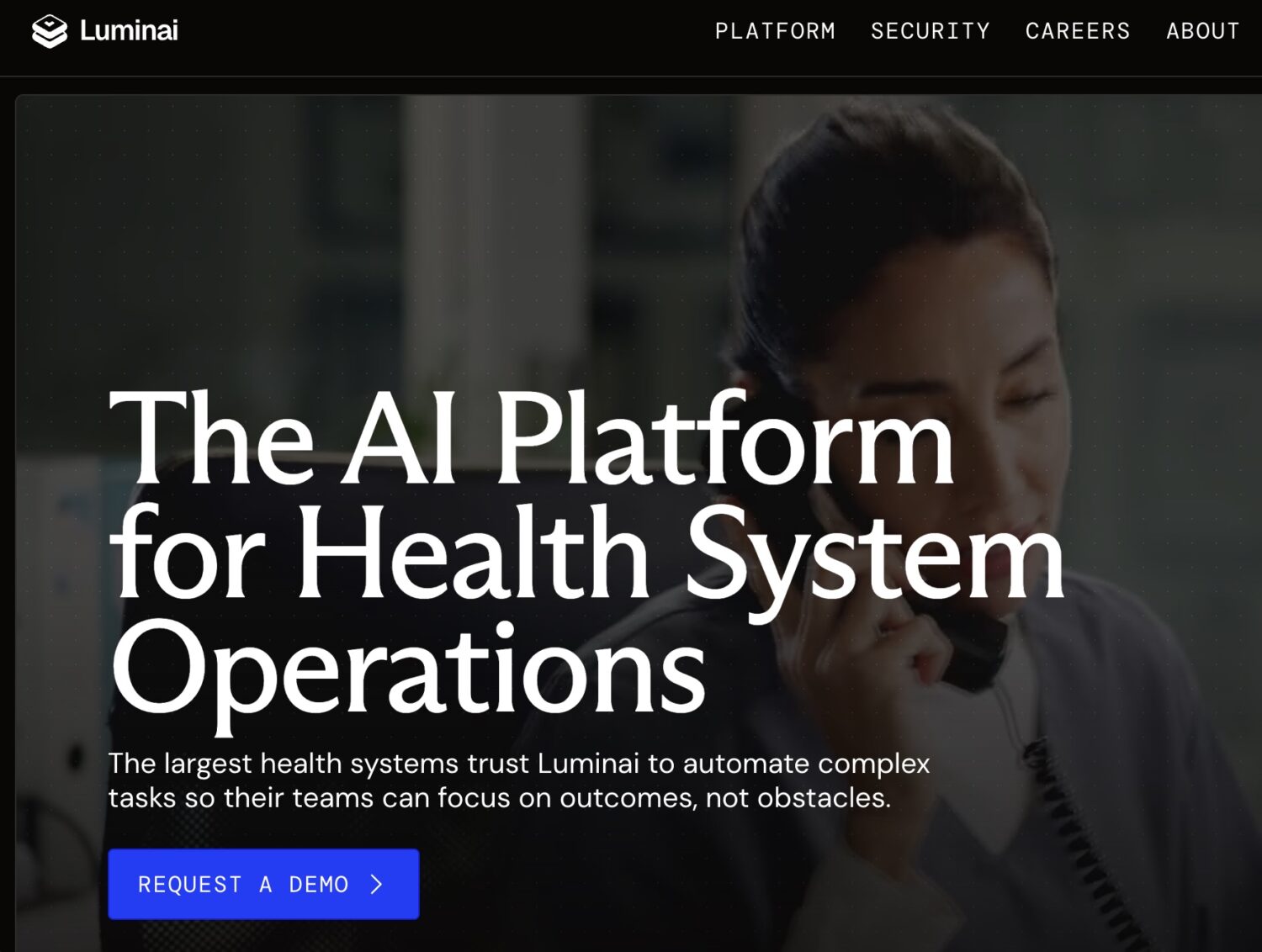
  • The Funding: Luminai, an AI-native enterprise automation platform for healthcare, has closed a $38M Series B round led by Peak XV Partners, bringing its total funding to $60M.
  • The Mega-Partnership: Luminai simultaneously announced a massive enterprise AI deployment with the Cleveland Clinic (which serves 15 million patients across 23 hospitals). The initial use case uses AI to process, classify, and intelligently route complex faxed referrals across thousands of possible destinations.

The Core Problem

If a hospital tries to automate referral routing using traditional Robotic Process Automation (RPA), the bot breaks the second a fax arrives with bad handwriting or a non-standard layout. If they try to use a generic Large Language Model (LLM), the AI lacks the specific clinical and business context of the hospital to make a safe routing decision.

Luminai bridges this gap by encoding a hospital’s specific Standard Operating Procedures (SOPs) into the software. It translates messy, unstructured reality into actionable data, applying the exact same routing logic as a trained human operator. When the AI hits an ambiguity it cannot solve, it routes the workflow (with full context) to a human. That human intervention is then fed back into the system, creating a continuous learning loop.

ROI

Luminai reports an average time-to-value of just 48 days. In enterprise healthcare software, where implementation cycles often drag on for 18 to 24 months, a 48-day turnaround is nearly unheard of.

  • LinkedIn
  • Twitter
  • Facebook
  • Email
  • Print

Tagged With: Artificial Intelligence, Cleveland Clinic

Tap Native

Get in-depth healthcare technology analysis and commentary delivered straight to your email weekly

Reader Interactions

Primary Sidebar

Subscribe to HIT Consultant

Latest insightful articles delivered straight to your inbox weekly.

Submit a Tip or Pitch

Featured Insights

Aligning IT & Clinical Teams: How to Reduce Friction and Improve Communication

Most-Read

Oracle Lays Off 539 Kansas City Employees as Focus Shifts to AI Data Centers

Oracle Lays Off 539 Kansas City Employees as Focus Shifts to AI Data Centers

SAMHSA and ONC Invest $20M in Behavioral Health IT Initiative

HHS Reverses 2024 Tech Reorganization: Why HHS Just Stripped AI and Cyber Operations Out of the ONC

How Small Medical Practices Can Build HIPAA-Aligned DevSecOps Without Enterprise Budgets

How Small Medical Practices Can Build HIPAA-Aligned DevSecOps Without Enterprise Budgets

Insilico Medicine and Eli Lilly Form $2.75B AI Drug Discovery Collaboration

Insilico Medicine and Eli Lilly Form $2.75B AI Drug Discovery Collaboration

Microsoft Copilot Health, Integrates Apple Health, Oura, and 50,000 EHRs in New AI Push

Microsoft Launches Copilot Health, Integrates Apple Health, Oura, and 50,000 EHRs in New AI Push

Health Recovery Solutions (HRS) Acquires Rimidi for Chronic Care Management and RPM Integration

Health Recovery Solutions (HRS) Acquires Rimidi for Chronic Care Management and RPM Integration

RadNet Subsidiary DeepHealth Acquires French Radiology AI Leader Gleamer

RadNet’s $269M AI Play: DeepHealth Acquires French AI Gleamer

Walgreens Launches Virtual Weight Management Platform for Self-Pay GLP-1 Patients

Walgreens Launches Virtual Weight Management Platform for Self-Pay GLP-1 Patients

KLAS Digital Pathology 2026 Report: Top IMS, Scanner, and AI Vendors Evaluated

KLAS Digital Pathology 2026 Report: Top IMS, Scanner, and AI Vendors Evaluated

The "Platform" Squeeze: Epic Releases Native AI Charting, Putting Venture-Backed Scribes on Notice

The “Platform” Squeeze: Epic Releases Native AI Charting, Putting Venture-Backed Scribes on Notice

Secondary Sidebar

Footer

Company

  • About Us
  • 2026 Editorial Calendar
  • Advertise with Us
  • Reprints and Permissions
  • Op-Ed Submission Guidelines
  • Contact
  • Subscribe

Editorial Coverage

  • Opinion
  • Health IT
    • Care Coordination
    • EMR/EHR
    • Interoperability
    • Population Health Management
    • Revenue Cycle Management
  • Digital Health
    • Artificial Intelligence
    • Blockchain Tech
    • Precision Medicine
    • Telehealth
    • Wearables
  • Startups
  • Value-Based Care
    • Accountable Care
    • Medicare Advantage

Connect

Subscribe to HIT Consultant Media

Latest insightful articles delivered straight to your inbox weekly

Copyright © 2026. HIT Consultant Media. All Rights Reserved. Privacy Policy |