
What You Should Know
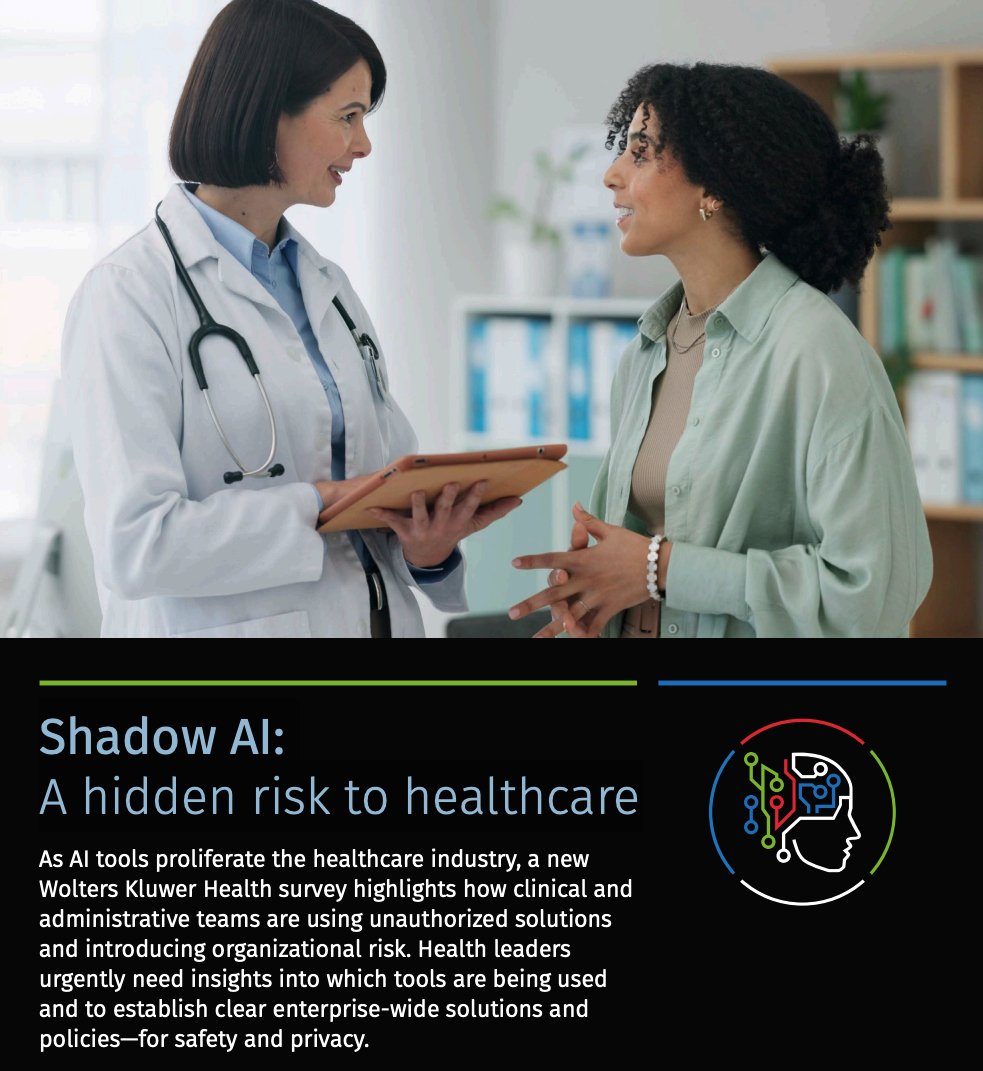
The Trend: Wolters Kluwer Health report reveals "Shadow AI"—the use of unauthorized AI tools by employees—has permeated healthcare, with nearly 20% of staff admitting to using unvetted algorithms and 40% encountering them.The Motivation: The driver isn't malice, but burnout. Clinicians are turning to these tools to speed up workflows and reduce administrative burden, often because approved enterprise alternatives are missing or inadequate.The Risk: The gap in governance
Read More
Archives for 2026
The End of the Guessing Game: Why Primary Care is Finally Ready for Pharmacogenomics

Pharmacogenomics, also referred to as PGx, is the use of a patient’s genetic makeup to guide safer, more effective medication choices and dosing in everyday clinical practice, including primary care. Although it has emerged as an essential and evidence-based tool in the primary care toolbox, its widespread adoption remains slow.
After more than 30 years in family medicine, I’ve watched every major clinical innovation face early skepticism – from electronic medical records to laparoscopic and
Read More
The Great Unbundling is Over: Why Healthcare’s “Point Solution” Era is Dead

We have reached point solution fatigue. The future of health care transformation depends on integrated platforms.
Have you ever wondered what happens once a patient’s insurance card is scanned at their doctor’s office? The answer: a lot.
Each time a patient visits a doctor, it sets off a cascade of behind-the-scenes work. These critical “back-of-house” tasks include patient
Read More
The Walking ICU: Wandercraft and Brigham and Women’s Test Robotics on Critical Patients

What You Should Know
The News: Wandercraft has enrolled the first patient in a groundbreaking clinical trial at Brigham and Women’s Hospital (a Harvard Medical School teaching hospital) to test its self-balancing exoskeleton in the ICU.The Goal: The study aims to determine if the Atalante X robot can safely mobilize fragile thoracic surgery patients days earlier than current standards, potentially improving cardiorespiratory function and mental well-being.The Implications: Beyond patient
Read More
The Self-Driving Revenue Cycle: Claim Health Raises $4.4M to Fix Post-Acute Care’s Biggest Bottleneck
What You Should Know
The News: Claim Health has raised a $4.4 million Seed round led by Maverick Ventures to scale its "AI-native" revenue operations platform for post-acute care.The Traction: Since exiting Y Combinator’s Spring 2025 batch, the company has grown revenue 30x in under a year, driven by providers seeking to replace legacy manual workflows.The Tech: The platform offers a "self-driving" revenue cycle—automating everything from patient intake to payment reconciliation—delivering a
Read More
The Burnout Paradox: Why “Purpose-Built” Workplaces Are Failing the Frontline
What You Should Know
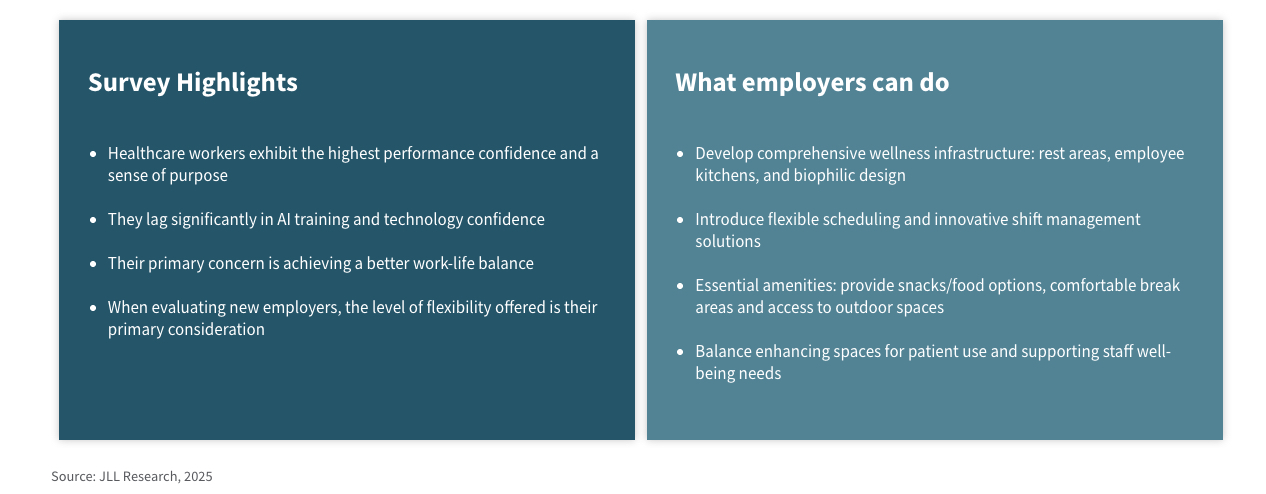
The Problem: A new JLL report reveals a "satisfaction gap" for frontline workers (retail, healthcare, labs). While their facilities support productivity, they fail on human-centered needs like wellbeing and flexibility.The Paradox: Frontline workers report higher burnout (44%) than office workers, yet have similar intentions to stay—often due to a lack of other options rather than loyalty, creating a "trapped" workforce.The Fix: The report calls for a strategy pivot:
Read More
Quantum Health Deploys Agentic AI to Fix the Care Journey
What You Should Know
The News: Quantum Health has launched a new "agentic" technology platform, moving beyond standard chatbots to AI agents that can independently initiate outreach, schedule appointments, and resolve billing issues.The Structure: The company is pivoting from a single offering to a flexible three-tier suite: Quantum Signature (comprehensive), Quantum Flex (configurable), and Embold Plus (digital-first entry point).The Tech: The platform fully integrates Embold Health’s
Read More
Kontakt.io Launches “Patient Flow Agent” to Reclaim the 22% of Hospital Days That Are Unnecessary
What You Should Know
The Launch: Kontakt.io has introduced the "Patient Flow Agent," an orchestration platform designed to reduce hospital length of stay (LOS) by blending real-time location data (RTLS) with electronic health records (EHR).The Thesis: The company argues that hospitals are suffering from a "flow orchestration problem," not a bed shortage. By fixing decision-making context, they aim to eliminate the 22% of inpatient days deemed clinically unnecessary.The ROI: For an average
Read More
Vega Imaging Curates World’s Largest Paired DBT Dataset for AI

What You Should Know
The News: Vega Imaging Informatics has successfully curated the world’s largest Digital Breast Tomosynthesis (DBT) dataset, containing over one million studies.The "Holy Grail": Unlike standard image sets, this dataset includes "paired histology outcomes" for over 22,000 patients, meaning the images are linked to definitive biopsy results (including 7,000+ confirmed cancer cases).The Engineering Feat: DBT files are up to 50x larger than standard x-rays. Vega’s ability to
Read More
Vizient 2026 Forecast: 65+ Population to Drive Hospital Utilization as AI Spend Hits $100B

What You Should Know
The Reality: The U.S. healthcare system is in a "structural pressure" cooker. While patient outcomes are improving (mortality down 33%), the financial model is fracturing under the weight of an aging population and rising supply costs.The Shift: 2026 marks the end of the "Megadeal" era. Hospital M&A has pivoted to distressed asset acquisitions, while successful systems are moving toward vertical partnerships rather than buying more hospitals.The Future: AI is the only
Read More
