

• Skip to main content
  • Skip to secondary menu
  • Skip to primary sidebar
  • Skip to secondary sidebar
  • Skip to footer

  • Opinion
  • Health IT
    • Behavioral Health
    • Care Coordination
    • EMR/EHR
    • Interoperability
    • Patient Engagement
    • Population Health Management
    • Revenue Cycle Management
    • Social Determinants of Health
  • Digital Health
    • AI
    • Blockchain
    • Precision Medicine
    • Telehealth
    • Wearables
  • Life Sciences
  • Investments
  • M&A
  • Value-based Care
    • Accountable Care (ACOs)
    • Medicare Advantage

Fitbit Health Solutions Business Grew 70%, $30.5M in Revenue in Q1 2019

by Fred Pennic 05/01/2019 Leave a Comment

  • LinkedIn
  • Twitter
  • Facebook
  • Email
  • Print

Fitbit Health Solutions Business Grew 70%, $30.5M in Revenue in Q1 2019

Fitbit today released its Q1 2019 earnings reporting revenue of $272 million, GAAP net loss per share of $(0.31), non-GAAP net loss per share of $(0.15), GAAP net loss of $(79) million, non-GAAP net loss of $(38) million, cash flow from operations of $(68) million and free cash flow of $(74) million.

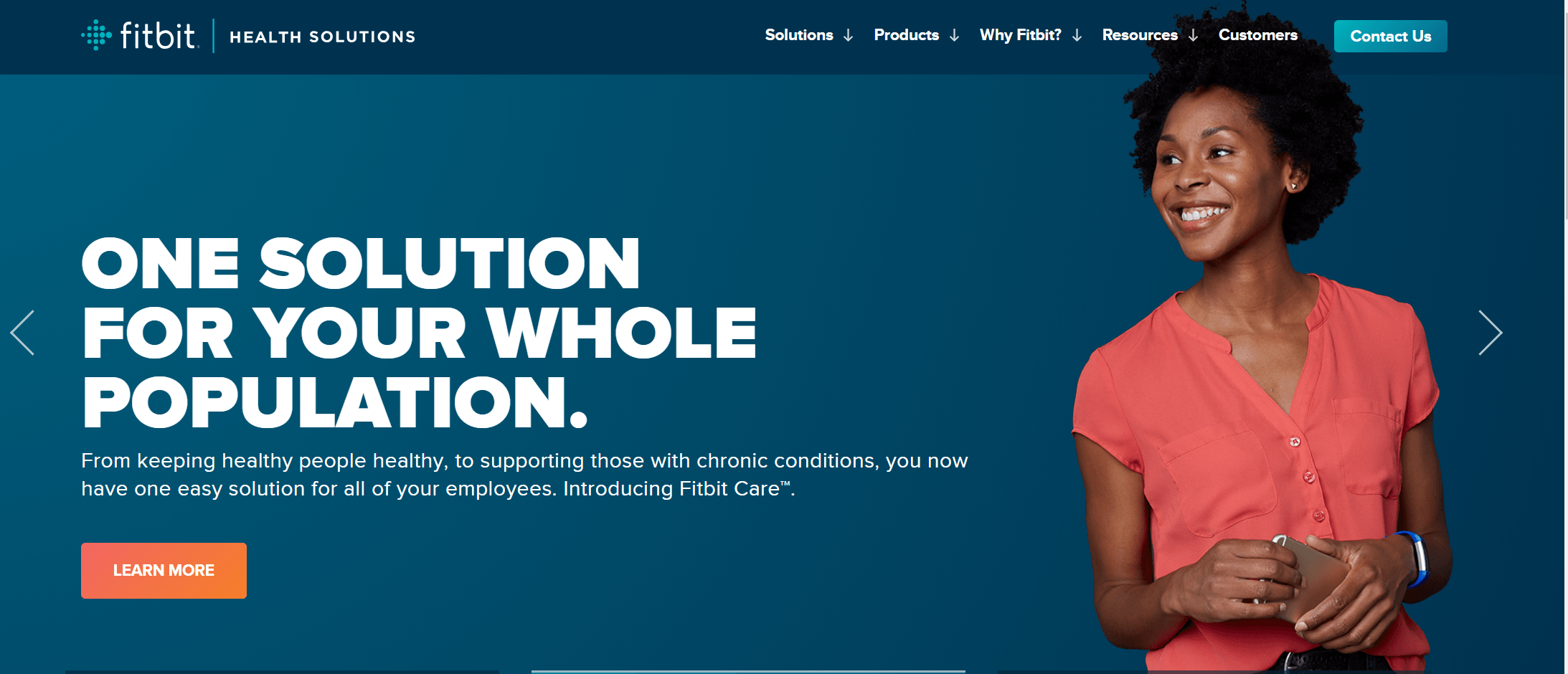
Q1 2019 Fitbit Health Solutions Earnings

Fitbit Health Solutions business grew 70% YOY with revenue of $30.5M, which was an important contributing factor to the company’s positive momentum overall in the quarter. The Health Solutions business is on-track to deliver its revenue target of $100M in FY19, driven by global growth and execution in the U.S.

During Q1 2019, Fitbit also expanded its partnership with Solera Health, an integrated benefit network that connects patients, payers, and physicians with community organizations and digital therapeutics providers to reduce the risk of type 2 diabetes using the Fitbit platform. A new analysis of more than 1,700 people, who enrolled in the National Diabetes Prevention Program (DPP) through Solera, shows participants who utilized a Fitbit device reported more activity and were more likely to stick with the program. 

Other Q1 2019 highlights include:

Fitbit’s strategy is leading to better results.

· Revenue of $272M exceeding guidance – Up 10% YOY

· Devices sold increased 36% with growth across smartwatches (up 117%) and trackers (up 17%)

o First quarter of positive year-over-year growth for trackers since 2016 and Inspire HR is currently the bestselling device in the U.S. ahead of Garmin, Fossil and Samsung (NPD)

o Smartwatches comprised 42% of revenue, up from 30% a year ago, growing faster than the industry

· The company continued to drive efficiencies, reducing OPEX by 13% 

· The company reiterated its full-year guidance

Fitbit continued to grow active users, bringing more people onto the Fitbit platform.

· Strategy to offer more affordable, accessible devices to lower the barriers of joining the Fitbit community is working, demonstrated by the increase of active users

· Newest products introduced over the past year represented 67% of revenue

· Increased confidence as Fitbit works to launch a premium subscription services platform later this year

“We saw continued momentum across our business in the first quarter, with revenue up 10% and devices sold up 36% year-over-year. Smartwatch device sales increased by 117% year-over-year and the introduction of our new trackers, Inspire and Inspire HR, helped spark the first quarter of year-over-year growth in tracker device sales in three years. In addition, our Fitbit Health Solutions business grew 70% with revenue of $30.5 million, demonstrating great progress towards our $100 million revenue target for 2019,” said James Park, co-founder, and CEO. “New users are continuing to join the Fitbit platform with active users increasing in the first quarter, underscoring the effectiveness of our strategy to bring more users onto the Fitbit platform with the introduction of more accessible, affordable devices.”

  • LinkedIn
  • Twitter
  • Facebook
  • Email
  • Print

Tagged With: diabetes, Digital Therapeutics, Fitbit, Garmin, Payers, physicians, risk, Samsung, Smartwatch, Solera Health, Type 2 Diabetes

Tap Native

Get in-depth healthcare technology analysis and commentary delivered straight to your email weekly

Reader Interactions

Primary Sidebar

Subscribe to HIT Consultant

Latest insightful articles delivered straight to your inbox weekly.

Submit a Tip or Pitch

2026 Predictions & Trends

Healthcare 2026 Forecast: Executives on AI Survival, Financial Reckoning, and the End of Point Solutions

2026 Healthcare Executive Predictions: Why the AI “Pilot Era” Is Officially Over

Most-Read

NYC Health + Hospitals to Acquire Maimonides in $2.2B Safety Net Overhaul

NYC Health + Hospitals to Acquire Maimonides in $2.2B Safety Net Overhaul

KLAS Report: Why Hospitals Are Choosing Efficiency Over 'Agentic' AI Hype in 2025

KLAS Report: Why Hospitals Are Choosing Efficiency Over ‘Agentic’ AI Hype in 2025

Advanced Primary Care 2026: Top 6 Investments for Health Systems According to Harvard Medical School

Advanced Primary Care 2026: Top 6 Investments for Health Systems According to Harvard Medical School

AI Nutrition Labels: The Key to Provider Adoption and Patient Trust?

AI Nutrition Labels: The Key to Provider Adoption and Patient Trust?

Kristen Hartsell, VP of Clinical Services, RedSail Technologies

The Pharmacy Closures Crisis: How Independent Pharmacies Are Fixing Pharmacy Deserts

HHS Launches 'OneHHS' AI Strategy to Integrate AI Across CDC, CMS, and FDA for Efficiency and Public Trust

HHS Launches ‘OneHHS’ AI Strategy to Integrate AI Across CDC, CMS, and FDA for Efficiency and Public Trust

From Overwhelmed to Optimized: How AI Agents Address Staffing Challenges and Burnout in Healthcare

From Overwhelmed to Optimized: How AI Agents Address Staffing Challenges and Burnout in Healthcare

The VBC Paradox: Why Hospitals Are Doubling Down on Value-Based Care While Revenue at Risk Lags

The VBC Paradox: Why Hospitals Are Doubling Down on Value-Based Care While Revenue at Risk Lags

Tebra Secures $250M to Challenge Legacy EHRs with AI-Powered Automation

Tebra Secures $250M to Challenge Legacy EHRs with AI-Powered Automation

AstraZeneca Selects Salesforce Agentforce Life Sciences to Deploy AI-Powered Global Customer Engagement

AstraZeneca Selects Salesforce Agentforce Life Sciences to Deploy AI-Powered Global Customer Engagement

Secondary Sidebar

Footer

Company

  • About Us
  • Advertise with Us
  • Reprints and Permissions
  • Op-Ed Submission Guidelines
  • Contact
  • Subscribe

Editorial Coverage

  • Opinion
  • Health IT
    • Care Coordination
    • EMR/EHR
    • Interoperability
    • Population Health Management
    • Revenue Cycle Management
  • Digital Health
    • Artificial Intelligence
    • Blockchain Tech
    • Precision Medicine
    • Telehealth
    • Wearables
  • Startups
  • Value-Based Care
    • Accountable Care
    • Medicare Advantage

Connect

Subscribe to HIT Consultant Media

Latest insightful articles delivered straight to your inbox weekly

Copyright © 2026. HIT Consultant Media. All Rights Reserved. Privacy Policy |