


For revenue cycle managers and other hospital executives, the rapid evolution of artificial intelligence tools signifies both a challenge and an opportunity. AI and machine learning offer the critical ability to maximize insights into a diverse array of data sets faster than ever. Leveraging tools that allow revenue cycle managers to see across all user groups and departments that create leakage has short- and long-term potential.
The challenge: when one payer changes its processes, it sends
Read More
Health IT | News, Analysis, Insights - HIT Consultant
Innovaccer-CHIME 2030 Survey Reveals AI Will Automate Nearly Two-Thirds of Administrative Work and Do 3x the Work With the Same Staff
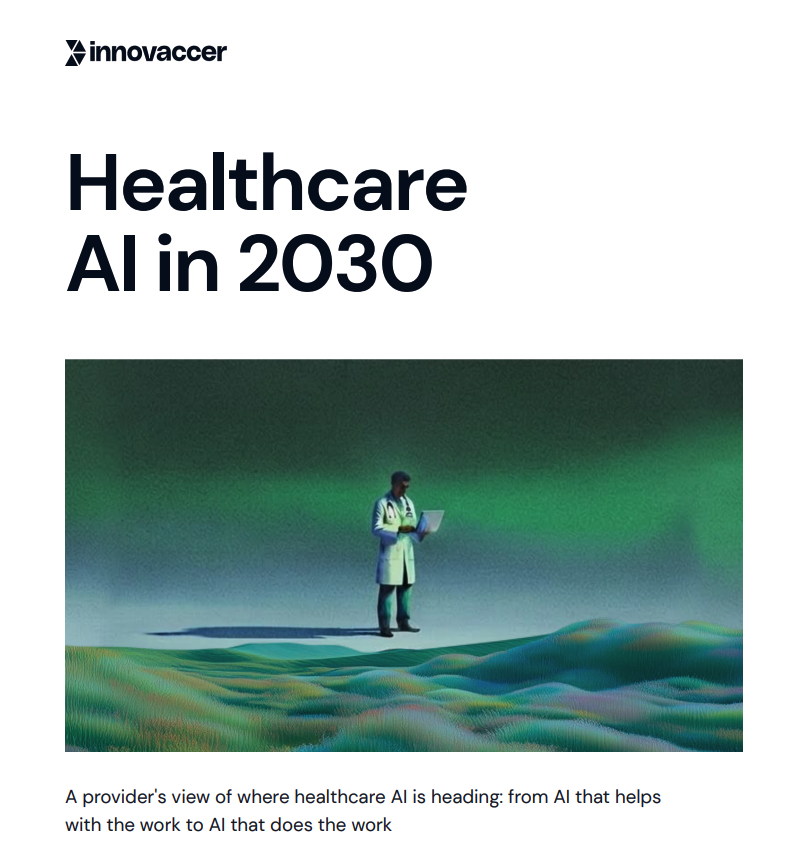
What You Should Know
Six Core Workflows Measured Level by Level
To map current enterprise maturity, Innovaccer and CHIME evaluated six high-volume administrative workflows across a four-tier autonomy ladder: L0 (All Manual), L1 (AI Helps via drafts/suggestions), L2 (AI Does It with human exception checking), and L3 (AI Runs It autonomously inside institutional guardrails).
The Experience Paradox: Why Scaling AI Sharpens ROI Skepticism
One of the study’s most counterintuitive
Read More
HLTH26: OpenAI Expands ChatGPT for Healthcare: Computer-Use Agents, 99% Clinical Safety Benchmarks, and 20+ Integrated Health Tech Plugins

What You Should Know
Benchmarking Safety, Clinical Helpfulness, and Unit Economics
To validate autonomous navigation across high-stakes clinical and back-office environments, OpenAI evaluated its frontier models—GPT-6 Astra and GPT-6 Luna—at maximum reasoning effort across both EHR inbox triage and standardized administrative workflows.
In physician-designed evaluations simulating complex EHR inbox tasks, GPT-6 Astra executed multi-step workflows requiring longitudinal chart synthesis
Read More
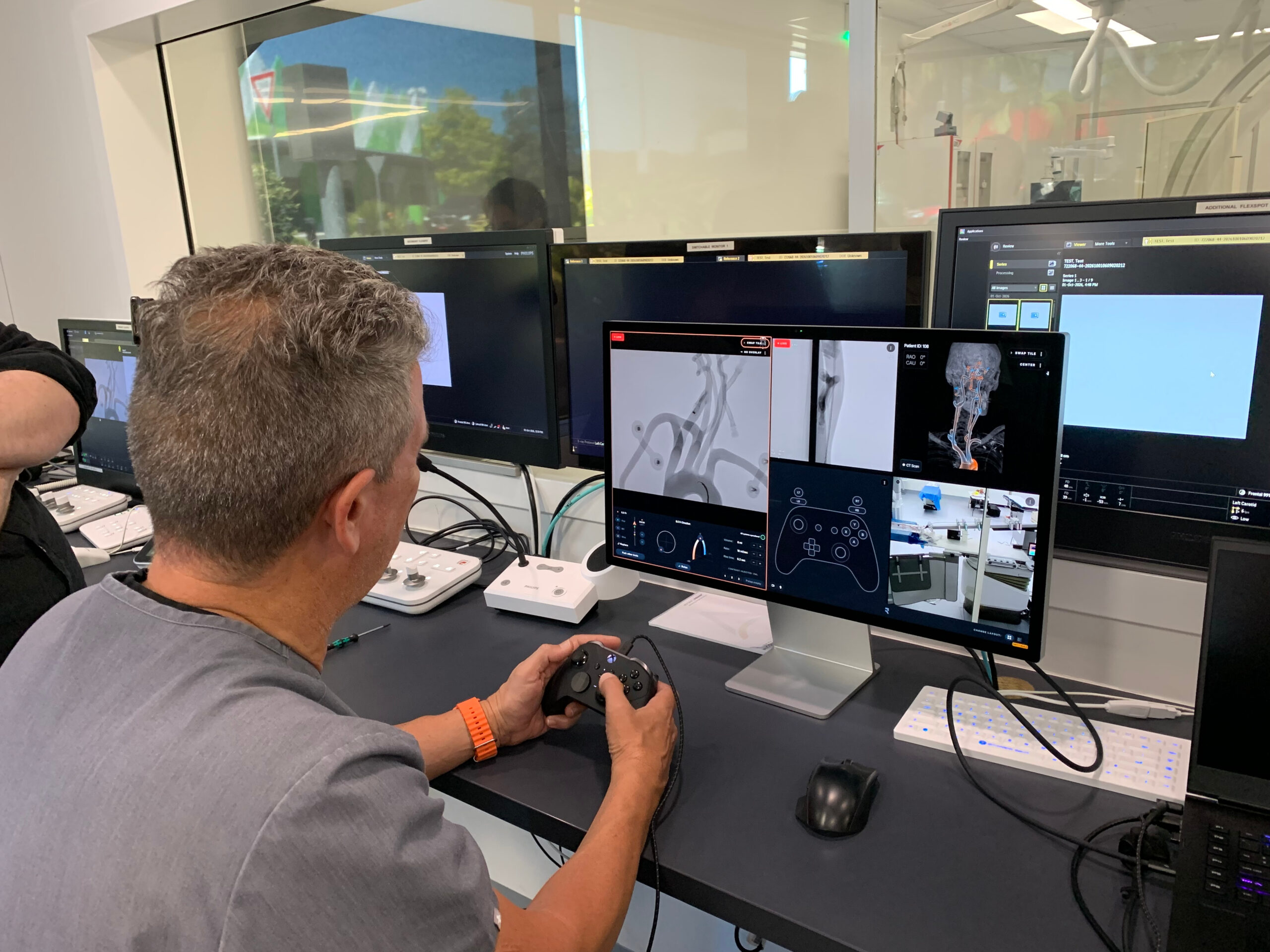
Remedy Robotics Raises $62M to Advance Remote Endovascular Stroke Robotics Toward FDA Approval
What You Should Know
The N1 Platform: Physical AI, Preoperative Simulation, and Remote Endovascular Execution
Backed by 48 issued patents spanning machine learning and surgical robotics, Remedy Robotics engineered the N1 System to decouple specialist expertise from physical bedside presence. The platform integrates precision catheter-driving hardware with an artificial intelligence software suite capable of supporting on-site, tele-operated remote, and progressively autonomous
Read More
UC Berkeley Spinout Knit Health Raises $35M Series A Led by NEA to Launch Med-BEAM World Model for Healthcare

What You Should Know
The Med-BEAM Architecture: Modeling Patient Trajectories from Billions of Clinical Decisions
Rather than predicting the next word in a clinical note, Med-BEAM is engineered as a foundational world model trained on billions of real-world healthcare decisions across hundreds of millions of longitudinal, de-identified patient records. By learning directly from empirical sequences of orders, diagnoses, specialist referrals, and downstream outcomes, the model constructs a
Read More
M&A: Credo Health Acquires Affineon Health and Relaunches as Pajama.ai to Reclaim 40 Hours Per Physician Monthly
What You Should Know
Merging Chart Retrieval with Inbox Execution
The strategic rationale behind the acquisition rests on pairing two complementary halves of the ambulatory workflow so clinicians are supported both before entering the exam room and after the patient departs.
On the front end, Credo Health contributes its automated medical record retrieval and clinical insight engine. Instead of clinical staff manually chasing external faxed records, Credo aggregates the patient’s
Read More
HHS Issues Final HIPAA Privacy Rule: 15-Day Access Deadlines, Free ePHI App Transfers, and HCBS/Social Services Disclosures

What You Should Know
Strengthening the Individual Right of Access and Personal Health App Connectivity
A central pillar of the Final Rule compresses record-release timelines and establishes explicit digital rights for patients seeking their protected health information (PHI). Covered entities must now fulfill individual access requests as soon as practicable, but no more than 15 calendar days after receipt—cutting the legacy 30-day response window in half—while retaining the option for a
Read More
Wolters Kluwer Acquires AgileMD for Up to $100M to Embed UpToDate Expert AI and FDA-Cleared eCART Surveillance Inside EHR Workflows

What You Should Know
Operationalizing Evidence: Pathways and FDA-Cleared Clinical Surveillance
AgileMD brings two core software engines designed to embed clinical intelligence directly into hospital electronic health record workflows. Its Pathways platform operationalizes institution-specific clinical guidelines directly inside the clinician’s native charting and order-entry environment, driving standardized care delivery and continuous outcomes measurement across service
Read More
Why AI-Assisted 100% Registry Review Is Essential for Clinical Data Integrity

Hospitals are judged by numbers that begin with a person reading a chart. Surgical complications, cancer outcomes, cardiac and stroke measures, and many of the quality scores that shape public rankings all trace back to clinical registries. Those registries don’t fill themselves. Trained staff comb through each patient’s record and enter the details by hand. It’s slow, meticulous work that most people never see, but it’s how healthcare performance gets measured.
To check that work, registries
Read More
VA and Department of War Go-Live on Oracle Health Information Network Under TEFCA

What You Should Know
Expanding Beyond the Joint Health Information Exchange
The go-live builds directly upon the existing Joint Health Information Exchange (JHIE)—the shared interoperability backbone connecting federal health agencies—by linking both departments into TEFCA’s standardized, multi-network exchange framework. Through a single connection point, VA and DoW clinicians can query and retrieve longitudinal clinical records from participating civilian hospitals, ambulatory clinics,
Read More
