

What You Should Know
Applied artificial intelligence and healthcare navigation company Baba secures $40M in Series A financing led by FirstMark Capital with participation from CVS Health Ventures and value-based healthcare specialist Valtruis, alongside returning venture investors General Catalyst, Genius Ventures, and Ground Up Ventures.Introduces BabaBench (published on arXiv and accepted to an upcoming NeurIPS workshop): a specialized AI benchmark designed to evaluate how frontier
Read More
Health IT | News, Analysis, Insights - HIT Consultant
Zoom Embeds Clinical Notes Across Meetings, Phone, and In-Person Visits
What You Should Know
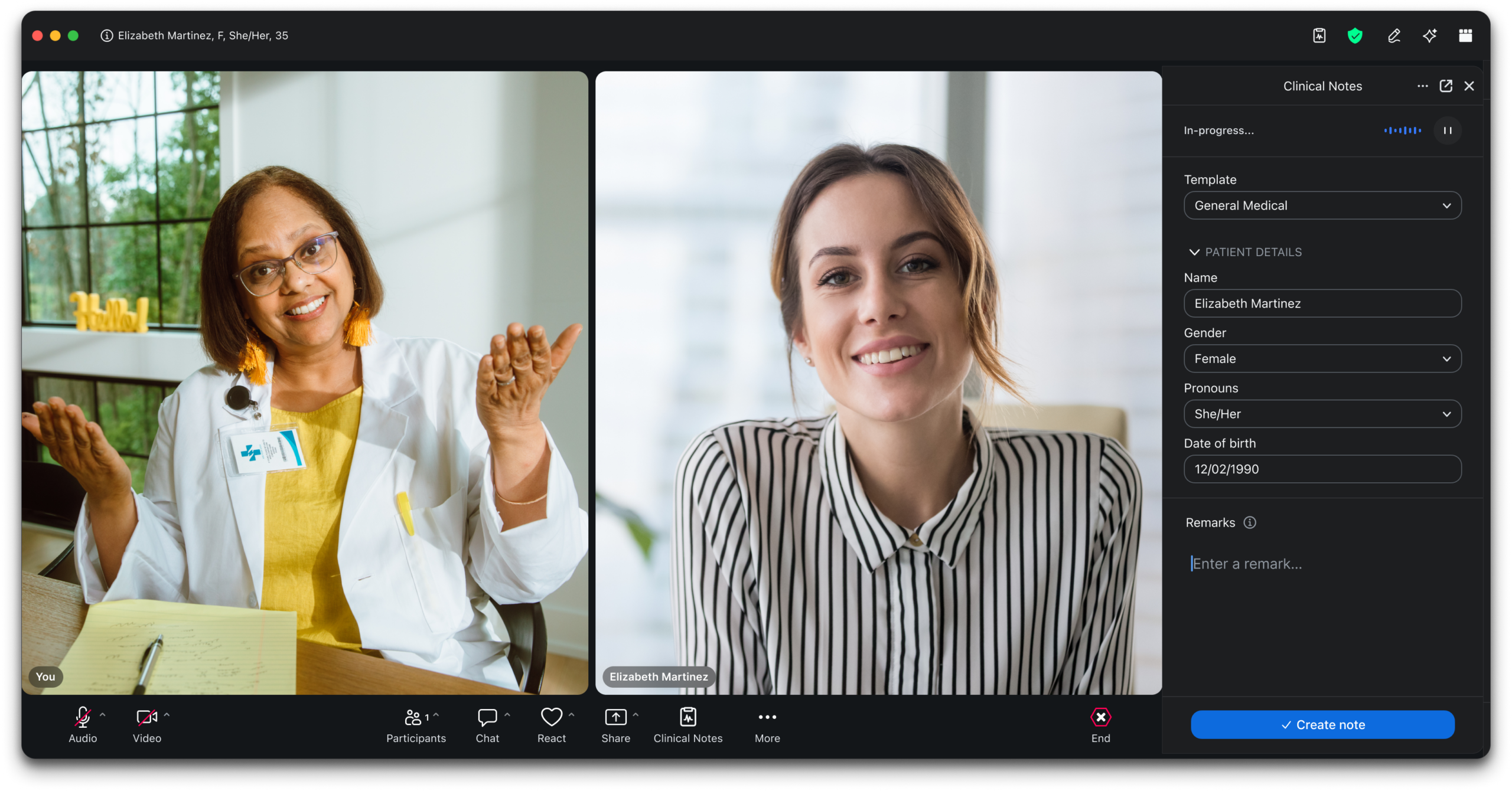
Video communications and collaboration infrastructure leader Zoom announced at Zoomtopia 2026, the rollout of enhanced Zoom Clinical Notes, an ambient clinical documentation solution powered by Zoom AI designed to convert clinical encounters into structured medical notes across in-person, video, and telephone visits.Directly addresses "point-solution fatigue" and workflow friction: unlike standalone third-party AI scribes that require separate app windows, separate
Read More
MEDITECH Partners with Lifemed AI to Arm Hospitals Against Payer Claims Denials

What You Should Know
Healthcare electronic health record (EHR) vendor MEDITECH and healthcare artificial intelligence company Lifemed AI announced a formal enterprise partnership, designating Lifemed as an Accelerator-level member of the MEDITECH Alliance program.The partnership embeds Lifemed’s proprietary non-generative deep-learning neural network platform directly into MEDITECH’s nationwide hospital and health system EHR ecosystem to eliminate claims denials, automate pre-bill scrubbing,
Read More
How Peristaltic Pumps Are Enabling the Next Generation of Robotic Surgery

Surgical robotics gets talked about the way AI gets talked about in every other industry right now. It's the thing everyone in medtech eventually brings up when the conversation turns to the future of surgery. As robotic-assisted procedures spread across specialties, from urology to orthopedics, the robot itself understandably gets most of the attention. Intuitive's da Vinci system remains the best-known example, but the category now includes an entire generation of platforms purpose-built for
Read More
VA-Epic Connection Enables Direct Specialist Scheduling for Veterans: External Provider Scheduling and WellHive Integration

What You Should Know
The U.S. Department of Veterans Affairs (VA) announced a major operational interoperability milestone enabling VA staff to book community specialist appointments directly with health systems using Epic.Leverages the VA’s External Provider Scheduling (EPS) platform, replacing traditional, friction-heavy administrative workflows—such as manual telephone calls, back-and-forth record requests, and faxes—with real-time, digital on-the-spot appointment booking.Addresses a
Read More
Healthcare CIOs Need a Plan for November’s State Ballot Measures
State ballot initiatives can become practical questions for healthcare technology teams: who remains eligible for coverage, which expenses must be reported, who can access a record and when systems should change. Those questions deserve attention as voters decide state measures in the November 3, 2026 election.
Chief information officers should put ballot implementation on a shared planning calendar with finance, clinical and compliance leaders. Preparing for both approval and rejection can
Read More
Sunlight AI Secures $17.4M to Scale Operating Infrastructure and Collections for Independent Physicians

What You Should Know
Healthcare administrative and practice-operating platform Sunlight AI officially launched, announcing a $17.4M seed financing round led by Lan Xuezhao, Founder of Basis Set Ventures.The seed syndicate includes Sofeon Ventures, Social Leverage, Actions Capital, Overlook Ventures, Early Light Ventures, family offices, and prominent health-tech founders—including Frank Williams, Founder of Evolent Health, alongside Chris Hubbell, Tilli Bannett, and Dara Rahimzadeh.Sunlight
Read More
M&A: Tegria Acquires CloudWave in First Move Under Altaris to Consolidate Healthcare Cyber Defense

What You Should Know
Global healthcare consulting, managed services, and technology solutions company Tegria announced its strategic acquisition of CloudWave, a full-service healthcare-exclusive cloud hosting, managed IT, and cybersecurity services provider.Marks a major corporate expansion milestone: this represents Tegria’s first acquisition since becoming a portfolio company of Altaris, a New York-based healthcare investment firm managing more than $9 billion in equity capital, earlier in
Read More
Notable Launches Flow Compass to Give Healthcare Operators Plain-Language Control of Their AI Workforce
What You Should Know
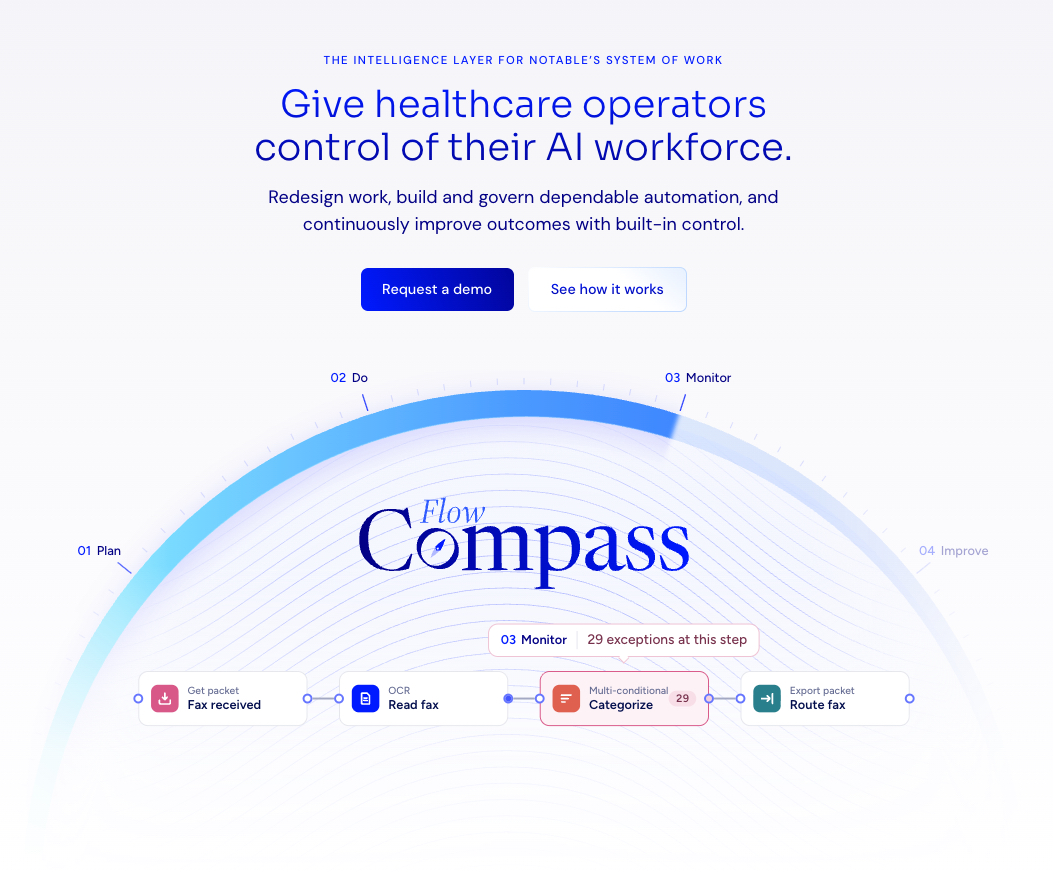
Healthcare automation pioneer Notable announced the launch of Flow Compass, a new conversational intelligence layer embedded directly within Flow Studio on the Notable Platform.Addresses the emerging "AI Agent Sprawl" crisis: while building basic AI agents has become accessible, health systems deploying dozens or hundreds of autonomous agents face severe operational risks around configuration drift, silent failures, unmapped dependencies, and opaque financial
Read More
GE HealthCare Launches LOGIQ Focus to Merge cSound Architecture with AI Workflow Automation

What You Should Know
Medical technology and imaging giant GE HealthCare announced the commercial launch of LOGIQ™ Focus, a new general imaging ultrasound system that bridges high-end beamforming performance with AI-enabled workflow productivity tools.Built on GE HealthCare’s proprietary cSound™ Architecture, it delivers advanced speckle-reduction imaging, an integrated High Definition Ultrasound (HDU) display for fine tissue characterization, and high-definition microvascular flow
Read More
