
What You Should Know
TEFCA Individual Access Services (IAS) Meets Consumer Consent
The integration between HealthEx and Oscar represents one of the first production payer deployments of Individual Access Services (IAS) under TEFCA, bypassing the slow, business-to-business payer data exchanges that have long stalled health plan interoperability:
“When someone changes health plans, their health history usually stays behind,” said Priyanka Agarwal, MD, MBA, Co-Founder and CEO of
Read More
Google Cloud Launches Gemini for Healthcare: Unifying Payer and Provider Workflows Across Epic, Oracle Health, and MCP Connectors
What You Should Know
The Four Core Pillars of Gemini for Healthcare
Developed in direct collaboration with academic medical centers, national health plans, and health system operators, the platform comprises four integrated functional layers:
1. Clinical and Administrative Skills
Skills are expert-authored, modular instructions and context packages that teach the Gemini agent how to execute specific, multi-step healthcare workflows according to standard operating procedures. The
Read More
Froncort.AI Secures $2.3M from Google.org to Transform Door-to-Door Infectious Disease Screening

What You Should Know
The Algorithmic Engine: Merging Earth Observation with Epidemiological Baselines
Founded in 2024 by physician-scientist and engineer Dr. Ujjwal Rao, Froncort.AI was designed to bridge clinical diagnostic logic with geospatial predictive modeling. Rather than deploying AI as an ambient charting tool or passive data dashboard, the core platform, AI-NETRA, generates actionable, micro-targeted field itineraries:
In a formal validation study conducted under ethics
Read More
SEARHC Joins Mayo Clinic Care Network to Bridge Specialist Tele-Informatics Across Southeast Alaska

What You Should Know
Specialty Access and Knowledge Exchange Architecture
Membership in the Mayo Clinic Care Network allows SEARHC physicians and advanced practice providers to retain primary responsibility for patient care while integrating tertiary-level second opinions and clinical protocols directly into local care delivery:
Dr. Cate Buley, Chief Medical Officer at SEARHC, emphasized the clinical impact on regional care: "For patients across Southeast Alaska, accessing
Read More
GDIT, IHS, and Oracle Health Deploy PATH EHR as the First Cloud-Native Federal Health System
What You Should Know
The Federal Government’s First Fully Cloud-Native EHR
The deployment of PATH EHR establishes a major technological milestone within federal digital health modernization:
Built upon the commercial Oracle Health enterprise software core and implemented by enterprise prime contractor GDIT, PATH EHR represents the first federal electronic health record system architected and hosted entirely within a cloud environment. Unlike earlier federal EHR deployments that relied
Read More
Fairview Health Services Selects Layer Health to Automate Enterprise Clinical Registry Abstraction

What You Should Know
Longitudinal Chart Synthesis and Source-Linked Traceability
The deployment addresses the primary challenge that has traditionally prevented health systems from automating clinical chart review: the unstructured nature of complex clinical narratives. Traditional natural language processing tools often fail because they lack longitudinal context or produce unreferenced outputs that require clinicians to re-read the entire chart to verify accuracy.
Layer Health’s
Read More
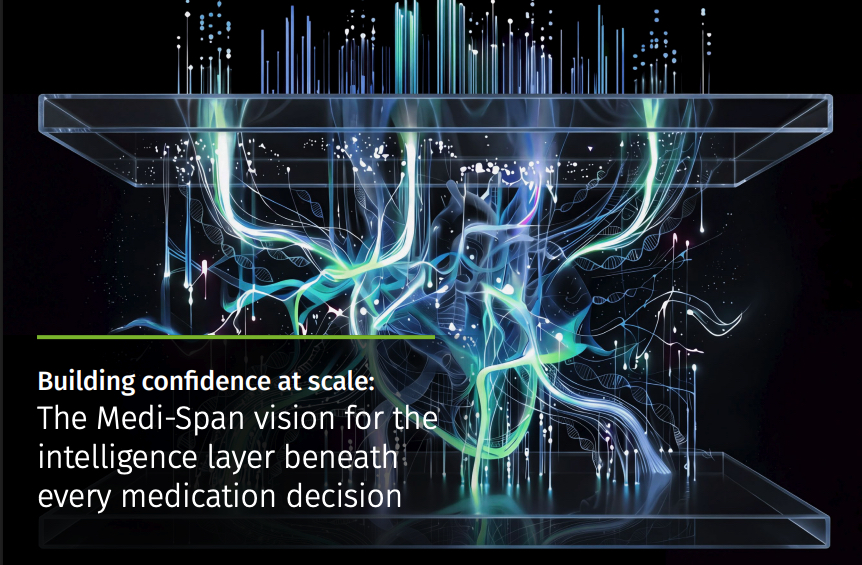
Wolters Kluwer Survey Exposes the Chasm Between Enterprise AI Acceleration and Consumer Drug Safety Trust
What You Should Know
The Consumer Trust Deficit and Channel Skepticism
The survey data highlights a distinct threshold where patient comfort breaks down whenever automated clinical decision-making displaces human oversight. Only twenty-seven percent of surveyed consumers strongly trust automated systems to accurately detect and flag potential drug-drug or drug-disease interactions without a healthcare professional directly involved. Demonstrating defensive behavior against perceived
Read More
Humana and athenahealth Expand Nationwide FHIR-Based Electronic Prior Authorization Across 180,000 Clinicians

What You Should Know
In-Workflow FHIR Architecture and Automated Adjudication
Rather than merely verifying whether a prior authorization is required, the expanded athenaOne capability creates a bidirectional, automated data pipeline between the clinical encounter and Humana's adjudication engine.
The integration leverages the Da Vinci Project’s Fast Healthcare Interoperability Resources (FHIR) interoperability standards:
By routing connectivity through athenaPayer, Humana
Read More
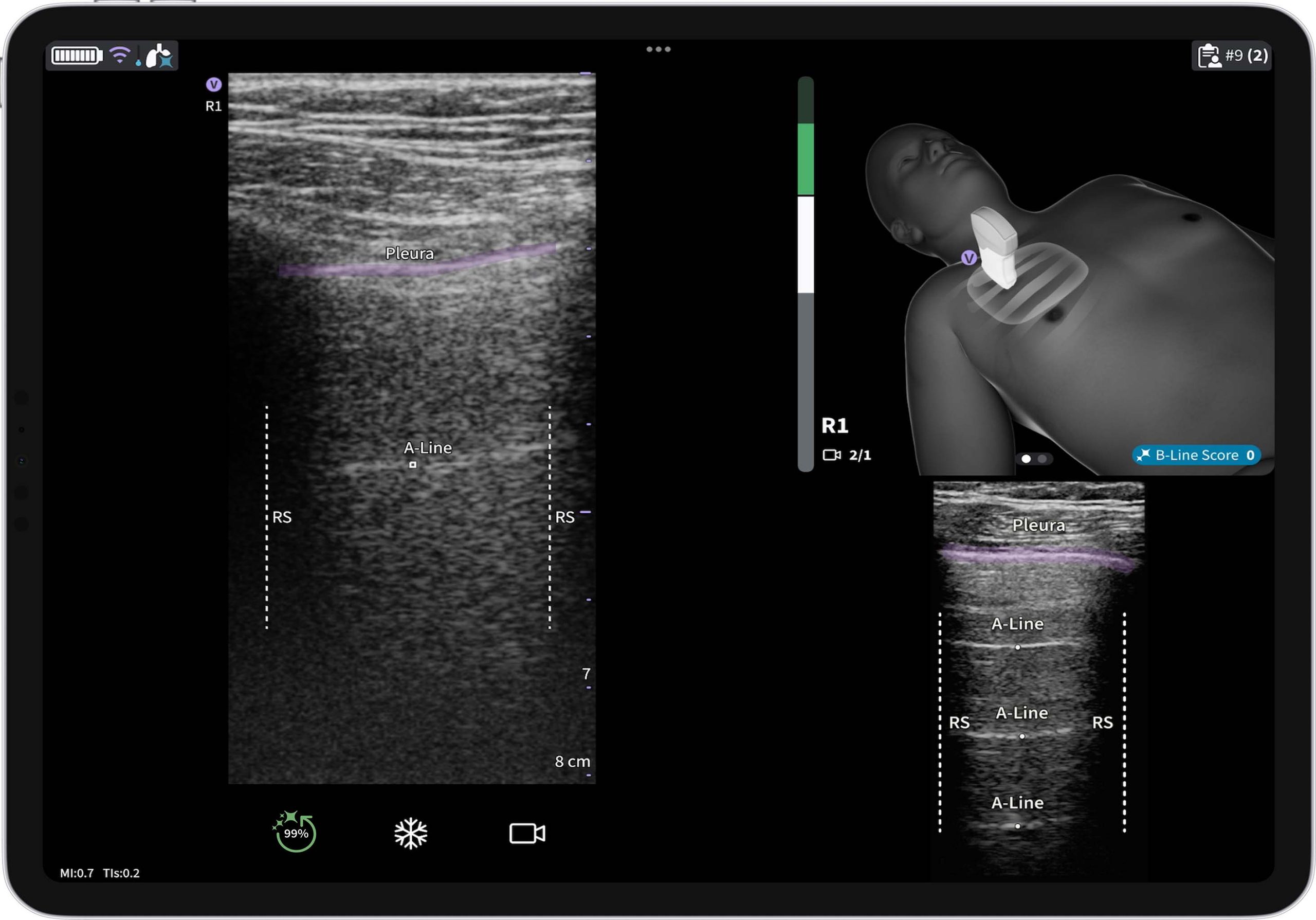
GE HealthCare Expands Vscan Air with Lung Guidance and AutoAS for Bedside Cardiopulmonary Triage
What You Should Know
The Cardiopulmonary AI Architecture
The rollout builds directly on GE HealthCare’s acquisition of Caption Health in 2023, expanding an integrated cardiopulmonary AI stack that already includes Caption AI for real-time cardiac probe guidance and Caption Interpretation Auto EF for automated ejection fraction calculation.
Operating across the standard clinical eight-zone lung examination protocol, Lung Guidance assists non-expert clinicians through real-time probe
Read More
Samsung Launches Upgraded Sleep Apnea Detection on Galaxy Ring and Watch: First FDA-Cleared Smart Ring Metric

What You Should Know
From Binary Alerts to Hourly Disruption Quantities
Samsung initially secured FDA De Novo authorization in February 2024 for the first wearable-based detection of moderate-to-severe OSA on the Galaxy Watch series. However, that first-generation iteration served primarily as a binary notification engine, simply indicating whether retrospective physiological patterns suggested risk.
The upgraded 2026 release transitions from passive alerts to structured physiological
Read More