

• Skip to main content
  • Skip to secondary menu
  • Skip to primary sidebar
  • Skip to secondary sidebar
  • Skip to footer

  • Opinion
  • Health IT
    • Behavioral Health
    • Care Coordination
    • EMR/EHR
    • Interoperability
    • Patient Engagement
    • Population Health Management
    • Revenue Cycle Management
    • Social Determinants of Health
  • Digital Health
    • AI
    • Blockchain
    • Precision Medicine
    • Telehealth
    • Wearables
  • Life Sciences
  • Investments
  • M&A
  • Value-based Care
    • Accountable Care (ACOs)
    • Medicare Advantage

JAMA Study: UPMC ‘Night Shift’ Video Game Reduces Trauma Under-Triage in Older Adults

by Fred Pennic 04/20/2026 Leave a Comment

  • LinkedIn
  • Twitter
  • Facebook
  • Email
  • Print
JAMA Study: UPMC 'Night Shift' Video Game Reduces Trauma Under-Triage in Older Adults
Nightshift Video Game

What You Should Know: 

  • Research Data: New research published in JAMA suggests that video games may be more than just entertainment—they could be a life-saving tool for emergency medicine. A study led by UPMC and the University of Pittsburgh found that emergency physicians who played a specially designed video game were significantly better at triaging severely injured older adults than those who received traditional continuing education.
  • The Trial: Published in JAMA, the study followed 800 physicians staffing non-trauma center emergency departments over a year, starting in 2024. Half completed standard continuing medical education (CME), while the other half played the game.
  • The Clinical Blindspot: Seriously injured older adults (over 65) are under-triaged in emergency departments as much as 70% of the time because their injuries present insidiously. For example, four fractured ribs in an older adult carry the same mortality risk as a liver gunshot wound in a young person.
  • The Tech Solution: To combat this, Dr. Deepika Mohan (UPMC/University of Pittsburgh) partnered with Carnegie Mellon University and Schell Games to create Night Shift, a video game designed to subconsciously rewire the ingrained decision-making behaviors (heuristics) of emergency physicians.

The Problem: The “Silent” Trauma of Aging

As the population ages, emergency departments are seeing an increasing number of patients over 65 with serious injuries. However, these patients are under-triaged as much as 70% of the time.

  • Insidious Injuries: Older adults often present with injuries that appear less severe but are clinically deadly.
  • The “Rib Fracture” Paradox: A young person shot in the liver has the same risk of death as an older person who suffers four rib fractures from a fall.
  • Heuristics: Physicians often rely on “mental shortcuts” or ingrained decision-making behaviors that can be difficult to change through standard lectures or recertification courses.

“Night Shift”: Rewiring the Physician’s Brain

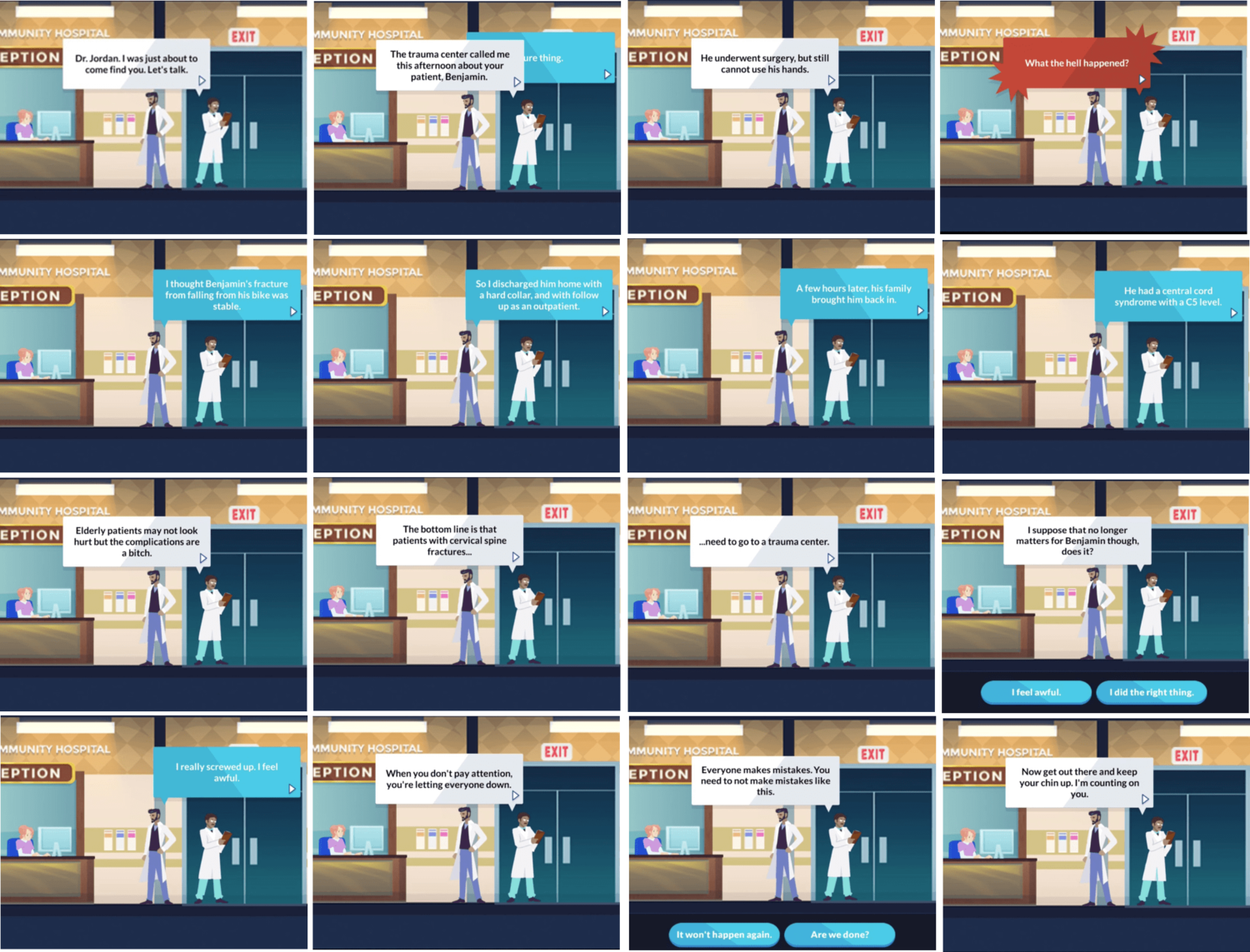
To tackle this, Dr. Deepika Mohan worked with decision scientists and Schell Games to create Night Shift. The game uses storytelling and high-stakes puzzles to help doctors subconsciously learn better triage habits.

  • Emotional Engagement: The game features a young physician in a high-stakes setting where decisions lead to immediate praise or admonishment.
  • Decision Puzzles: Players must solve clinical puzzles in under 90 seconds with limited information.
  • Subconscious Learning: By tapping into emotions, the game aims to rewire the “heuristics” that lead to under-triage.

Study Results: Game vs. Standard Education

In a year-long randomized trial involving 800 physicians at non-trauma centers:

  • Lower Under-Triage: Physicians who played the game had an under-triage rate of 49%, compared to 57% in the control group.
  • Diagnostic Accuracy: The game did not lead to “over-triaging.” Both groups transferred stable patients at the same rate, suggesting the game improved actual diagnostic ability rather than just increasing a physician’s willingness to transfer.
  • The “Dose” Effect: Adherence to guidelines was highest within 30 days of playing but faded over time. Researchers are now exploring “microdoses”—90-second weekly sessions—to maintain these behavioral changes.

The Future of Medical Recertification

Dr. Mohan views this as the beginning of a broader behavioral intervention that could span the entire spectrum of trauma care, from EMS teams to top-level trauma center clinicians. By replacing costly, time-consuming courses with engaging, evidence-based gaming, healthcare systems may finally find a way to help physicians “rediscover the joy in medicine” while measurably saving lives.

  • LinkedIn
  • Twitter
  • Facebook
  • Email
  • Print

Tagged With: Artificial Intelligence

Tap Native

Get in-depth healthcare technology analysis and commentary delivered straight to your email weekly

Reader Interactions

Primary Sidebar

Subscribe to HIT Consultant

Latest insightful articles delivered straight to your inbox weekly.

Submit a Tip or Pitch

Featured Insights

Aligning IT & Clinical Teams: How to Reduce Friction and Improve Communication

Most-Read

Oracle Lays Off 539 Kansas City Employees as Focus Shifts to AI Data Centers

Oracle Lays Off 539 Kansas City Employees as Focus Shifts to AI Data Centers

SAMHSA and ONC Invest $20M in Behavioral Health IT Initiative

HHS Reverses 2024 Tech Reorganization: Why HHS Just Stripped AI and Cyber Operations Out of the ONC

How Small Medical Practices Can Build HIPAA-Aligned DevSecOps Without Enterprise Budgets

How Small Medical Practices Can Build HIPAA-Aligned DevSecOps Without Enterprise Budgets

Insilico Medicine and Eli Lilly Form $2.75B AI Drug Discovery Collaboration

Insilico Medicine and Eli Lilly Form $2.75B AI Drug Discovery Collaboration

Microsoft Copilot Health, Integrates Apple Health, Oura, and 50,000 EHRs in New AI Push

Microsoft Launches Copilot Health, Integrates Apple Health, Oura, and 50,000 EHRs in New AI Push

Health Recovery Solutions (HRS) Acquires Rimidi for Chronic Care Management and RPM Integration

Health Recovery Solutions (HRS) Acquires Rimidi for Chronic Care Management and RPM Integration

RadNet Subsidiary DeepHealth Acquires French Radiology AI Leader Gleamer

RadNet’s $269M AI Play: DeepHealth Acquires French AI Gleamer

Walgreens Launches Virtual Weight Management Platform for Self-Pay GLP-1 Patients

Walgreens Launches Virtual Weight Management Platform for Self-Pay GLP-1 Patients

KLAS Digital Pathology 2026 Report: Top IMS, Scanner, and AI Vendors Evaluated

KLAS Digital Pathology 2026 Report: Top IMS, Scanner, and AI Vendors Evaluated

The "Platform" Squeeze: Epic Releases Native AI Charting, Putting Venture-Backed Scribes on Notice

The “Platform” Squeeze: Epic Releases Native AI Charting, Putting Venture-Backed Scribes on Notice

Secondary Sidebar

Footer

Company

  • About Us
  • 2026 Editorial Calendar
  • Advertise with Us
  • Reprints and Permissions
  • Op-Ed Submission Guidelines
  • Contact
  • Subscribe

Editorial Coverage

  • Opinion
  • Health IT
    • Care Coordination
    • EMR/EHR
    • Interoperability
    • Population Health Management
    • Revenue Cycle Management
  • Digital Health
    • Artificial Intelligence
    • Blockchain Tech
    • Precision Medicine
    • Telehealth
    • Wearables
  • Startups
  • Value-Based Care
    • Accountable Care
    • Medicare Advantage

Connect

Subscribe to HIT Consultant Media

Latest insightful articles delivered straight to your inbox weekly

Copyright © 2026. HIT Consultant Media. All Rights Reserved. Privacy Policy |