

What You Should Know
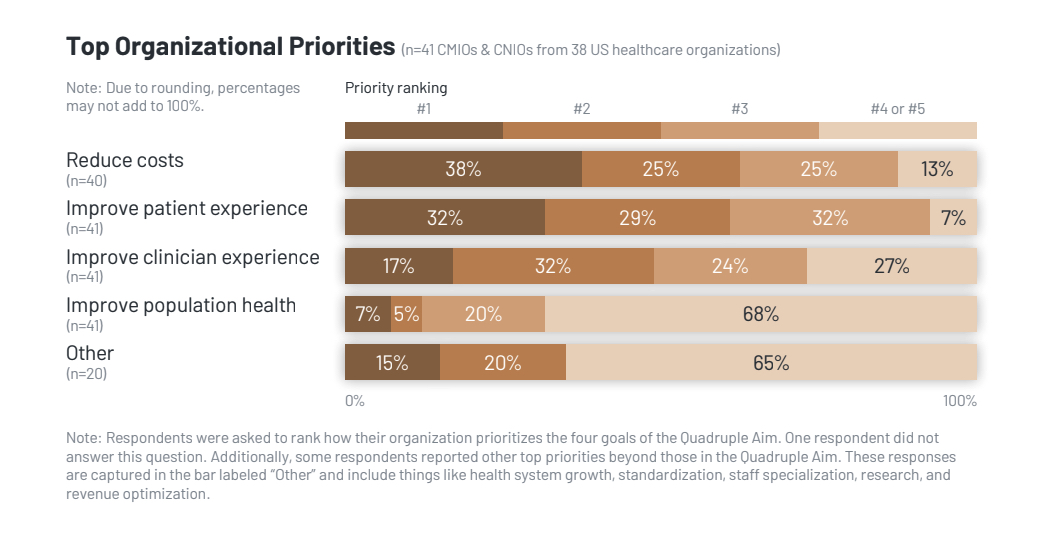
- The Core Paradox: According to a new 2026 report from the KLAS Arch Collaborative, healthcare organizations that prioritize costs above all else are experiencing the highest rates of clinician burnout.
- The Domino Effect: Neglecting clinician well-being does not save money. The report proves that ignoring burnout leads directly to interrelated issues: increased staff turnover, decreased patient experience, and ultimately, increased operational costs.
- The AI Band-Aid: Ambient speech technology has emerged as the dominant strategy to improve the clinician experience and solve pain points like documentation. However, KLAS explicitly notes that while it helps, it is not a “silver bullet” for systemic workflow issues.
- The Disconnect: Both hospital leadership (CMIOs/CNIOs) and frontline clinicians identify the exact same top pain points, but they view these challenges through entirely different lenses, complicating the implementation of solutions.
Strategic Harmony: Balancing Financial Realities with Clinician Well-Being in 2026
The KLAS Arch Collaborative has released its latest report, “CMIO & CNIO Perspectives on the Clinician Experience 2026,” providing a deep dive into how healthcare leaders are navigating the tension between operational costs and provider burnout. While the Quadruple Aim remains the gold standard, the report reveals that neglecting the “fourth pillar”—clinician well-being—often sabotages the other three goals.
The Cost of Prioritizing Cost
A central finding of the report is that organizations focusing exclusively on cost reduction see the highest rates of clinician burnout. This narrow focus creates a negative ripple effect:
- Higher Turnover: Burnout is a direct driver of increased clinician turnover, which paradoxically leads to higher long-term costs.
- Patient Impact: Deteriorating clinician well-being is closely linked to a decrease in the quality of the patient experience.
- Strategic Blind Spots: Organizations that treat well-being as a secondary goal struggle to achieve the efficiency gains they originally sought through cost-cutting.
Shared Pain, Different Lenses
The report highlights that while leadership and frontline clinicians agree on the top pain points—primarily administrative burden and EHR friction—they view these challenges through different lenses.
- Clinician View: Focuses on the immediate impact on patient care and personal exhaustion.
- Leadership View: Focuses on the systemic risks to population health management and financial sustainability.
Ambient Speech: A Tool, Not a Cure-All
Ambient speech technology has emerged as a dominant strategy for reducing documentation burden, with significant interest from systems like Houston Methodist and Atlantic Health System. However, the report cautions that it is not a “silver bullet.” While it solves specific documentation hurdles, it cannot fix underlying cultural or operational issues within an organization.
For more information about the KLAS report, visit https://klasresearch.com/archcollaborative/report/cmio-and-cnio-perspectives-on-the-clinician-experience-2026/719
