

• Skip to main content
  • Skip to secondary menu
  • Skip to primary sidebar
  • Skip to secondary sidebar
  • Skip to footer

  • Opinion
  • Health IT
    • Behavioral Health
    • Care Coordination
    • EMR/EHR
    • Interoperability
    • Patient Engagement
    • Population Health Management
    • Revenue Cycle Management
    • Social Determinants of Health
  • Digital Health
    • AI
    • Blockchain
    • Precision Medicine
    • Telehealth
    • Wearables
  • Life Sciences
  • Investments
  • M&A
  • Value-based Care
    • Accountable Care (ACOs)
    • Medicare Advantage

Wellumio Raises $7.28M to Bring MRI Scans Directly to the Bedside

by Fred Pennic 02/11/2026 Leave a Comment

  • LinkedIn
  • Twitter
  • Facebook
  • Email
  • Print
Wellumio Raises $7.28M to Bring MRI Scans Directly to the Bedside
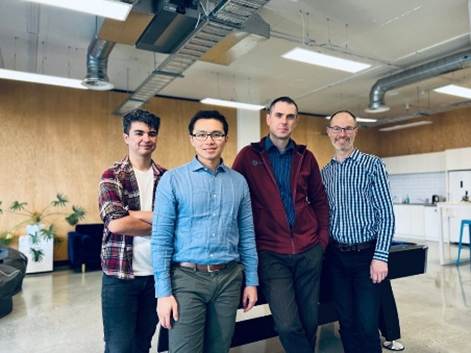
(L to R) Dion Thomas, Dr Shieak Tzeng, Dr Sergei Obruchkov, and Dr Paul Teal

What You Should Know

  • The Raise: New Zealand-based Wellumio has raised $7.28M in the first close of its pre-Series A round, led by Nuance Connected Capital, to fast-track its portable stroke detection technology. The round also included participation from Icehouse Ventures, NZ Growth Capital Partners, Pacific Channel and the New Zealand Government’s Active Investor Plus (AIP) program.
  • The Tech: The company’s flagship device, Axana, is a 50kg, battery-powered MRI scanner. Unlike traditional machines, it requires no shielded rooms, cryogenics, or contrast agents, allowing it to be used at the point of care.
  • The Mission: The device targets the “golden hour” of stroke care. Currently, fewer than 5% of patients receive treatment within this critical window; Wellumio aims to boost this by eliminating the transport and scheduling delays associated with hospital radiology suites.

Shrinking the MRI

In neurology, time is brain. For stroke victims, the difference between a full recovery and permanent disability often comes down to the “golden hour”—the first 60 minutes after symptoms appear. Yet, the bottleneck has always been physics: you cannot bring a 10-ton MRI machine to the patient; you must bring the patient to the machine.

The current standard of care for stroke diagnosis involves expensive infrastructure: shielded rooms, massive magnets, cryogenics for cooling, and specialized staff. This logistical friction is why fewer than five percent of global patients receive treatment within the optimal window.

Wellumio’s Axana disrupts this by shrinking the form factor.

  • Portability: The device weighs just 50kg (approx. 110 lbs), making it mobile enough for emergency departments and acute care settings.
  • Usability: It is battery-powered and requires no contrast agents or radiation.
  • Technology: It utilizes proprietary Pulsed Gradient Free Mapping (PGFM) technology, which secured a U.S. patent in December 2025.

According to the company, early feasibility trials have shown that Axana can identify stroke biomarkers with an accuracy comparable to conventional MRI.

“The strong support we’ve received validates both the clinical need we are addressing and the progress we’ve made,” said Dr. Shieak Tzeng, Co-founder and CEO of Wellumio.

  • LinkedIn
  • Twitter
  • Facebook
  • Email
  • Print

Tagged With: Artificial Intelligence

Tap Native

Get in-depth healthcare technology analysis and commentary delivered straight to your email weekly

Reader Interactions

Primary Sidebar

Subscribe to HIT Consultant

Latest insightful articles delivered straight to your inbox weekly.

Submit a Tip or Pitch

Featured Research Report

2026 Best in KLAS Awards: The Full List of Software & Services Winners

Most-Read

The "Platform" Squeeze: Epic Releases Native AI Charting, Putting Venture-Backed Scribes on Notice

The “Platform” Squeeze: Epic Releases Native AI Charting, Putting Venture-Backed Scribes on Notice

Analysis: Oracle Cerner’s Plans for a National EHR

Oracle May Cut 30k Jobs and Sell Cerner to Fund $156B OpenAI Deal

The $1.9B Exit: Why CommonSpirit is Insourcing Revenue Cycle and Tenet is Betting Big on Conifer AI

The $1.9B Exit: Why CommonSpirit is Insourcing Revenue Cycle and Tenet is Betting Big on Conifer AI

KLAS 2026 Rankings: Aledade and Guidehealth Named Top VBC Enablement Firms

KLAS 2026 Rankings: Aledade and Guidehealth Named Top VBC Enablement Firms

Beyond the Hype: New KLAS Data Validates the Financial and Clinical ROI of Ambient AI

Beyond the Hype: New KLAS Data Validates the Financial and Clinical ROI of Ambient AI

Anthropic Debuts ‘Claude for Healthcare’ and Opus 4.5 to Engineer the Future of Life Sciences

Anthropic Debuts ‘Claude for Healthcare’ and Opus 4.5 to Engineer the Future of Life Sciences

OpenAI Debuts ChatGPT Health: A ‘Digital Front Door’ That Connects Medical Records to Agentic AI

OpenAI Debuts ChatGPT Health: A ‘Digital Front Door’ That Connects Medical Records to Agentic AI

From Genes to Hackers: The Hidden Cybersecurity Risks in Life Sciences

From Genes to Hackers: The Hidden Cybersecurity Risks in Life Sciences

Utah Becomes First State to Approve AI System for Prescription Renewals

Utah Becomes First State to Approve AI System for Prescription Renewals

NYC Health + Hospitals to Acquire Maimonides in $2.2B Safety Net Overhaul

NYC Health + Hospitals to Acquire Maimonides in $2.2B Safety Net Overhaul

Secondary Sidebar

Footer

Company

  • About Us
  • 2026 Editorial Calendar
  • Advertise with Us
  • Reprints and Permissions
  • Op-Ed Submission Guidelines
  • Contact
  • Subscribe

Editorial Coverage

  • Opinion
  • Health IT
    • Care Coordination
    • EMR/EHR
    • Interoperability
    • Population Health Management
    • Revenue Cycle Management
  • Digital Health
    • Artificial Intelligence
    • Blockchain Tech
    • Precision Medicine
    • Telehealth
    • Wearables
  • Startups
  • Value-Based Care
    • Accountable Care
    • Medicare Advantage

Connect

Subscribe to HIT Consultant Media

Latest insightful articles delivered straight to your inbox weekly

Copyright © 2026. HIT Consultant Media. All Rights Reserved. Privacy Policy |