
• Skip to main content
  • Skip to secondary menu
  • Skip to primary sidebar
  • Skip to secondary sidebar
  • Skip to footer

  • Opinion
  • Health IT
    • Behavioral Health
    • Care Coordination
    • EMR/EHR
    • Interoperability
    • Patient Engagement
    • Population Health Management
    • Revenue Cycle Management
    • Social Determinants of Health
  • Digital Health
    • AI
    • Blockchain
    • Precision Medicine
    • Telehealth
    • Wearables
  • Life Sciences
  • Investments
  • M&A
  • Value-based Care
    • Accountable Care (ACOs)
    • Medicare Advantage

Intel, Samsung Partner on AI-Based Ultrasound Solution for Anesthesia Administration

by Fred Pennic 03/16/2021 Leave a Comment

  • LinkedIn
  • Twitter
  • Facebook
  • Email
  • Print
Intel, Samsung Partner on AI-Based Ultrasound Solution for Anesthesia Administration

What You Should Know:

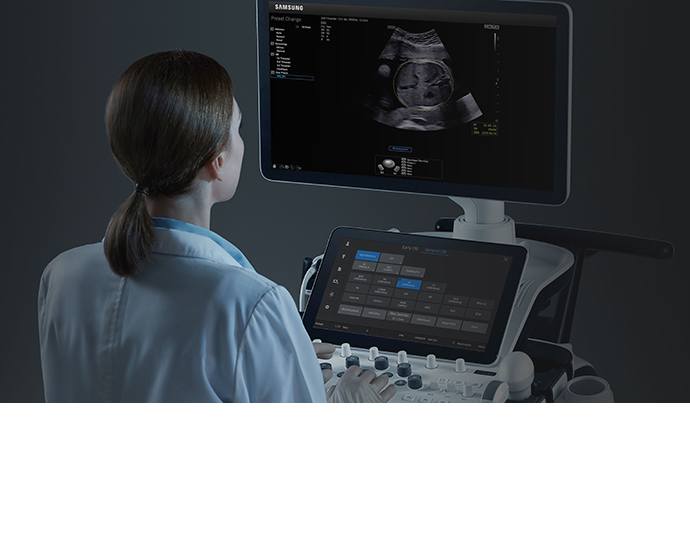
–  Samsung Medison and Intel are collaborating on NerveTrack™, a real-time nerve tracking ultrasound feature that helps anesthesiologists identify nerves in a patient’s arm to help administer anesthesia quickly and accurately. Leveraging the Intel Distribution of OpenVINO toolkit for computer vision and annotation, Samsung Medison’s NerveTrack™ can reduce scanning time by up to 30 percent in an extremely difficult case.[1]

– Ultrasound-guided regional anesthesia (UGRA) is becoming standard practice for needle-based interventions, including vascular access and peripheral nerve block. However, even with UGRA, it can be difficult for anesthesiologists to correctly identify nerves, which can be as small as 2 millimeters in diameter, or to see the needle tip properly. NerveTrack™, can automatically identify nerves in real time for anesthesiologists — reducing the possibility of complications while improving workflows.

– NerveTrack™ was developed based on Intel’s OpenVINO toolkit. It uses inference to detect and identify the location of a nerve area in real time during an ultrasound scan, improving the treatment workflow for anesthesiologists. To train Samsung’s proprietary real-time algorithm that automatically detects nerves in ultrasound images, a significant amount of clinical ultrasound data was required. And with Intel’s OpenVINO CVAT (Computer Vision Annotation Tool), the total volume of training data increased up to 7x, leading to improved accuracy of more than 20 percent.

  • LinkedIn
  • Twitter
  • Facebook
  • Email
  • Print

Tagged With: AI, intel, Samsung, Ultrasound

Tap Native

Get in-depth healthcare technology analysis and commentary delivered straight to your email weekly

Reader Interactions

Primary Sidebar

Subscribe to HIT Consultant

Latest insightful articles delivered straight to your inbox weekly.

Submit a Tip or Pitch

2026 Predictions & Trends

Healthcare 2026 Forecast: Executives on AI Survival, Financial Reckoning, and the End of Point Solutions

2026 Healthcare Executive Predictions: Why the AI “Pilot Era” Is Officially Over

Most-Read

NYC Health + Hospitals to Acquire Maimonides in $2.2B Safety Net Overhaul

NYC Health + Hospitals to Acquire Maimonides in $2.2B Safety Net Overhaul

KLAS Report: Why Hospitals Are Choosing Efficiency Over 'Agentic' AI Hype in 2025

KLAS Report: Why Hospitals Are Choosing Efficiency Over ‘Agentic’ AI Hype in 2025

Advanced Primary Care 2026: Top 6 Investments for Health Systems According to Harvard Medical School

Advanced Primary Care 2026: Top 6 Investments for Health Systems According to Harvard Medical School

AI Nutrition Labels: The Key to Provider Adoption and Patient Trust?

AI Nutrition Labels: The Key to Provider Adoption and Patient Trust?

Kristen Hartsell, VP of Clinical Services, RedSail Technologies

The Pharmacy Closures Crisis: How Independent Pharmacies Are Fixing Pharmacy Deserts

HHS Launches 'OneHHS' AI Strategy to Integrate AI Across CDC, CMS, and FDA for Efficiency and Public Trust

HHS Launches ‘OneHHS’ AI Strategy to Integrate AI Across CDC, CMS, and FDA for Efficiency and Public Trust

From Overwhelmed to Optimized: How AI Agents Address Staffing Challenges and Burnout in Healthcare

From Overwhelmed to Optimized: How AI Agents Address Staffing Challenges and Burnout in Healthcare

The VBC Paradox: Why Hospitals Are Doubling Down on Value-Based Care While Revenue at Risk Lags

The VBC Paradox: Why Hospitals Are Doubling Down on Value-Based Care While Revenue at Risk Lags

Tebra Secures $250M to Challenge Legacy EHRs with AI-Powered Automation

Tebra Secures $250M to Challenge Legacy EHRs with AI-Powered Automation

AstraZeneca Selects Salesforce Agentforce Life Sciences to Deploy AI-Powered Global Customer Engagement

AstraZeneca Selects Salesforce Agentforce Life Sciences to Deploy AI-Powered Global Customer Engagement

Secondary Sidebar

Footer

Company

  • About Us
  • Advertise with Us
  • Reprints and Permissions
  • Op-Ed Submission Guidelines
  • Contact
  • Subscribe

Editorial Coverage

  • Opinion
  • Health IT
    • Care Coordination
    • EMR/EHR
    • Interoperability
    • Population Health Management
    • Revenue Cycle Management
  • Digital Health
    • Artificial Intelligence
    • Blockchain Tech
    • Precision Medicine
    • Telehealth
    • Wearables
  • Startups
  • Value-Based Care
    • Accountable Care
    • Medicare Advantage

Connect

Subscribe to HIT Consultant Media

Latest insightful articles delivered straight to your inbox weekly

Copyright © 2026. HIT Consultant Media. All Rights Reserved. Privacy Policy |