
• Skip to main content
  • Skip to secondary menu
  • Skip to primary sidebar
  • Skip to secondary sidebar
  • Skip to footer

  • Opinion
  • Health IT
    • Behavioral Health
    • Care Coordination
    • EMR/EHR
    • Interoperability
    • Patient Engagement
    • Population Health Management
    • Revenue Cycle Management
    • Social Determinants of Health
  • Digital Health
    • AI
    • Blockchain
    • Precision Medicine
    • Telehealth
    • Wearables
  • Life Sciences
  • Investments
  • M&A
  • Value-based Care
    • Accountable Care (ACOs)
    • Medicare Advantage

Babyscripts Lowers Prenatal In-Person Visits During COVID-19 Outbreak

by Jasmine Pennic 03/24/2020 Leave a Comment

  • LinkedIn
  • Twitter
  • Facebook
  • Email
  • Print
Babyscripts Inks $500k Strategic Partnership with Inova Health

What You Should Know:

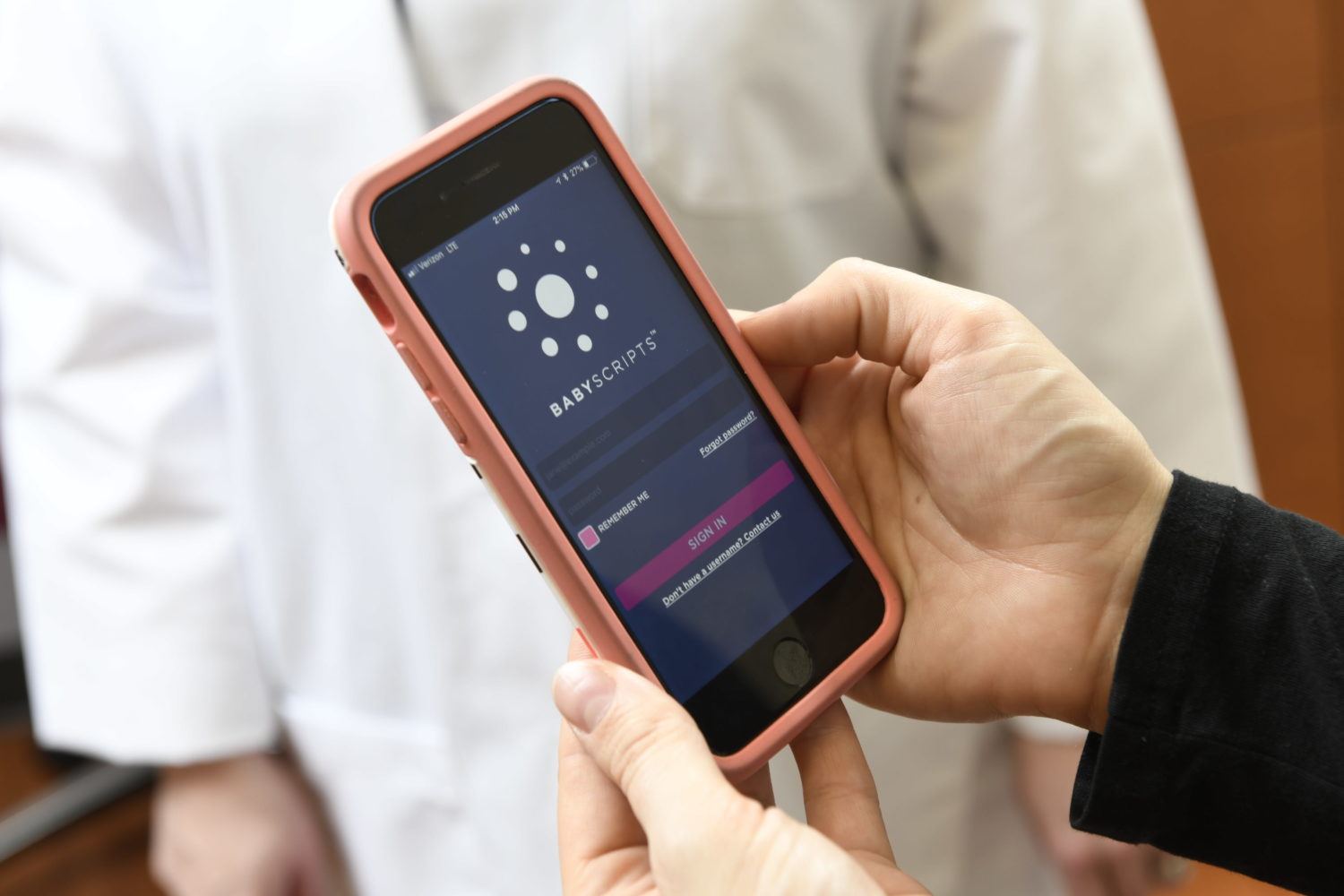
– Babyscripts, a virtual care platform for obstetrics is helping to lower the amount of prenatal in-person visits to 4-6 appointments during the COVID-19 outbreak due to increased demand.

– The standard amount of in-person prenatal care visits is 12-14. With the help of mobile health and their remote patient monitoring platform, which connects patients directly with their providers, Babyscripts is safely transitioning prenatal care outside the clinic. 


As providers are increasingly turning to virtual care solutions to monitor their patients amid the COVID-19 outbreak, Babyscripts, the leading virtual care platform for obstetrics, announced it is dramatically reducing in-person prenatal visit schedules for low-risk patients to 4-6 appointments through term (37 weeks), then weekly thereafter, with slightly modified schedules for high-risk patients. The standard amount of in-person prenatal care visits is 12-14. With the help of mobile health and their remote patient monitoring platform, Babyscripts is safely transitioning prenatal care outside the clinic. 

As more states release shelter-in-place advisories and tighten social distancing guidelines due to the coronavirus outbreak, Babyscripts has responded to increased demand from new and existing customers to further enable providers to decrease in-person visits while remaining connected to their patients and delivering the same level of care. 

“Our providers have seen the benefits of virtual care and we’re stepping up to help them make the transition faster,” said Juan Pablo Segura, President of Babyscripts. “We are bringing five years of experience and a wealth of clinical data to the table, and our customers are leaning on that knowledge to change their protocols to be the most responsive possible.”

Leveraging Remote Patient Monitoring in COVID-19 Outbreak

In concert with remote patient monitoring (RPM), providers deliver the same testing typically available during in-office prenatal visits and rely on RPM to track compliance to weekly measurements and identify elevated risk. Through Babyscripts myJourney, a mobile app, patients are kept abreast of the most up-to-date information available, including symptoms to look for; risk-management information around social distancing and limiting exposure; changing policies around visitation, water-births, doulas, et al.; health system-specific information on initiatives like drive-through testing and virtual visits; and local information like the library and food bank closures that affect life outside of healthcare. These resources have seen engagement rates between 80-100%, reinforcing the value that pregnant mothers place on trusted provider information in real-time. 

Telehealth and RPM Reimbursements Available for Providers Implementing Virtual Care

Further fueling adoption, telehealth and RPM reimbursements are now available for providers to implement these revised prenatal visit schedules with technology, as both public and private health insurers have taken steps to increase access due to concern over the spread of COVID-19. 

Two codes that Babyscripts highlights for their customers are:
99453 – Initial set-up and patient education on the use of monitoring equipment
99454 – Initial collection, transmission, and report/summary services to the clinician managing the patient.
*Providers are recommended to directly contact payers to confirm coverage of the above two codes as it relates to working with Babyscripts.

As new developments around COVID-19 present themselves, Babyscripts will continue to work directly with providers to establish protocols, disseminate information, and deliver the most up-to-date solutions to mothers and babies. 

  • LinkedIn
  • Twitter
  • Facebook
  • Email
  • Print

Tagged With: Babyscripts, Coronavirus (COVID-19), mobile health, obstetrics, Patient Education, Patient Monitoring, Payers, remote patient monitoring, risk, Virtual Care, Virtual Care Platform, Virtual Visits

Tap Native

Get in-depth healthcare technology analysis and commentary delivered straight to your email weekly

Reader Interactions

Primary Sidebar

Subscribe to HIT Consultant

Latest insightful articles delivered straight to your inbox weekly.

Submit a Tip or Pitch

2026 Predictions & Trends

Healthcare 2026 Forecast: Executives on AI Survival, Financial Reckoning, and the End of Point Solutions

2026 Healthcare Executive Predictions: Why the AI “Pilot Era” Is Officially Over

Most-Read

KLAS Report: Why Hospitals Are Choosing Efficiency Over 'Agentic' AI Hype in 2025

KLAS Report: Why Hospitals Are Choosing Efficiency Over ‘Agentic’ AI Hype in 2025

Advanced Primary Care 2026: Top 6 Investments for Health Systems According to Harvard Medical School

Advanced Primary Care 2026: Top 6 Investments for Health Systems According to Harvard Medical School

AI Nutrition Labels: The Key to Provider Adoption and Patient Trust?

AI Nutrition Labels: The Key to Provider Adoption and Patient Trust?

Kristen Hartsell, VP of Clinical Services, RedSail Technologies

The Pharmacy Closures Crisis: How Independent Pharmacies Are Fixing Pharmacy Deserts

HHS Launches 'OneHHS' AI Strategy to Integrate AI Across CDC, CMS, and FDA for Efficiency and Public Trust

HHS Launches ‘OneHHS’ AI Strategy to Integrate AI Across CDC, CMS, and FDA for Efficiency and Public Trust

From Overwhelmed to Optimized: How AI Agents Address Staffing Challenges and Burnout in Healthcare

From Overwhelmed to Optimized: How AI Agents Address Staffing Challenges and Burnout in Healthcare

The VBC Paradox: Why Hospitals Are Doubling Down on Value-Based Care While Revenue at Risk Lags

The VBC Paradox: Why Hospitals Are Doubling Down on Value-Based Care While Revenue at Risk Lags

Tebra Secures $250M to Challenge Legacy EHRs with AI-Powered Automation

Tebra Secures $250M to Challenge Legacy EHRs with AI-Powered Automation

AstraZeneca Selects Salesforce Agentforce Life Sciences to Deploy AI-Powered Global Customer Engagement

AstraZeneca Selects Salesforce Agentforce Life Sciences to Deploy AI-Powered Global Customer Engagement

Aidoc Partners with NVIDIA MONAI to Scale Open-Source Clinical AI

Aidoc Partners with NVIDIA MONAI to Scale Open-Source Clinical AI

Secondary Sidebar

Footer

Company

  • About Us
  • Advertise with Us
  • Reprints and Permissions
  • Op-Ed Submission Guidelines
  • Contact
  • Subscribe

Editorial Coverage

  • Opinion
  • Health IT
    • Care Coordination
    • EMR/EHR
    • Interoperability
    • Population Health Management
    • Revenue Cycle Management
  • Digital Health
    • Artificial Intelligence
    • Blockchain Tech
    • Precision Medicine
    • Telehealth
    • Wearables
  • Startups
  • Value-Based Care
    • Accountable Care
    • Medicare Advantage

Connect

Subscribe to HIT Consultant Media

Latest insightful articles delivered straight to your inbox weekly

Copyright © 2025. HIT Consultant Media. All Rights Reserved. Privacy Policy |