
What You Should Know
Virtual Cancer Patients: Merging Tumor Organoids with Clinical AI
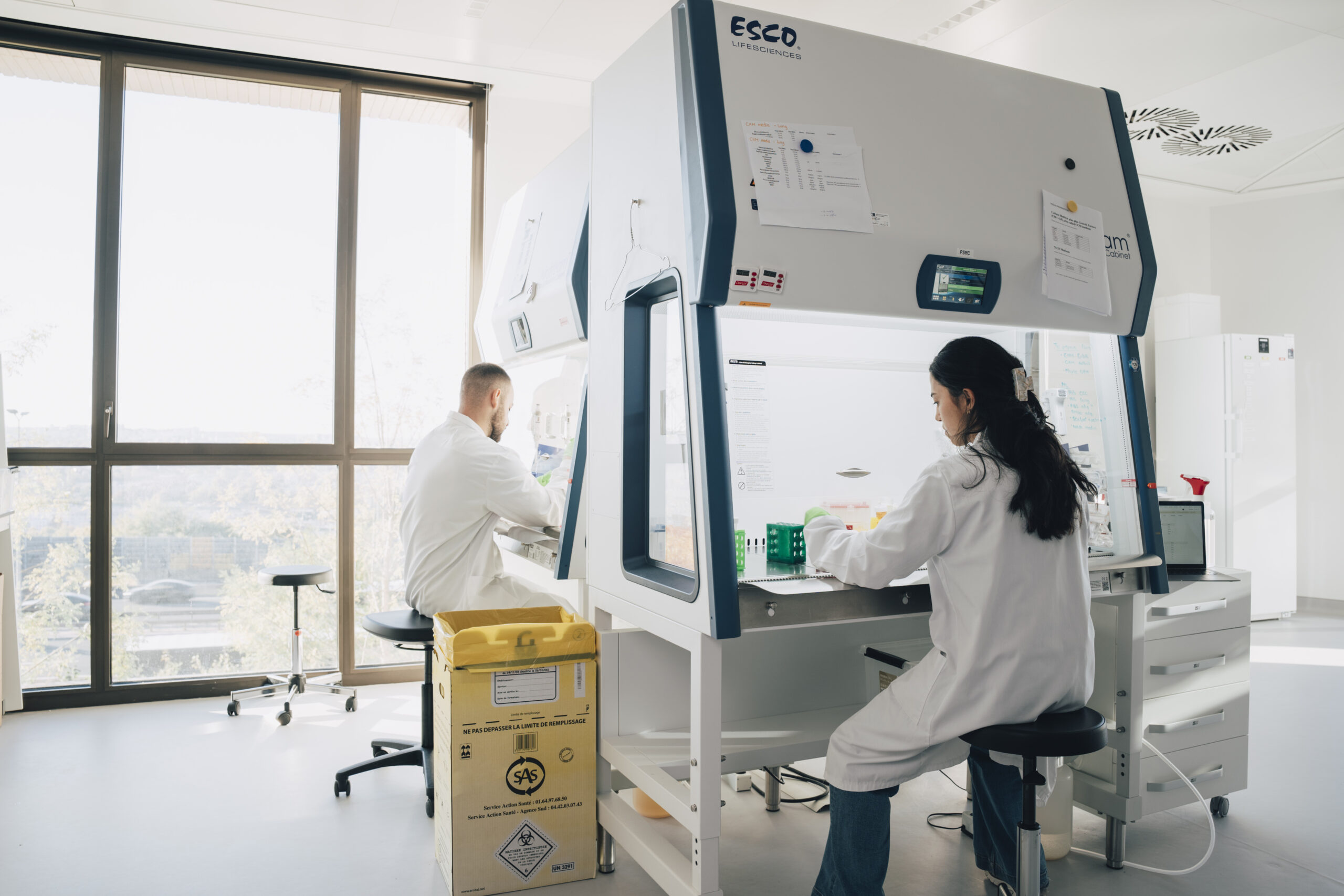
Founded in 2023 as a spin-out of the Gustave Roussy cancer campus in France, Orakl bridges wet-lab experimental biology and machine learning by constructing cohorts of virtual cancer patients. Rather than training algorithms exclusively on static, retrospective genomic databases, the company cultures real patients' tumors in the laboratory as three-dimensional organoids, pairing experimental
Read More
Life Sciences | News, Analysis, Insights - HIT Consultant
Redesigning Pharma Adherence Around Patient Behavioral Signals and AI-Native MCP Rails

AI’s biggest contribution to adherence can be a new model: reading the signals patients leave before they stop, and responding with support built for that moment, but only if pharma decides who it wants to be to that patient.
In 2003, the World Health Organization reported that adherence to long-term therapy in developed countries averages about 50%. Since then, the industry has taken on that number in waves: first as a compliance problem, then as a cost problem, then as an infrastructure
Read More
PhaSER Biomedical Secures $2.7M Gates Foundation Grant to Scale 8HUM Preclinical Models and HERALD AI
What You Should Know
The 8HUM Platform: Replacing Murine Blind Spots with Human Metabolic Ground Truth
Founded in October 2022 to commercialize transgenic technology developed through a collaboration between Professor Roland Wolf at the University of Dundee, CXR Biosciences, Taconic Farms, and Scottish Enterprise, PhaSER Biomedical re-engineers preclinical candidate validation:
Professor Roland Wolf, Founder of PhaSER Biomedical, outlined the translational impact: "We are really
Read More
How Real-World Data (RWD) Is the Turning Point for Pharma Innovation
The pharma industry is accustomed to operating in a highly regulated and risk-conscious environment. While companies continue to invest in scientific innovation, they have been slower to adopt technology.
Long cycle times and uncertainty around new platforms have made organizations hesitant to disrupt entrenched workflows. That hesitation has led to many leaders falling into a “watch and wait mentality,” missed opportunities to lower costs, shorten timelines and deliver new treatments
Read More
Roche Partners with Chai Discovery to Deploy Chai-3 Across Global Therapeutic Pipelines

What You Should Know
The Generative Architecture of Chai-3
Founded in 2024 by Joshua Meier, Jack Dent, Matthew McPartlon, and Jacques Boitreaud—with founding team experience spanning OpenAI, Meta Fundamental AI Research (FAIR), Stripe, and academic molecular design—Chai Discovery positions its technology stack as a modern computer-aided design (CAD) suite for biological therapeutics.
Rather than merely predicting static folded conformations from existing primary sequences, Chai’s
Read More
Advancing Clinical Trials Through Digital Health Technology

Decentralized and hybrid trials continue to grow in popularity, making it essential for contract research organizations (CROs) to seamlessly integrate remote wearable technologies into trial operations. Traditional, site-based trials often miss meaningful changes between participant visits, so remote wearable devices are appealing because they improve study quality through continuous, real-world data collection. One study showed that a 14-day adhesive ECG patch detected arrhythmias in 59.5% of
Read More
Why Regulatory Flexibility Demands Decision-Ready Clinical Evidence

Regulatory guidance plays a critical role in clinical trial development, but it cannot anticipate every question that may emerge during the development of a program. When guidance is absent, outdated or inconsistent across authorities, sponsors have legitimate room to exercise judgment. However, that flexibility should be approached as conditional rather than permissive. Flexibility in a program’s design does not change the level of scrutiny that regulators will apply to the evidence sponsors
Read More
The Next Competitive Advantage in Drug Development Won’t Be a Better Molecule. It’ll Be Better Patient Selection.
For decades, the industry has organized itself around a single question: how do we discover more, and better, drug candidates? Target identification keeps getting smarter, molecule generation keeps getting faster, and AI has now touched nearly every stage of early discovery. Yet a molecule is only ever as good as the patients it happens to be tested on, and that half of the equation has received a fraction of the innovation investment.
Consider what happened across non-small cell lung cancer
Read More
Pharma’s Billion-Dollar AI Bets May Be Chasing the Wrong Advantage

2026 will be remembered as the year pharma went all in on AI.
Since January, nearly every major pharmaceutical company has announced some version of the same thing. GSK signed a five-year foundation-model deal with Noetik. Eli Lilly built a co-innovation lab with NVIDIA. Merck committed a billion dollars to Google Cloud. This month, Novo Nordisk named Amazon Web Services its preferred AI partner. The dollar figures are staggering. And the messaging has been almost identical across all of
Read More
Clinical Trial Site Selection and AI: Look-Alike Modeling Across Real-World Data and Care Delivery Signals

Site selection and enrollment failures are persistent challenges for life sciences organizations. A Tufts Center for the Study of Drug Development analysis of nearly 16,000 investigative sites across 151 Phase II and III global trials found that nearly half of all selected sites either failed to enroll a patient or under-enrolled.1 Site-selection decisions commonly draw on historical performance indicators like prior trial participation and past enrollment, typically favoring sites with an
Read More