
What You Should Know
- Shyld AI has closed a $13.4M seed round led by Aulis Capital, marking one of the largest early-stage rounds in the healthcare AI sector.
- The company is moving beyond “passive” ambient AI to Active Intelligence, deploying Agentic AI systems that take real-time action inside physical hospital environments.
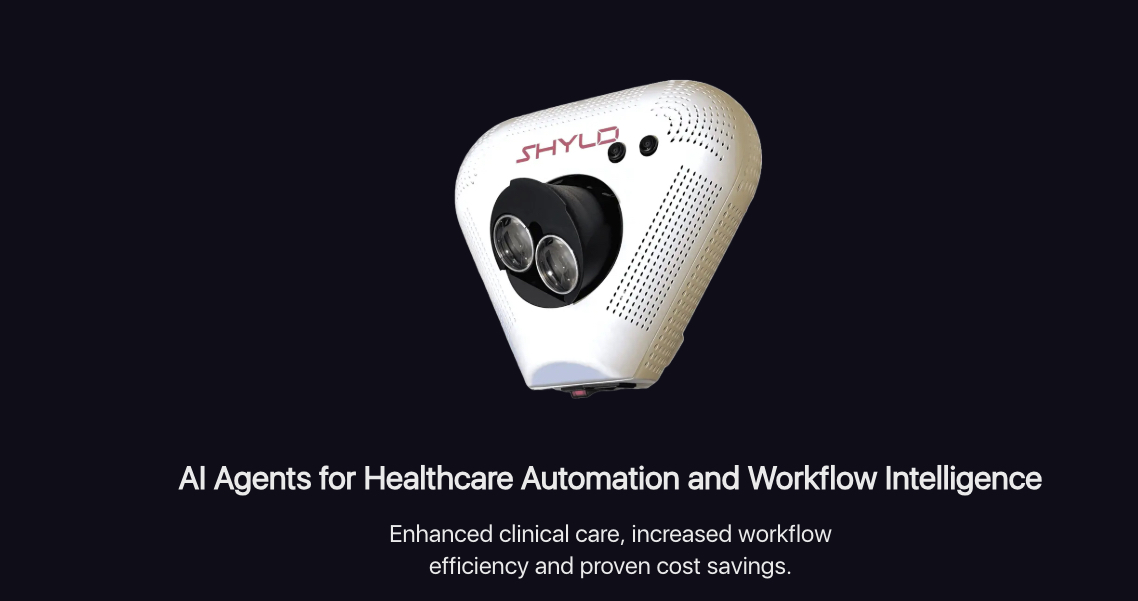
- Flagship Technology: The system combines AI with UV-C light technology to autonomously disinfect rooms; a Stanford University study found it reduced contamination by more than 93%.
- Operating Room Impact: Shyld agents interpret case progression and staff movement in real time to optimize turnover phases, identify missing supplies, and reduce surgical delays.
- Edge-Native Architecture: Capabilities are powered by VERTEX, a proprietary foundation model that runs directly on edge devices to preserve privacy and eliminate reliance on hospital IT infrastructure.
The current healthcare AI landscape is largely dominated by ambient and passive systems. Shyld AI is challenging this status quo by introducing a new category of Agentic AI designed to execute critical operational tasks autonomously. By interpreting physical environments in real time, the platform aims to reduce the administrative and physical burden on clinical and environmental services teams.
CEO Mohammad Noshad noted that the mission is to provide technology that “understands how hospitals actually operate” and improves workflows without adding additional workload for staff.
VERTEX: The Edge-Native Intelligence Layer
At the core of Shyld AI’s performance is VERTEX, a proprietary foundation model specifically designed for real-time physical environments.
- Latency-Free Reasoning: Unlike cloud-dependent models, VERTEX runs directly on-site, allowing for continuous perception and action without lag.
- Privacy-First: By processing data on edge-native devices within the room, the system minimizes data exposure and preserves patient and staff privacy.
- Infrastructure Independence: The edge-first architecture ensures the system remains operational even during hospital IT disruptions, providing reliable performance at the point of care.
Targeted Impact: Infections and OR Efficiency
Shyld AI is targeting two of the most significant pain points in modern hospital management: healthcare-associated infections (HAIs) and surgical throughput.
- Clinical Safety: CDC data indicates HAIs contribute to approximately 72,000 hospital deaths annually. Shyld’s autonomous UV-C disinfection system provides a data-backed solution to this crisis.
- Operational Velocity: In the operating room, the agents track turnover phases and delay drivers. This allows hospitals to optimize disinfection timing and catch supply gaps before procedures begin, protecting surgical schedules from costly disruptions.
Strategic Expansion into Industrial Environments
With the new funding, Shyld AI plans to expand beyond general hospital operations. The company is eyeing additional high-stakes environments, including pharmaceutical manufacturing and regulated cleanrooms, where real-time “Active AI” can ensure strict compliance and safety standards are met autonomously.
Skip Fleshman, Partner at Aulis Capital, highlighted the “rare velocity” of Shyld’s adoption, attributing it to the fundamental shift from ambient observation to active physical intelligence.
