
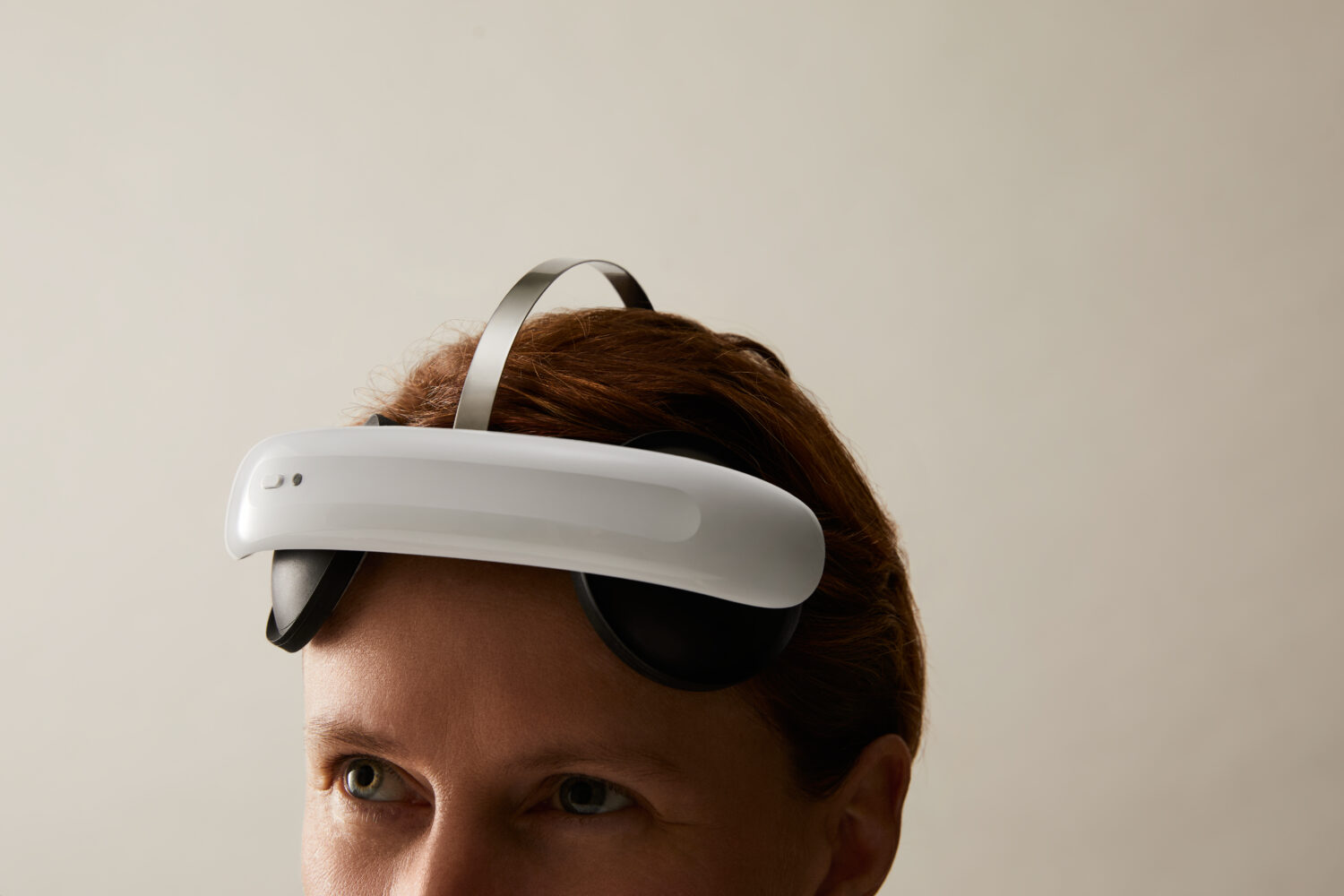
What You Should Know
- Swedish neurotechnology company Flow Neuroscience officially launched FL-100 across the United States, introducing the first FDA-approved at-home transcranial direct current stimulation (tDCS) treatment for depression to the American market.
- Backed by formal premarket approval (FDA PMA P230024), the prescription-only medical device is indicated for adults (18+) with moderate to severe major depressive disorder (MDD) in the current episode who are not treatment-refractory, available as a standalone monotherapy or alongside existing medication.
- Combines the wireless FL-100 stimulation headset with an interactive companion app to deliver low-intensity electrical currents (0.5 to 2.0 mA) targeting the left dorsolateral prefrontal cortex (DLPFC) to restore hypoactive mood regulation circuits.
- Grounded in pivotal phase 2 trial results published in Nature Medicine (Woodham et al., 2024), which demonstrated a 57% remission rate (MADRS ≤12) at 10 weeks and rapid symptom improvement within the first three weeks.
FDA-Approved FL-100 At-Home tDCS Depression Treatment in the US
To bring brain stimulation directly into patients’ living rooms, Swedish medical technology company Flow Neuroscience has officially launched FL-100 across the United States, introducing the first FDA-approved at-home transcranial direct current stimulation (tDCS) device for depression to the U.S. market.
The prescription-only system received Premarket Approval (PMA P230024) and is cleared for adults aged 18 and older experiencing a current episode of moderate to severe major depressive disorder (MDD) who are not considered treatment-refractory to medication. It is approved for use either as a standalone monotherapy or as an adjunctive treatment alongside standard antidepressants and psychotherapy.
Delivering Targeted Neuromodulation at Home
The FL-100 system combines a lightweight, wireless headset with a mobile companion app that acts as an interactive digital controller.
The hardware delivers low-intensity direct electrical current to the left dorsolateral prefrontal cortex (DLPFC)—a cortical region critical for mood and emotional processing that is frequently hypoactive in individuals with depression.
The therapy operates on a structured, clinician-monitored protocol:
- Acute Phase: 15 sessions delivered over the first three weeks (five 30-minute sessions per week).
- Continuation Phase: Three maintenance sessions per week thereafter.
- Integrated Safety & Adherence: The companion software controls stimulation timing, prevents over-use, logs symptom progression, and feeds compliance data directly back to the prescribing physician.
Pivotal Clinical Trial & International Adoption
The FDA approval was supported by data from the EMPOWER trial, a 10-week, double-blind, sham-controlled study published in Nature Medicine. In the trial:
- 57% of patients in the active tDCS arm achieved clinical remission (defined as a Montgomery-Åsberg Depression Rating Scale [MADRS] score of 12 or lower) at 10 weeks.
- Active stimulation delivered two- to three-fold higher response and remission rates compared to sham controls, with adverse events limited largely to transient, localized skin redness and mild tingling at the electrode contact points.
The U.S. rollout builds on broad international adoption. The platform has been used by more than 65,000 individuals globally across the UK, Europe, and Australia, with over 1,200 healthcare professionals prescribing the system. In the UK, Flow has been integrated into routine mental health services across multiple National Health Service (NHS) trusts.
Prescription Pathways and Clinical Training
To support the commercial rollout, Flow Neuroscience is establishing dedicated prescribing channels for psychiatrists, primary care physicians, and psychiatric nurse practitioners.
Patients can be evaluated in-person or remotely via Flow Care, an affiliated telemedicine pathway staffed by independent licensed clinicians. The company is also rolling out provider training modules to help clinicians interpret remote adherence data and integrate tDCS telemetry into ongoing medical management.
“FDA approval was a major scientific and regulatory milestone for Flow, but making the treatment available to patients is the moment that really matters,” said Daniel Månsson, CEO and co-founder of Flow Neuroscience. “For the first time in the US, clinicians can prescribe an FDA-approved tDCS treatment for depression that patients can use in their own homes. It gives patients and clinicians another evidence-based option and a fundamentally different way of approaching depression treatment.
