
What You Should Know
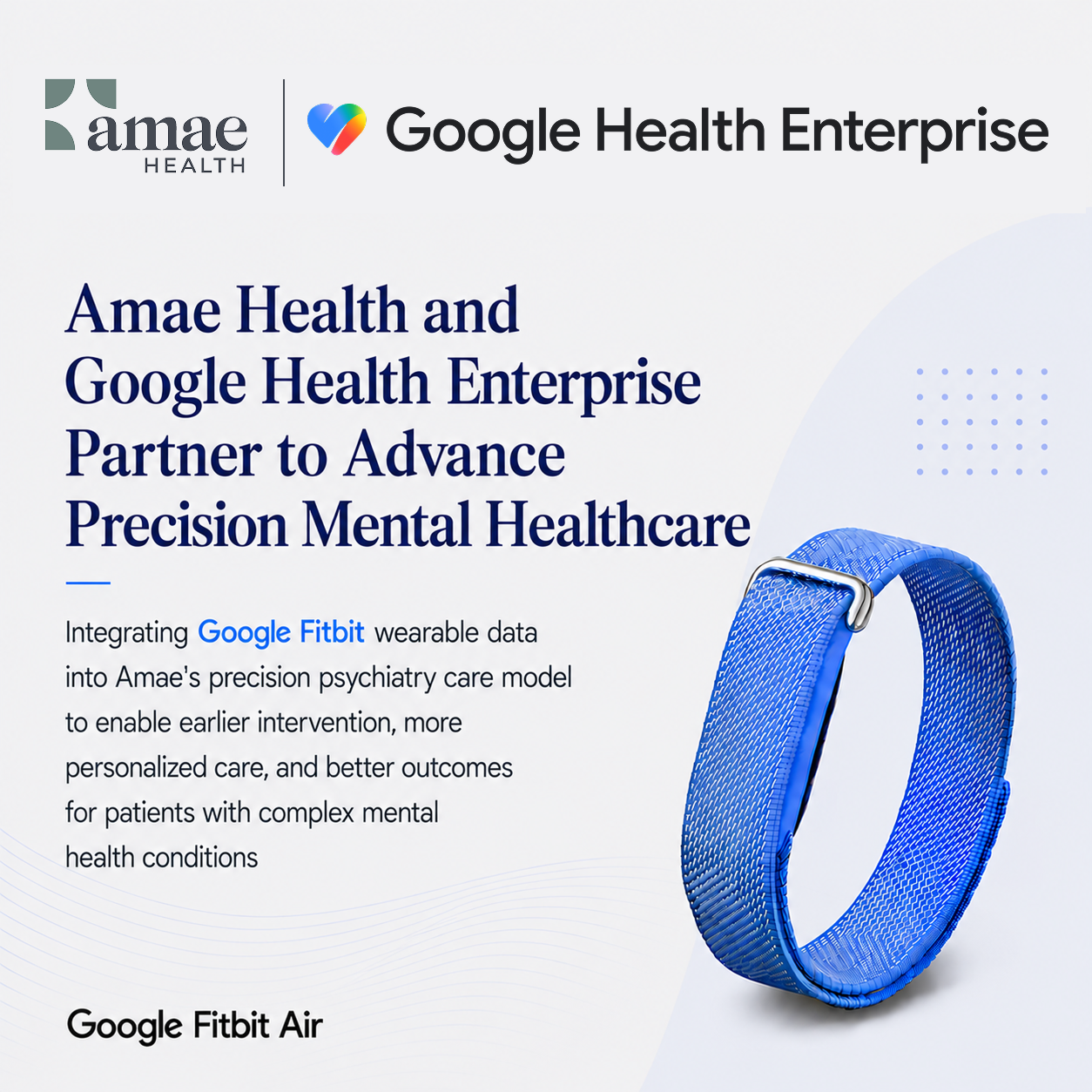
- Amae Health announced a strategic collaboration with Google Health Enterprise to integrate continuous, wearable-derived behavioral metrics into its precision psychiatry model.
- The collaboration feeds wearable data from Google Health apps and Fitbit devices directly into Amae’s multidisciplinary care team workflows to track physiological and behavioral markers.
- Measured parameters include heart rate variability (HRV), sleep architectures, physical activity, and daily routine shifts to detect clinical decline in severe mental illness (SMI) prior to relapse.
- Building on clinical partnerships with Cedars-Sinai, Mass General Brigham, and NewYork-Presbyterian, Amae is developing a mental health composite score—analogous to cardiac risk scoring in cardiology.
- Target conditions include complex psychiatric diagnoses such as schizophrenia, bipolar disorder, major depressive disorder (MDD), and severe personality disorders.
Beyond Episodic Psychiatry: Amae Health and Google Health Enterprise Partner on Wearable Precision Medicine
Amae Health and Google Health Enterprise have partnered to integrate wearable physiological tracking into precision psychiatry, targeting severe mental illnesses like schizophrenia, bipolar disorder, and major depressive disorder.
For decades, psychiatric care has relied on periodic office visits and self-reported symptoms. Because clinical decline often occurs quietly between appointments, care teams frequently miss early warning signs, leading to avoidable emergency room visits, acute hospitalizations, and prolonged relapses.
The new collaboration feeds continuous behavioral data from Google Health software and Fitbit devices—including sleep disruption, physical activity, heart rate variability, and circadian rhythm shifts—directly into Amae’s clinical workflow engines. By streaming real-time alerts to psychiatrists, therapists, and primary care providers, the system enables care teams to spot signs of decompensation days or weeks before a crisis occurs.
The initiative builds on Amae’s existing clinical network, which includes partnerships with academic medical centers such as Cedars-Sinai, Mass General Brigham, and NewYork-Presbyterian. Looking ahead, the two organizations are developing a standardized composite risk score that combines wearable telemetry with EEG data, voice analysis, and medication response metrics to create an objective measurement model similar to cardiovascular risk scores.
“Our partnership with Google Health Enterprise reflects a fundamental shift in how we understand and measure severe mental illness,” said Dr. Scott Fears, Chief Medical Officer at Amae Health. “Unlike other areas of medicine, psychiatry has historically lacked objective tools for measuring disease progression and treatment response. By integrating wearable-derived behavioral signals into our care model, we are capturing measurable patterns of illness in real-world settings.”
