
• Skip to main content
  • Skip to secondary menu
  • Skip to primary sidebar
  • Skip to secondary sidebar
  • Skip to footer

  • Opinion
  • Health IT
    • Behavioral Health
    • Care Coordination
    • EMR/EHR
    • Interoperability
    • Patient Engagement
    • Population Health Management
    • Revenue Cycle Management
    • Social Determinants of Health
  • Digital Health
    • AI
    • Blockchain
    • Precision Medicine
    • Telehealth
    • Wearables
  • Life Sciences
  • Investments
  • M&A
  • Value-based Care
    • Accountable Care (ACOs)
    • Medicare Advantage

The “Digital Front Door” or a Revolving Door? Why Nurse-Led Access is 2026’s Critical Efficiency Lever

by Fred Pennic 01/20/2026 Leave a Comment

  • LinkedIn
  • Twitter
  • Facebook
  • Email
  • Print
The "Digital Front Door" or a Revolving Door? Why Nurse-Led Access is 2026’s Critical Efficiency Lever

What You Should Know

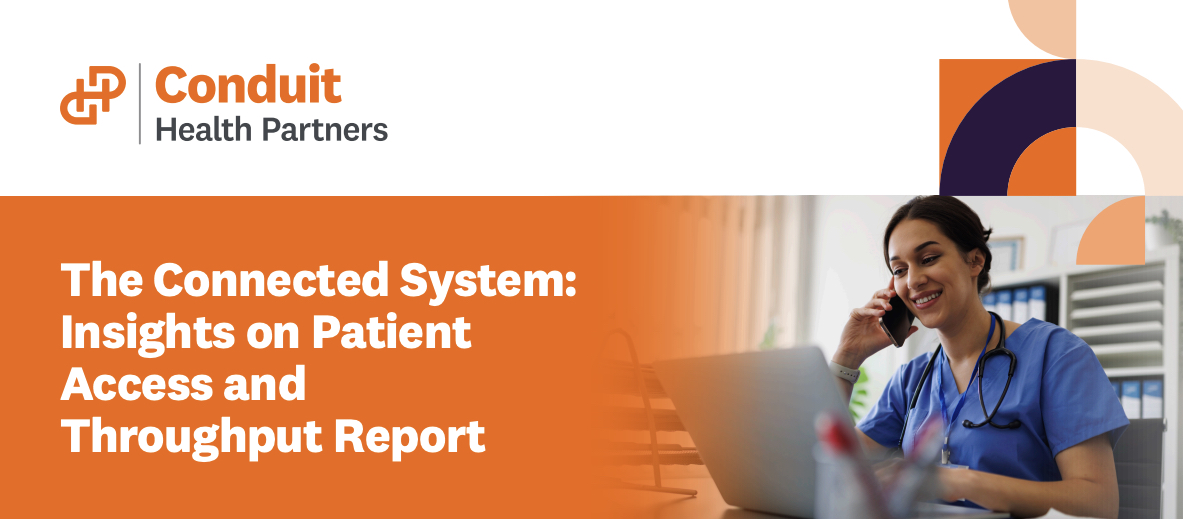
– A new national report from Conduit Health Partners reveals that 74% of patient triage cases are resolved without an ER visit when clinical expertise is placed at the first point of contact. 

– The  report, “The Connected System: Insights on Patient Access and Throughput,” finds that aligning nurse-led triage with centralized transfer centers can drive a 3:1 return on investment by protecting hospital capacity and reducing the “firefighting” of downstream congestion.

– Drawing on operational data and a survey of 64 triage and transfer nurses, the report highlights that when access fails, the effects ripple through the entire system, leading to worsened outcomes and avoidable ER strain.

The Data: Triage as a Shield for Capacity

Access is the first test of a health system’s performance. When patients can’t reach clinical expertise early, they often default to the emergency department, even for non-emergent needs.

  • ER Diversion: 74% of nurse-led triage cases are resolved without an ER visit.
  • Predictable Surges: Demand is not random. Peak demand for after-hours support consistently occurs around 5 p.m. and on Saturdays, with over 60% of nurses seeing significant volume spikes during flu season.
  • Self-Care Guidance: Between 60% and 80% of nurses report successfully managing minor respiratory symptoms, medication refills, and chronic disease follow-up via phone, preventing unnecessary escalations.

Throughput: Movement is More Than Bed Management

Once a patient enters the system, the challenge shifts to movement. The report defines three critical transfer types—inbound, outbound, and internal—each requiring distinct clinical and operational workflows.

  • The Visibility Crisis: In many systems, the problem isn’t a lack of space, but a lack of visibility. Standardizing coordination through a centralized hub reduces communication delays and creates a single point of accountability for patient movement.
  • Rural Resilience: Rural hospitals face wider throughput variability due to staffing and transport constraints. However, centralized coordination led to a 34.6% decrease in average case time for these facilities by providing earlier visibility into capacity.

5 Operational Imperatives

For Chief Medical Officers and COOs, the report outlines five clear takeaways:

  1. Interconnect Access and Throughput: Strengthening the “front door” reduces downstream congestion.
  2. Solve Bottlenecks with Data: Communication gaps improve when systems coordinate around shared clinical leadership.
  3. Integrate Nurse Perspectives: Frontline insights identify challenges earlier than legacy data systems.
  4. Align Tech with Workforce: Technology sustains performance only when it supports clinical expertise.
  5. Optimize Existing Capacity: Financial stability comes from better coordination, not just physical expansion.

“As health systems navigate unprecedented demand and operational complexity, frontline nurses offer essential, real-world perspectives on how changes impact patient care and daily operations,” said Cheryl Dalton-Norman, president of Conduit Health Partners. “This report highlights the value of listening to those closest to care delivery to align access and throughput, so patients begin care in the right setting and move efficiently through the system, creating predictability, balanced workloads, and fewer delays for both staff and patients.”

  • LinkedIn
  • Twitter
  • Facebook
  • Email
  • Print

Tagged With: Digital Front Door

Tap Native

Get in-depth healthcare technology analysis and commentary delivered straight to your email weekly

Reader Interactions

Primary Sidebar

Subscribe to HIT Consultant

Latest insightful articles delivered straight to your inbox weekly.

Submit a Tip or Pitch

Featured Research Report

2026 Best in KLAS Awards: The Full List of Software & Services Winners

Most-Read

The "Platform" Squeeze: Epic Releases Native AI Charting, Putting Venture-Backed Scribes on Notice

The “Platform” Squeeze: Epic Releases Native AI Charting, Putting Venture-Backed Scribes on Notice

Analysis: Oracle Cerner’s Plans for a National EHR

Oracle May Cut 30k Jobs and Sell Cerner to Fund $156B OpenAI Deal

The $1.9B Exit: Why CommonSpirit is Insourcing Revenue Cycle and Tenet is Betting Big on Conifer AI

The $1.9B Exit: Why CommonSpirit is Insourcing Revenue Cycle and Tenet is Betting Big on Conifer AI

KLAS 2026 Rankings: Aledade and Guidehealth Named Top VBC Enablement Firms

KLAS 2026 Rankings: Aledade and Guidehealth Named Top VBC Enablement Firms

Beyond the Hype: New KLAS Data Validates the Financial and Clinical ROI of Ambient AI

Beyond the Hype: New KLAS Data Validates the Financial and Clinical ROI of Ambient AI

Anthropic Debuts ‘Claude for Healthcare’ and Opus 4.5 to Engineer the Future of Life Sciences

Anthropic Debuts ‘Claude for Healthcare’ and Opus 4.5 to Engineer the Future of Life Sciences

OpenAI Debuts ChatGPT Health: A ‘Digital Front Door’ That Connects Medical Records to Agentic AI

OpenAI Debuts ChatGPT Health: A ‘Digital Front Door’ That Connects Medical Records to Agentic AI

From Genes to Hackers: The Hidden Cybersecurity Risks in Life Sciences

From Genes to Hackers: The Hidden Cybersecurity Risks in Life Sciences

Utah Becomes First State to Approve AI System for Prescription Renewals

Utah Becomes First State to Approve AI System for Prescription Renewals

NYC Health + Hospitals to Acquire Maimonides in $2.2B Safety Net Overhaul

NYC Health + Hospitals to Acquire Maimonides in $2.2B Safety Net Overhaul

Secondary Sidebar

Footer

Company

  • About Us
  • 2026 Editorial Calendar
  • Advertise with Us
  • Reprints and Permissions
  • Op-Ed Submission Guidelines
  • Contact
  • Subscribe

Editorial Coverage

  • Opinion
  • Health IT
    • Care Coordination
    • EMR/EHR
    • Interoperability
    • Population Health Management
    • Revenue Cycle Management
  • Digital Health
    • Artificial Intelligence
    • Blockchain Tech
    • Precision Medicine
    • Telehealth
    • Wearables
  • Startups
  • Value-Based Care
    • Accountable Care
    • Medicare Advantage

Connect

Subscribe to HIT Consultant Media

Latest insightful articles delivered straight to your inbox weekly

Copyright © 2026. HIT Consultant Media. All Rights Reserved. Privacy Policy |