
• Skip to main content
  • Skip to secondary menu
  • Skip to primary sidebar
  • Skip to secondary sidebar
  • Skip to footer

  • Opinion
  • Health IT
    • Behavioral Health
    • Care Coordination
    • EMR/EHR
    • Interoperability
    • Patient Engagement
    • Population Health Management
    • Revenue Cycle Management
    • Social Determinants of Health
  • Digital Health
    • AI
    • Blockchain
    • Precision Medicine
    • Telehealth
    • Wearables
  • Life Sciences
  • Investments
  • M&A
  • Value-based Care
    • Accountable Care (ACOs)
    • Medicare Advantage

Thyme Care Secures $97M to Scale Value-Based Oncology and AI Infrastructure

by Fred Pennic 09/26/2025 Leave a Comment

  • LinkedIn
  • Twitter
  • Facebook
  • Email
  • Print
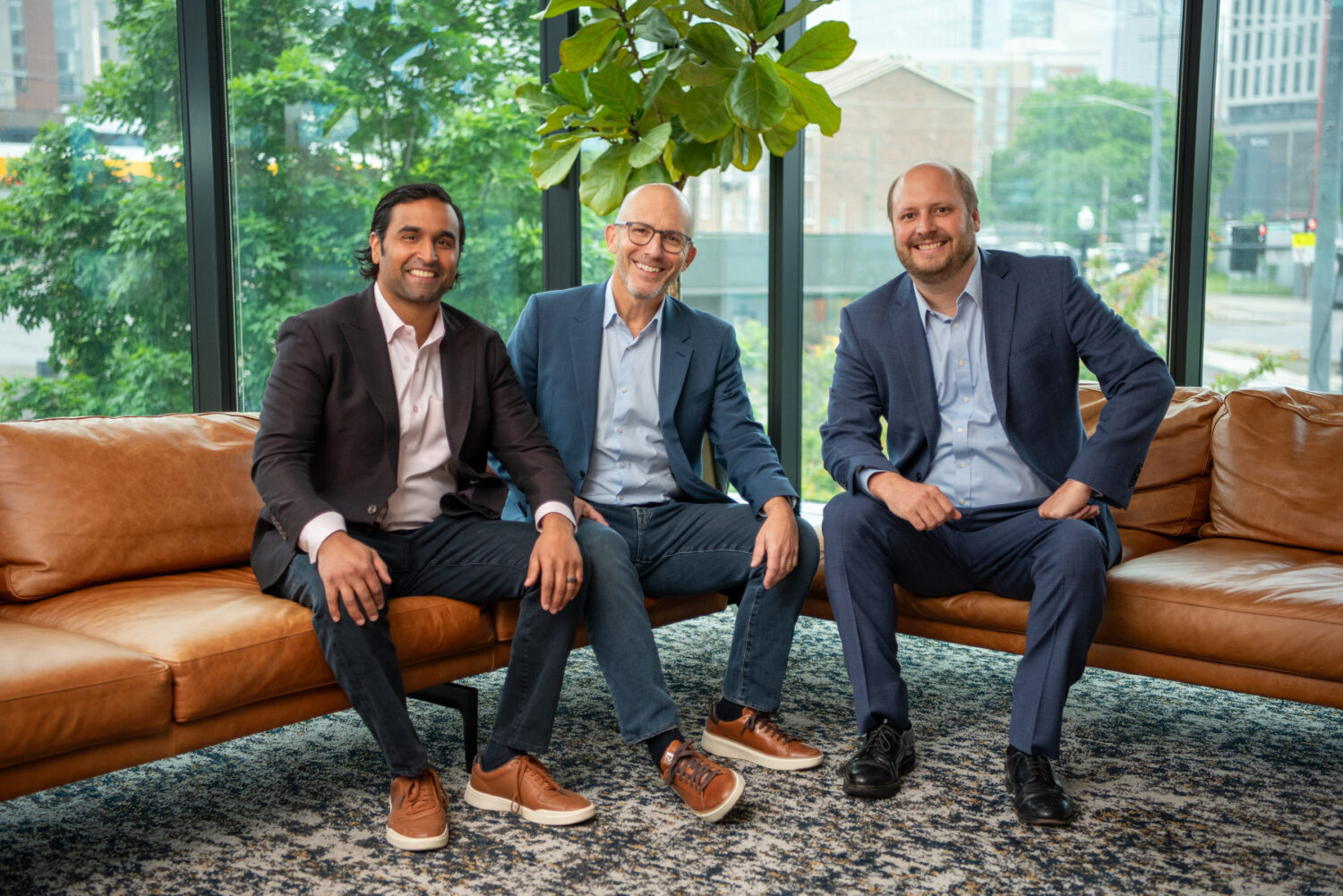
Robin Shah, Co-Founder and Chief Executive Officer; Dr. Bobby Green, Co-Founder, Chief Medical Officer, and President; and Dr. Brad Diephuis, President and Chief Operating Officer

What You Should Know: 

– Thyme Care, a value-based cancer care enabler secures $97M in Series D funding, bringing its total capital raised to $275M. 

The funding round was overwhelmingly backed by strategic investors, including current investors such as CVS Health® Ventures, Foresite Capital, and a16z Bio + Health, with new strategic investors including Morgan Health (JPMorganChase), Humana, Texas Oncology, and Memorial Hermann Health System.

– The company also achieved profitability and now manages more than $5B in oncology spend.  This landmark year of growth includes extending access to 8 million people nationwide through new Medicare, commercial, and employer contracts.


The Model: Integrated Infrastructure and Shared Accountability

Since its founding in 2020, Thyme Care has worked to create an integrated oncology infrastructure that reduces friction across the system. The model is built on aligning incentives through partnerships with payers so that the best care for patients is also the most sustainable for the system. Thyme Care works closely with more than 1,000 oncologists nationwide.

According to CEO and Co-Founder Robin Shah, Thyme Care was founded to change a system “not designed for people with cancer”. The platform achieves this by:

  • Reducing administrative burden.
  • Supporting higher-value drug choices.
  • Integrating services like palliative care and survivorship.

For patients, this translates to earlier interventions, fewer delays, and continuous support throughout the cancer journey.


AI as a Critical Accelerant

Artificial intelligence, already deeply integrated into Thyme Care’s model, is becoming a critical accelerant for the company’s growth. By automating documentation, surfacing real-time insights, and synthesizing complex patient data, AI reduces the cognitive load on care teams. The result is a system that allows providers to focus on people rather than paperwork and makes high-quality, scalable cancer care possible.

Measurable Impact on Cost, Outcomes, and Provider Efficiency

Thyme Care’s model has demonstrated systemic transformation across three key areas:

1. Avoiding Costly Complications

By intervening earlier and providing timely support for symptoms like pain or nausea, Thyme Care helps patients avoid unnecessary hospital visits. Members who completed electronic patient-reported outcome surveys (ePROs) were 40% less likely to visit the ER and had 19% fewer hospital admissions. This saves the healthcare system millions while allowing providers to focus on the highest-value care.

2. Enhancing Patient Experience and Engagement

The purpose-built technology and care teams—including doctors, nurses, and social workers—create a more compassionate cancer journey. Approximately 90% of members report feeling more supported. This trust results in a high level of engagement, with 72% of members proactively sharing updates through ePROs, which is nearly double the industry average.

3. Reducing Provider Burden

Thyme Care lightens the load on oncology practices by taking on time-consuming administrative and care coordination tasks. One Thyme Care Oncology Partner practice saved nearly 2,000 hours of staff time in a single year, enabling providers to focus on delivering high-quality, hands-on care.


“The system was not designed for people with cancer, and too often patients fall through the cracks,” added Thyme Care Chief Executive Officer and Co-Founder Robin Shah. “My co-founder, Dr. Bobby Green, and I have seen this from the inside out for decades. We’ve witnessed it at the bedside in community practices and in building national infrastructures at Flatiron Health and OneOncology, and we founded Thyme Care to change it. Our next chapter is about scaling what works while exploring new ways to tackle the barriers that still make cancer care harder than it needs to be.”

  • LinkedIn
  • Twitter
  • Facebook
  • Email
  • Print

Tagged With: Artificial Intelligence, Oncology

Tap Native

Get in-depth healthcare technology analysis and commentary delivered straight to your email weekly

Reader Interactions

Primary Sidebar

Subscribe to HIT Consultant

Latest insightful articles delivered straight to your inbox weekly.

Submit a Tip or Pitch

2026 Predictions & Trends

Healthcare 2026 Forecast: Executives on AI Survival, Financial Reckoning, and the End of Point Solutions

2026 Healthcare Executive Predictions: Why the AI “Pilot Era” Is Officially Over

Most-Read

OpenAI Debuts ChatGPT Health: A ‘Digital Front Door’ That Connects Medical Records to Agentic AI

OpenAI Debuts ChatGPT Health: A ‘Digital Front Door’ That Connects Medical Records to Agentic AI

From Genes to Hackers: The Hidden Cybersecurity Risks in Life Sciences

From Genes to Hackers: The Hidden Cybersecurity Risks in Life Sciences

Utah Becomes First State to Approve AI System for Prescription Renewals

Utah Becomes First State to Approve AI System for Prescription Renewals

NYC Health + Hospitals to Acquire Maimonides in $2.2B Safety Net Overhaul

NYC Health + Hospitals to Acquire Maimonides in $2.2B Safety Net Overhaul

KLAS Report: Why Hospitals Are Choosing Efficiency Over 'Agentic' AI Hype in 2025

KLAS Report: Why Hospitals Are Choosing Efficiency Over ‘Agentic’ AI Hype in 2025

Advanced Primary Care 2026: Top 6 Investments for Health Systems According to Harvard Medical School

Advanced Primary Care 2026: Top 6 Investments for Health Systems According to Harvard Medical School

AI Nutrition Labels: The Key to Provider Adoption and Patient Trust?

AI Nutrition Labels: The Key to Provider Adoption and Patient Trust?

Kristen Hartsell, VP of Clinical Services, RedSail Technologies

The Pharmacy Closures Crisis: How Independent Pharmacies Are Fixing Pharmacy Deserts

HHS Launches 'OneHHS' AI Strategy to Integrate AI Across CDC, CMS, and FDA for Efficiency and Public Trust

HHS Launches ‘OneHHS’ AI Strategy to Integrate AI Across CDC, CMS, and FDA for Efficiency and Public Trust

From Overwhelmed to Optimized: How AI Agents Address Staffing Challenges and Burnout in Healthcare

From Overwhelmed to Optimized: How AI Agents Address Staffing Challenges and Burnout in Healthcare

Secondary Sidebar

Footer

Company

  • About Us
  • Advertise with Us
  • Reprints and Permissions
  • Op-Ed Submission Guidelines
  • Contact
  • Subscribe

Editorial Coverage

  • Opinion
  • Health IT
    • Care Coordination
    • EMR/EHR
    • Interoperability
    • Population Health Management
    • Revenue Cycle Management
  • Digital Health
    • Artificial Intelligence
    • Blockchain Tech
    • Precision Medicine
    • Telehealth
    • Wearables
  • Startups
  • Value-Based Care
    • Accountable Care
    • Medicare Advantage

Connect

Subscribe to HIT Consultant Media

Latest insightful articles delivered straight to your inbox weekly

Copyright © 2026. HIT Consultant Media. All Rights Reserved. Privacy Policy |