
• Skip to main content
  • Skip to secondary menu
  • Skip to primary sidebar
  • Skip to secondary sidebar
  • Skip to footer

  • Opinion
  • Health IT
    • Behavioral Health
    • Care Coordination
    • EMR/EHR
    • Interoperability
    • Patient Engagement
    • Population Health Management
    • Revenue Cycle Management
    • Social Determinants of Health
  • Digital Health
    • AI
    • Blockchain
    • Precision Medicine
    • Telehealth
    • Wearables
  • Life Sciences
  • Investments
  • M&A
  • Value-based Care
    • Accountable Care (ACOs)
    • Medicare Advantage

Humana Report Highlights Better Outcomes for Heart Failure Patients in Value-Based Care

by Fred Pennic 08/25/2025 Leave a Comment

  • LinkedIn
  • Twitter
  • Facebook
  • Email
  • Print

What You Should Know: 

– Humana Inc. has released a new Value-Based Care Issue Brief with findings that indicate value-based care delivers a higher quality of care and better medication adherence to evidence-based medicine for Medicare Advantage patients diagnosed with heart failure.

Impact of Heart Failture

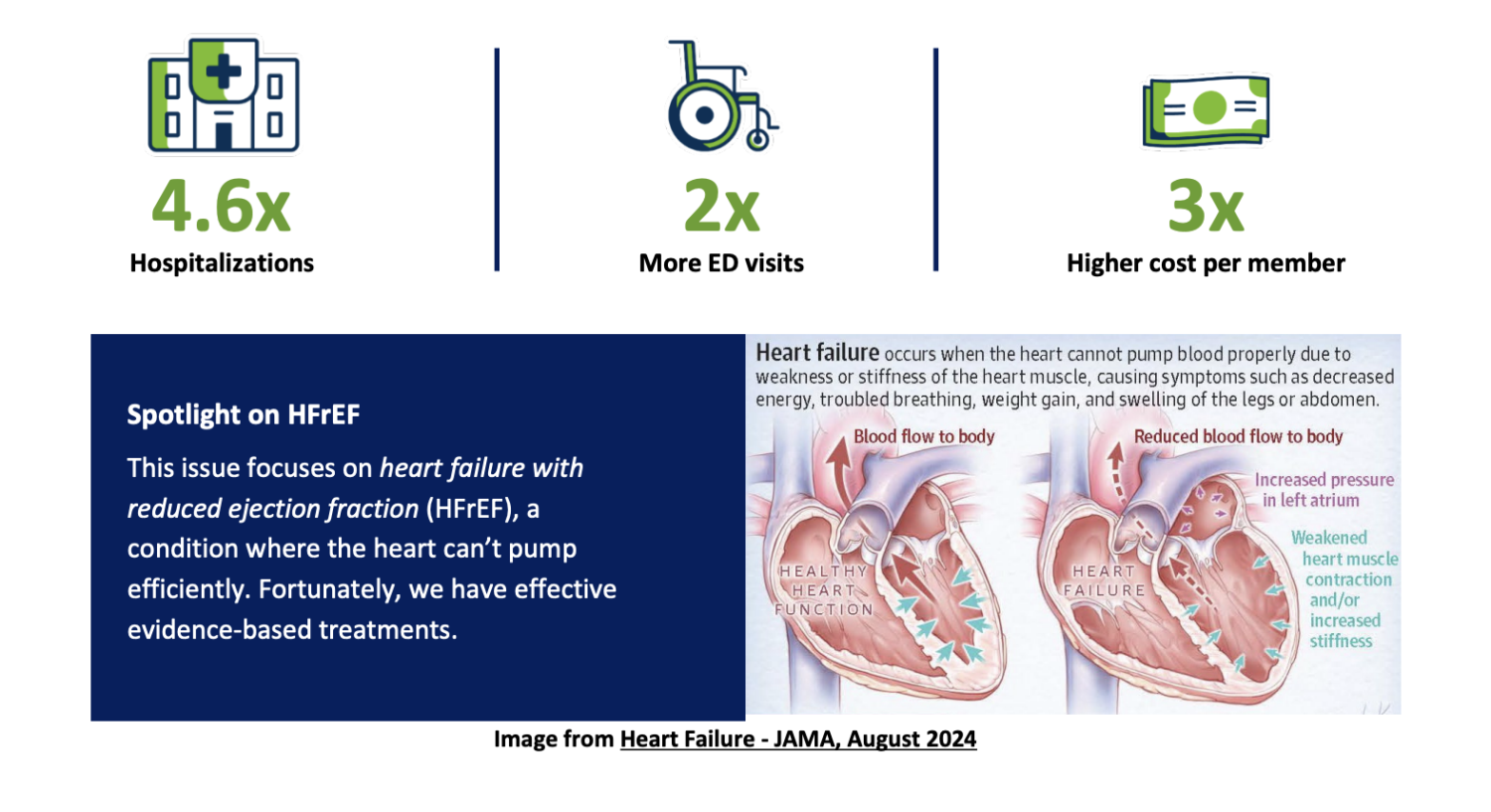
Heart failure is a growing concern, with 11.4 million Americans expected to be diagnosed with the condition by 2050. Patients with heart failure are more likely to be hospitalized and visit the emergency department twice as often as others.  While the gold standard treatment, known as quadruple therapy, is recommended, less than one in five patients with heart failure with reduced ejection fraction (HFrEF) receive this therapy within six months of being discharged from the hospital.

Value-Based Care Drives Better Medical Management

The data analyzed in Humana’s brief compared Medicare Advantage patients with HFrEF who received care from value-based clinicians to those who did not. The findings showed that patients treated by value-based care clinicians were nearly 28% more likely to receive the full quadruple therapy, which is considered the gold standard of evidence-based medical treatment.

The value-based care model incentivizes clinicians to provide proactive, high-value interventions. In contrast, the traditional fee-for-service model often results in a fragmented experience for both clinicians and patients, with no incentives to reduce low-value care. Humana’s research also shows that patients aligned with value-based care practices manage chronic diseases better, see their primary care physician more often, and are more satisfied with the quality of care they receive.

According to Dr. Kate Goodrich, Chief Medical Officer at Humana, the value-based care model relies on primary care physicians, specialists, care teams, and patients working together to achieve better health outcomes. She noted that this coordinated approach is the meaningful difference for patients with heart failure with HFrEF, as those in value-based care experienced better medical management.

  • LinkedIn
  • Twitter
  • Facebook
  • Email
  • Print

Tagged With: Value-Based Care

Tap Native

Get in-depth healthcare technology analysis and commentary delivered straight to your email weekly

Reader Interactions

Primary Sidebar

Subscribe to HIT Consultant

Latest insightful articles delivered straight to your inbox weekly.

Submit a Tip or Pitch

Featured Insights

Aligning IT & Clinical Teams: How to Reduce Friction and Improve Communication

Most-Read

Aidoc Secures $150M to Accelerate Enterprise-Scale Clinical AI Across 2,000 Hospitals

OpenAI Launches ChatGPT for Clinicians: Free AI Documentation and Research Tool for Verified Physicians

OpenAI Launches ChatGPT for Clinicians: Free AI Documentation and Research Tool for Verified Physicians

IKS Health Acquires TruBridge for Rural EHR and RCM Solutions Expansion

IKS Health Acquires TruBridge for Rural EHR and RCM Solutions Expansion

UT Austin is Building the Nation's First 'AI-Native' Hospital, Backed by $750M

Why UT Austin is Building an ‘AI-Native’ Hospital from Scratch

The Medtech Pitch Deck Casino: Why Hype Still Wins, and How Scrutiny Could Improve Everyone’s Odds

The Casino Model: Why Medtech VCs Are Betting Billions on Unproven AI

Oracle Lays Off 539 Kansas City Employees as Focus Shifts to AI Data Centers

Oracle Lays Off 539 Kansas City Employees as Focus Shifts to AI Data Centers

SAMHSA and ONC Invest $20M in Behavioral Health IT Initiative

HHS Reverses 2024 Tech Reorganization: Why HHS Just Stripped AI and Cyber Operations Out of the ONC

How Small Medical Practices Can Build HIPAA-Aligned DevSecOps Without Enterprise Budgets

How Small Medical Practices Can Build HIPAA-Aligned DevSecOps Without Enterprise Budgets

Insilico Medicine and Eli Lilly Form $2.75B AI Drug Discovery Collaboration

Insilico Medicine and Eli Lilly Form $2.75B AI Drug Discovery Collaboration

Microsoft Copilot Health, Integrates Apple Health, Oura, and 50,000 EHRs in New AI Push

Microsoft Launches Copilot Health, Integrates Apple Health, Oura, and 50,000 EHRs in New AI Push

Secondary Sidebar

Footer

Company

  • About Us
  • 2026 Editorial Calendar
  • Advertise with Us
  • Reprints and Permissions
  • Op-Ed Submission Guidelines
  • Contact
  • Subscribe

Editorial Coverage

  • Opinion
  • Health IT
    • Care Coordination
    • EMR/EHR
    • Interoperability
    • Population Health Management
    • Revenue Cycle Management
  • Digital Health
    • Artificial Intelligence
    • Blockchain Tech
    • Precision Medicine
    • Telehealth
    • Wearables
  • Startups
  • Value-Based Care
    • Accountable Care
    • Medicare Advantage

Connect

Subscribe to HIT Consultant Media

Latest insightful articles delivered straight to your inbox weekly

Copyright © 2026. HIT Consultant Media. All Rights Reserved. Privacy Policy |