
• Skip to main content
  • Skip to secondary menu
  • Skip to primary sidebar
  • Skip to secondary sidebar
  • Skip to footer

  • Opinion
  • Health IT
    • Behavioral Health
    • Care Coordination
    • EMR/EHR
    • Interoperability
    • Patient Engagement
    • Population Health Management
    • Revenue Cycle Management
    • Social Determinants of Health
  • Digital Health
    • AI
    • Blockchain
    • Precision Medicine
    • Telehealth
    • Wearables
  • Life Sciences
  • Investments
  • M&A
  • Value-based Care
    • Accountable Care (ACOs)
    • Medicare Advantage

New Vivalink Survey Finds Nearly 90% of Americans Open to Remote Clinical Trials

by Fred Pennic 08/07/2025 Leave a Comment

  • LinkedIn
  • Twitter
  • Facebook
  • Email
  • Print

What You Should Know: 

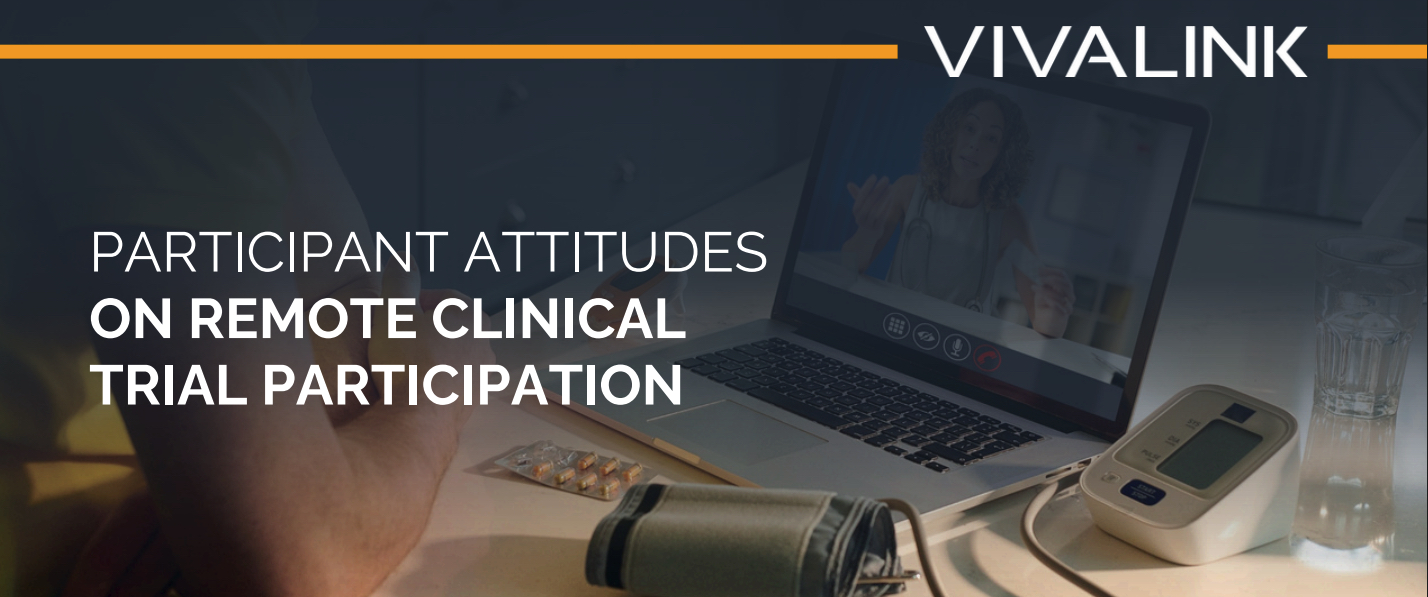
– A new survey shows that remote clinical trials are not just a convenient option but a key factor in whether people choose to participate in research at all. 

– The survey, conducted by digital healthcare solutions provider Vivalink, found that nearly 90% of Americans are open to participating in fully remote trials, signaling a major shift in patient expectations.

A Clear Preference for Virtual Trials

The survey, which polled over 200 U.S. adults, highlighted a strong preference for trials that include virtual elements: 

  • 52% of respondents said they are very likely to join a fully remote clinical trial, compared to just 34% who said the same about traditional in-person trials.
  • While 78% were open to participating in person, a notable  22% ruled out in-person trials entirely.
  • Hybrid trials are also popular, with 37% saying they are very likely to join one and 52% being somewhat likely.

User Experience is the Top Driver

When deciding whether to join a trial, participants are most influenced by the overall user experience. The most important considerations for respondents were:

  • Easy-to-use tools (70%).
  • Financial compensation (56%).
  • Clear and consistent communication (55%).

For wearable devices specifically, participants emphasized the importance of using FDA-cleared devices and having reliable access to tech support.

Comfort and Clarity are Key to Retention

Keeping participants enrolled in a trial is just as important as recruiting them. The survey found that physical discomfort and unclear expectations are major reasons why someone might leave a trial early.

  • 68% cited physical discomfort as the top reason they would leave a trial.
  • 51% pointed to unclear expectations from the trial organizers.
  • 47% said difficulty using the technology, even with support, would cause them to drop out.

The time commitment is also a significant factor, with 57% of respondents willing to participate only in a trial lasting three months or less.

“It’s clear from these findings that remote clinical trials are more than just a convenience; they’re a prerequisite for many people considering participation,” said Jiang Li, CEO at Vivalink. “As virtual trials become more common, designing them around patient experience, not just logistics, will be key to successful recruitment and retention.”

  • LinkedIn
  • Twitter
  • Facebook
  • Email
  • Print

Tagged With: Clinical Trials

Tap Native

Get in-depth healthcare technology analysis and commentary delivered straight to your email weekly

Reader Interactions

Primary Sidebar

Subscribe to HIT Consultant

Latest insightful articles delivered straight to your inbox weekly.

Submit a Tip or Pitch

Featured Insights

Aligning IT & Clinical Teams: How to Reduce Friction and Improve Communication

Most-Read

CB Insights Q2 2026 State of Digital Health Report: Fewest Deals in Over a Decade as Median Sizes Rise

CB Insights Q2 2026 State of Digital Health Report: Fewest Deals in Over a Decade as Median Sizes Rise

mount-sinai-launches-epic-chart-with-art-nursing-ambient-ai

Mount Sinai Medical Center Extends Epic’s Ambient AI to Inpatient Nursing

M&A: Tempus AI to Acquire Personalis for $1.5B to Expand Precision Oncology and MRD Monitoring

M&A: Tempus AI to Acquire Personalis for $1.5B to Expand Precision Oncology and MRD Monitoring

Why Brain Health Is Entering Its Infrastructure Era

Brain Health’s Infrastructure Era: Proving Clinical Outcomes with Integrated Neuromotor Tracking

Why Catholic Health Inked a $500M Care Alliance with GE HealthCare to Automate Outpatient Triage

Catholic Health Inks $500M Care Alliance with GE HealthCare to Automate Outpatient Triage

KLAS Global HIT Trends 2026 Report: Artificial Intelligence Becomes the Top Investment Priority

KLAS Global HIT Trends 2026 Report: Artificial Intelligence Becomes the Top Investment Priority

Optum Partners with Anthropic to Deploy Claude Across Healthcare Claims and Revenue Workflows

Optum Partners with Anthropic to Deploy Claude Across Healthcare Claims and Revenue Workflows

Rock Health H1 2026 Digital Health Funding Recap: Startups Hit $7.4B in Venture Rebound

Rock Health H1 2026 Digital Health Funding Recap: Startups Hit $7.4B in Venture Rebound

M&A: ResMed to Sell MatrixCare Business to Frazier Healthcare Partners for $450M

M&A: ResMed to Sell MatrixCare Business to Frazier Healthcare Partners for $450M

The Real Risk in Healthcare AI Isn’t the Model. It’s the Data. 

Clinical Data Fidelity: The Real Blindspot in Healthcare AI Strategy

Secondary Sidebar

Footer

Company

  • About Us
  • 2026 Editorial Calendar
  • Advertise with Us
  • Reprints and Permissions
  • Op-Ed Submission Guidelines
  • Contact
  • Subscribe

Editorial Coverage

  • Opinion
  • Health IT
    • Care Coordination
    • EMR/EHR
    • Interoperability
    • Population Health Management
    • Revenue Cycle Management
  • Digital Health
    • Artificial Intelligence
    • Blockchain Tech
    • Precision Medicine
    • Telehealth
    • Wearables
  • Startups
  • Value-Based Care
    • Accountable Care
    • Medicare Advantage

Connect

Subscribe to HIT Consultant Media

Latest insightful articles delivered straight to your inbox weekly

Copyright © 2026. HIT Consultant Media. All Rights Reserved. Privacy Policy |