
• Skip to main content
  • Skip to secondary menu
  • Skip to primary sidebar
  • Skip to secondary sidebar
  • Skip to footer

  • Opinion
  • Health IT
    • Behavioral Health
    • Care Coordination
    • EMR/EHR
    • Interoperability
    • Patient Engagement
    • Population Health Management
    • Revenue Cycle Management
    • Social Determinants of Health
  • Digital Health
    • AI
    • Blockchain
    • Precision Medicine
    • Telehealth
    • Wearables
  • Life Sciences
  • Investments
  • M&A
  • Value-based Care
    • Accountable Care (ACOs)
    • Medicare Advantage

CLEW Medical Scores FDA Clearance for Next-Gen AI-Powered Patient Deterioration Prediction

by Jasmine Pennic 05/13/2024 Leave a Comment

  • LinkedIn
  • Twitter
  • Facebook
  • Email
  • Print
CLEW Medical Scores FDA Clearance for Next-Gen AI-Powered Patient Deterioration Prediction

What You Should Know: 

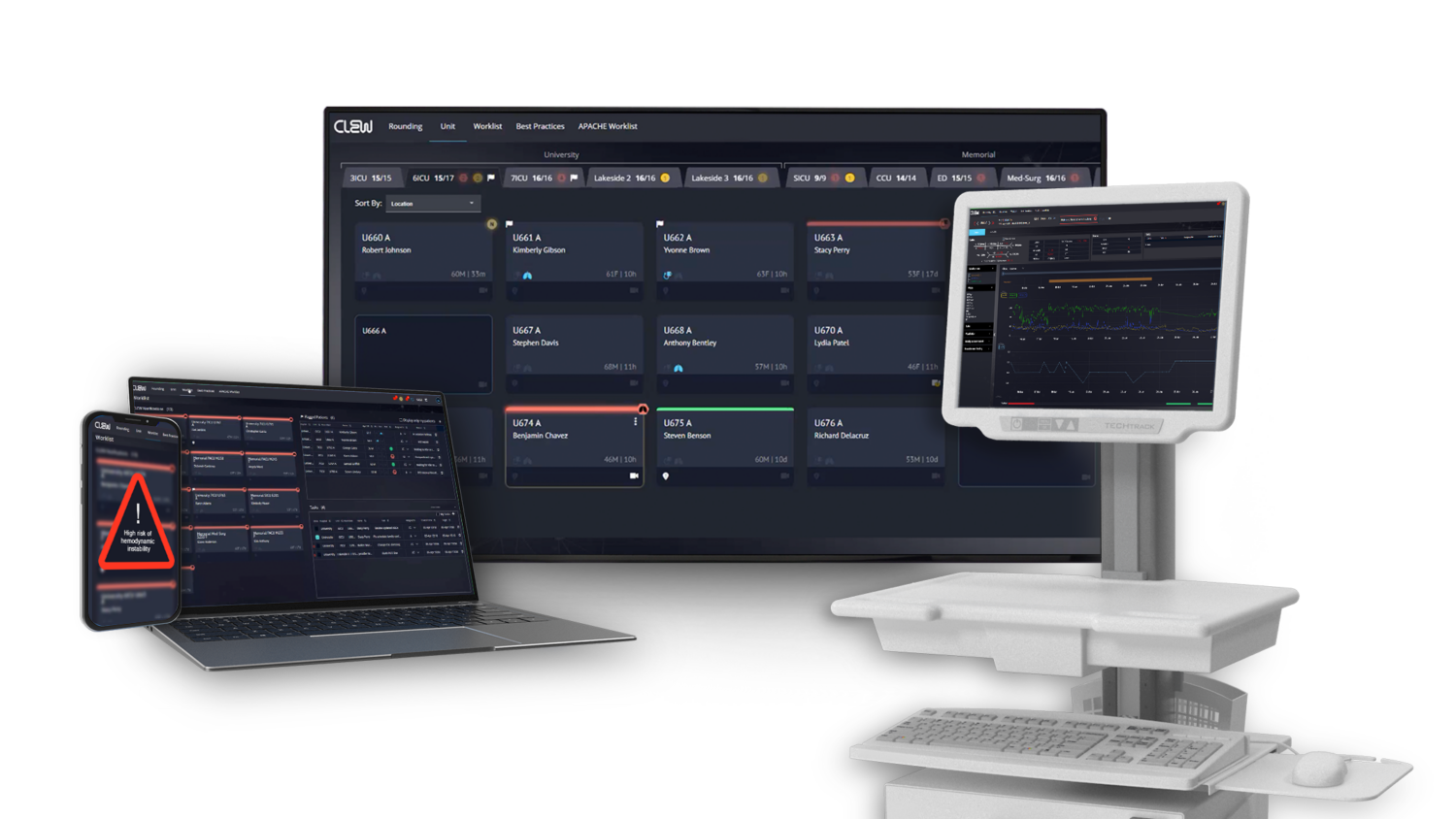
– CLEW Medical, a provider of AI-driven clinical surveillance and predictive analytics, has achieved a breakthrough with FDA 510(k) clearance for its second-generation AI models for predicting patient deterioration. 

– The FDA clearance builds upon their pioneering achievement of being the first FDA-cleared Class II medical device for this purpose in 2021.

Rigorous Testing for FDA Approval

Obtaining FDA clearance signifies that CLEW’s AI models have undergone rigorous evaluation. The process involved a comprehensive assessment of safety and performance data, along with extensive testing. The FDA also approved CLEW’s proposed pre-authorized change control plan (PCCP), allowing specific future modifications to the system’s input data without requiring a new 510(k) application.

Early Warning System for Patient Care

CLEW’s platform leverages a combination of cutting-edge machine-learning models and established best practices to identify patients at risk of deterioration early on. This empowers healthcare systems to intervene proactively, potentially improving patient outcomes.

Clinically Validated Performance

A recent study published in the prestigious CHEST Journal demonstrated the effectiveness of CLEW’s platform. The study found that CLEW’s predictions were at least five times more accurate than alerts from a leading telemedicine system, and generated 50 times fewer alarms compared to other monitoring systems. This translates to fewer false positives and more actionable insights for healthcare providers.

“At CLEW, we understand the significance of using AI to enhance care for critically ill patients,” said Paul Roscoe, CLEW CEO. “We are committed to fostering trust among caregivers, while offering them the most sophisticated and accurate clinical predictions available on the market by adhering to the most stringent regulatory processes. AI and machine-learning technology in this space must undergo the same level of scrutiny and diligence in design, development, testing, and validation as other medical devices used by clinicians.”

  • LinkedIn
  • Twitter
  • Facebook
  • Email
  • Print

Tagged With: FDA Clearance, FDA clearance 510k

Tap Native

Get in-depth healthcare technology analysis and commentary delivered straight to your email weekly

Reader Interactions

Primary Sidebar

Subscribe to HIT Consultant

Latest insightful articles delivered straight to your inbox weekly.

Submit a Tip or Pitch

2026 Predictions & Trends

Healthcare 2026 Forecast: Executives on AI Survival, Financial Reckoning, and the End of Point Solutions

2026 Healthcare Executive Predictions: Why the AI “Pilot Era” Is Officially Over

Most-Read

HHS Launches 'OneHHS' AI Strategy to Integrate AI Across CDC, CMS, and FDA for Efficiency and Public Trust

HHS Launches ‘OneHHS’ AI Strategy to Integrate AI Across CDC, CMS, and FDA for Efficiency and Public Trust

Kristen Hartsell, VP of Clinical Services, RedSail Technologies

The Pharmacy Closures Crisis: How Independent Pharmacies Are Fixing Pharmacy Deserts

From Overwhelmed to Optimized: How AI Agents Address Staffing Challenges and Burnout in Healthcare

From Overwhelmed to Optimized: How AI Agents Address Staffing Challenges and Burnout in Healthcare

The VBC Paradox: Why Hospitals Are Doubling Down on Value-Based Care While Revenue at Risk Lags

The VBC Paradox: Why Hospitals Are Doubling Down on Value-Based Care While Revenue at Risk Lags

Tebra Secures $250M to Challenge Legacy EHRs with AI-Powered Automation

Tebra Secures $250M to Challenge Legacy EHRs with AI-Powered Automation

AstraZeneca Selects Salesforce Agentforce Life Sciences to Deploy AI-Powered Global Customer Engagement

AstraZeneca Selects Salesforce Agentforce Life Sciences to Deploy AI-Powered Global Customer Engagement

Aidoc Partners with NVIDIA MONAI to Scale Open-Source Clinical AI

Aidoc Partners with NVIDIA MONAI to Scale Open-Source Clinical AI

RapidAI Secures FDA Clearance for Five New Deep Clinical AI Modules, Expanding Enterprise Imaging Platform

RapidAI and AWS Deepen Partnership to Scale Clinical AI in Healthcare

Greece and Sword Health to Build AI-Powered Healthcare Front Door

Greece and Sword Health to Build AI-Powered Healthcare Front Door

GE HealthCare Acquires Intelerad for $2.3B to Create Cloud-First, AI-Enabled Imaging Ecosystem

GE HealthCare Acquires Intelerad for $2.3B to Create Cloud-First, AI-Enabled Imaging Ecosystem

Secondary Sidebar

Footer

Company

  • About Us
  • Advertise with Us
  • Reprints and Permissions
  • Op-Ed Submission Guidelines
  • Contact
  • Subscribe

Editorial Coverage

  • Opinion
  • Health IT
    • Care Coordination
    • EMR/EHR
    • Interoperability
    • Population Health Management
    • Revenue Cycle Management
  • Digital Health
    • Artificial Intelligence
    • Blockchain Tech
    • Precision Medicine
    • Telehealth
    • Wearables
  • Startups
  • Value-Based Care
    • Accountable Care
    • Medicare Advantage

Connect

Subscribe to HIT Consultant Media

Latest insightful articles delivered straight to your inbox weekly

Copyright © 2025. HIT Consultant Media. All Rights Reserved. Privacy Policy |