
• Skip to main content
  • Skip to secondary menu
  • Skip to primary sidebar
  • Skip to secondary sidebar
  • Skip to footer

  • Opinion
  • Health IT
    • Behavioral Health
    • Care Coordination
    • EMR/EHR
    • Interoperability
    • Patient Engagement
    • Population Health Management
    • Revenue Cycle Management
    • Social Determinants of Health
  • Digital Health
    • AI
    • Blockchain
    • Precision Medicine
    • Telehealth
    • Wearables
  • Life Sciences
  • Investments
  • M&A
  • Value-based Care
    • Accountable Care (ACOs)
    • Medicare Advantage

Verily Launches Baseline Health System Consortium with Duke, Mayo, Vanderbilt

by Jasmine Pennic 05/16/2019 Leave a Comment

  • LinkedIn
  • Twitter
  • Facebook
  • Email
  • Print

Duke, Mayo, Vanderbilt, Others Join Verily’s Baseline Health System Consortium

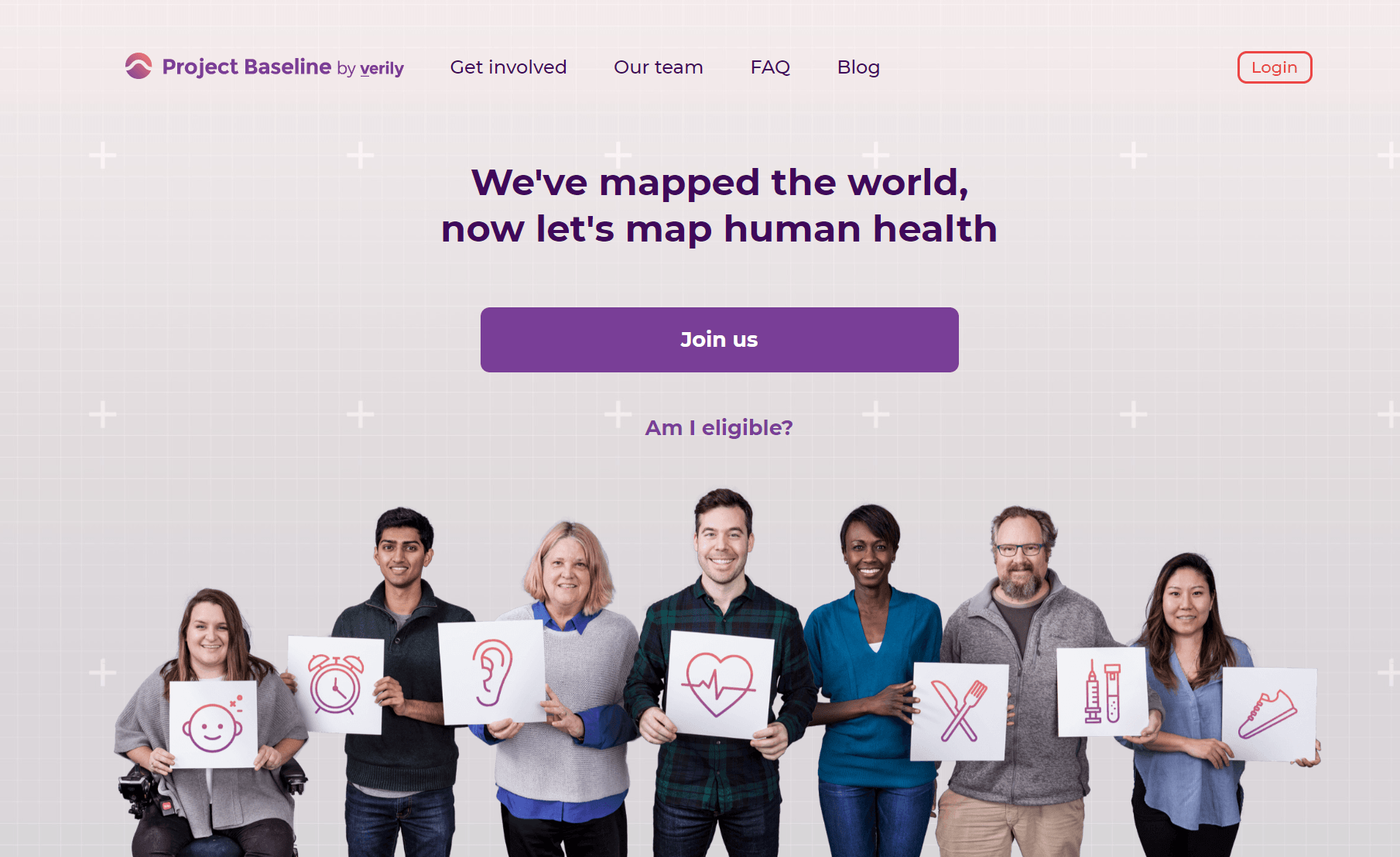
Verily, an Alphabet company, today announced a new Project Baseline initiative, the Baseline Health System Consortium, comprised of Verily, Duke University Health System, Vanderbilt University Medical Center, University of Mississippi Medical Center, Mayo Clinic, Regional Health in South Dakota and the University of Pittsburgh. Verily launched Project Baseline in 2017 with the Project Baseline Health Study to develop the technology and tools to help researchers create a more comprehensive map of human health.

This strategic collaboration will identify and develop solutions to significant challenges in clinical research, including making research more accessible and engaging for patients, clinicians, researchers, and research sponsors alike.

Bridging the Gap Between Research and Care to Further Precision Medicine

United by a vision of transforming clinical research, the consortium partners will embark on a pilot in 2019 to analyze existing research programs, and use tools and technology developed through Project Baseline, including the Baseline Platform — an end-to-end evidence generation platform — to make it faster and easier to conduct studies, capture health information in a more efficient way and generate better evidence to support scientific discovery. The consortium partners sit at the nexus of clinical research and clinical care and are uniquely positioned to help Verily iterate on its technology to bridge the gap between research and care and further precision medicine.

Consortium Leadership

Duke University School of Medicine, a collaborator in the Health Study, will partner with Verily on this next phase. Adrian Hernandez, M.D., M.H.S., Vice Dean of Duke University School of Medicine and a principal investigator for the Health Study, is joined by leaders in health research Manesh Patel, M.D., Duke University Health System; Russell Rothman, M.D., M.P.P., Vanderbilt University Medical Center; Javed Butler, M.D., M.P.H., M.B.A., University of Mississippi Medical Center; Veronique L. Roger, M.D., M.P.H., Mayo Clinic; Drew Purdy, M.D., Regional Health in South Dakota; and Kathleen McTigue, M.D., M.P.H., M.S., University of Pittsburgh, as representatives to the consortium. Robert Harrington, M.D., professor and chair of the Department of Medicine at Stanford Medicine, will chair the Steering Committee, building on Stanford Medicine’s role as a partner in the Health Study.

Recent Verily Projects

In founding the consortium and partnering with sophisticated health systems, Verily continues to build a robust research ecosystem, with the goal of delivering modern solutions for faster evidence generation and discovery. In February, Verily announced it was joining forces with the American Heart Association (AHA) on Research Goes Red, a new initiative to engage women in heart health research and discovery. Earlier this month, Verily launched the Project Baseline Heart Biomarker Study, expanding its research into risk factors for heart disease.

“The clinical research system fails to provide the evidence that patients and clinicians need to make good health and healthcare decisions,” said Robert Califf, M.D., former FDA commissioner and advisor, Verily. “By developing useful tools and approaches, this robust collaboration has the potential to drive more efficient and effective research as we link patients, advocacy groups, clinicians, health systems and researchers.

  • LinkedIn
  • Twitter
  • Facebook
  • Email
  • Print

Tagged With: Alphabet, American Heart Association, clinical research, FDA, Health Systems, Heart, heart disease, Mayo Clinic, Partners, Precision Medicine, risk, Verily

Tap Native

Get in-depth healthcare technology analysis and commentary delivered straight to your email weekly

Reader Interactions

Primary Sidebar

Subscribe to HIT Consultant

Latest insightful articles delivered straight to your inbox weekly.

Submit a Tip or Pitch

2026 Predictions & Trends

Healthcare 2026 Forecast: Executives on AI Survival, Financial Reckoning, and the End of Point Solutions

2026 Healthcare Executive Predictions: Why the AI “Pilot Era” Is Officially Over

Most-Read

KLAS Report: Why Hospitals Are Choosing Efficiency Over 'Agentic' AI Hype in 2025

KLAS Report: Why Hospitals Are Choosing Efficiency Over ‘Agentic’ AI Hype in 2025

Advanced Primary Care 2026: Top 6 Investments for Health Systems According to Harvard Medical School

Advanced Primary Care 2026: Top 6 Investments for Health Systems According to Harvard Medical School

AI Nutrition Labels: The Key to Provider Adoption and Patient Trust?

AI Nutrition Labels: The Key to Provider Adoption and Patient Trust?

Kristen Hartsell, VP of Clinical Services, RedSail Technologies

The Pharmacy Closures Crisis: How Independent Pharmacies Are Fixing Pharmacy Deserts

HHS Launches 'OneHHS' AI Strategy to Integrate AI Across CDC, CMS, and FDA for Efficiency and Public Trust

HHS Launches ‘OneHHS’ AI Strategy to Integrate AI Across CDC, CMS, and FDA for Efficiency and Public Trust

From Overwhelmed to Optimized: How AI Agents Address Staffing Challenges and Burnout in Healthcare

From Overwhelmed to Optimized: How AI Agents Address Staffing Challenges and Burnout in Healthcare

The VBC Paradox: Why Hospitals Are Doubling Down on Value-Based Care While Revenue at Risk Lags

The VBC Paradox: Why Hospitals Are Doubling Down on Value-Based Care While Revenue at Risk Lags

Tebra Secures $250M to Challenge Legacy EHRs with AI-Powered Automation

Tebra Secures $250M to Challenge Legacy EHRs with AI-Powered Automation

AstraZeneca Selects Salesforce Agentforce Life Sciences to Deploy AI-Powered Global Customer Engagement

AstraZeneca Selects Salesforce Agentforce Life Sciences to Deploy AI-Powered Global Customer Engagement

Aidoc Partners with NVIDIA MONAI to Scale Open-Source Clinical AI

Aidoc Partners with NVIDIA MONAI to Scale Open-Source Clinical AI

Secondary Sidebar

Footer

Company

  • About Us
  • Advertise with Us
  • Reprints and Permissions
  • Op-Ed Submission Guidelines
  • Contact
  • Subscribe

Editorial Coverage

  • Opinion
  • Health IT
    • Care Coordination
    • EMR/EHR
    • Interoperability
    • Population Health Management
    • Revenue Cycle Management
  • Digital Health
    • Artificial Intelligence
    • Blockchain Tech
    • Precision Medicine
    • Telehealth
    • Wearables
  • Startups
  • Value-Based Care
    • Accountable Care
    • Medicare Advantage

Connect

Subscribe to HIT Consultant Media

Latest insightful articles delivered straight to your inbox weekly

Copyright © 2025. HIT Consultant Media. All Rights Reserved. Privacy Policy |