
• Skip to main content
  • Skip to secondary menu
  • Skip to primary sidebar
  • Skip to secondary sidebar
  • Skip to footer

  • Opinion
  • Health IT
    • Behavioral Health
    • Care Coordination
    • EMR/EHR
    • Interoperability
    • Patient Engagement
    • Population Health Management
    • Revenue Cycle Management
    • Social Determinants of Health
  • Digital Health
    • AI
    • Blockchain
    • Precision Medicine
    • Telehealth
    • Wearables
  • Life Sciences
  • Investments
  • M&A
  • Value-based Care
    • Accountable Care (ACOs)
    • Medicare Advantage

5 Disruptive Technologies Driving The Future of Patient Monitoring Solutions

by Fred Pennic 04/11/2019 Leave a Comment

  • LinkedIn
  • Twitter
  • Facebook
  • Email
  • Print
5 Disruptive Technologies Driving The Future of Patient Monitoring Solutions
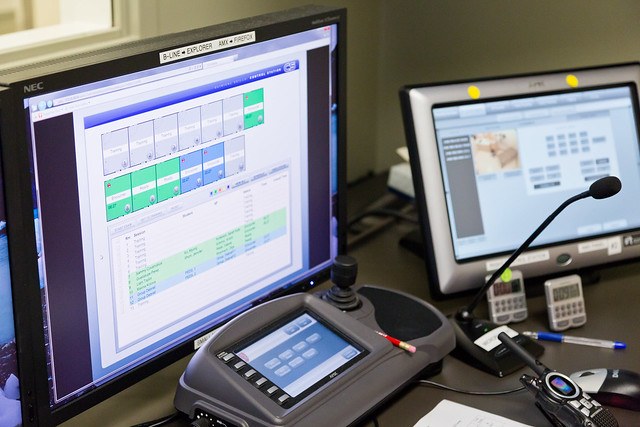
Image Credit: EdTech Stanford

The patient monitoring market is expected to be worth more than $350 billion by 2025, as the focus is likely to move beyond device sales to solutions, according to a recent Frost & Sullivan’s report. The report, Patient Monitoring Industry—Analysis of Investment and Trends outlines the future of patient monitoring across the continuum of care, the shifts in the market, and investment opportunities.

Evolution of Patient Monitoring

Patient monitoring has evolved from ad hoc to continuous monitoring of multiple parameters, causing a surge in the amount of unprocessed and unorganized data available to clinicians for decision-making. To extract actionable information from this data, healthcare providers are turning to big data analytics and other analysis solutions. Predictive analytics is becoming a particularly important technology, as it not only presents the current state of the patient’s health but also predicts future illnesses. The success of this technology, among many others, attracted $566.3 million in investments in 2018.

“In the future, patient monitoring data will be combined with concurrent streams from numerous other sensors, as almost every life function will be monitored and its data captured and stored,” said Sowmya Rajagopalan, Advanced Medical Technologies Global Director at Frost & Sullivan. “The data explosion can be harnessed and employed through technologies such as artificial intelligence (AI), machine learning, etc., to deliver targeted, outcome-based therapies.”

Disruptive Innovations in Patient Monitoring

In addition to these machine learning and AI, patient monitoring solution developers will look to incorporate disruptive technologies such as:

1. Brain-computer interface (BCI)

From treating and monitoring users with mobility or speech disabilities, BCI now monitors and measures health metrics for healthy people and uses the information to analyze a person’s psychological state or emotional, cognitive state.

2. Wearables/Embedded/Biosensors

An increase in the chronic disease population and a shift in focus from treatment to prevention drive this technology. Continuous glucose monitors, blood pressure monitors, pulse oximeters, and electrocardiogram monitors are some of the main applications.

3. Smart Prosthetics/Smart Implants

These are crucial for patient management post-surgery or rehabilitation. They help in measuring the key parameters to support monitoring and early intervention to avoid readmission or complexities.

4. Nano-robotics/Digital Medicine

Digital pills and nanorobots are designed to monitor medicine intake to address the expensive, long-standing issue of non-adherence.

5. Advanced Materials/Smart Fabrics

This emerging field focuses on wound management, cardiac monitoring, and mental illness.

All these technologies and innovations are focused on providing real-time measurable value to the patient and healthcare institution. Future innovations will be aimed at mass personalization and availability.

  • LinkedIn
  • Twitter
  • Facebook
  • Email
  • Print

Tagged With: AI, Artificial Intelligence, big data, Biosensors, Blood Pressure, Blood Pressure Monitors, Cardiac Monitoring, Digital medicine, Machine Learning, Mental Illness, Patient Monitoring, Predictive Analytics, sensors, Wearables

Tap Native

Get in-depth healthcare technology analysis and commentary delivered straight to your email weekly

Reader Interactions

Primary Sidebar

Subscribe to HIT Consultant

Latest insightful articles delivered straight to your inbox weekly.

Submit a Tip or Pitch

2026 Predictions & Trends

Healthcare 2026 Forecast: Executives on AI Survival, Financial Reckoning, and the End of Point Solutions

2026 Healthcare Executive Predictions: Why the AI “Pilot Era” Is Officially Over

Most-Read

NYC Health + Hospitals to Acquire Maimonides in $2.2B Safety Net Overhaul

NYC Health + Hospitals to Acquire Maimonides in $2.2B Safety Net Overhaul

KLAS Report: Why Hospitals Are Choosing Efficiency Over 'Agentic' AI Hype in 2025

KLAS Report: Why Hospitals Are Choosing Efficiency Over ‘Agentic’ AI Hype in 2025

Advanced Primary Care 2026: Top 6 Investments for Health Systems According to Harvard Medical School

Advanced Primary Care 2026: Top 6 Investments for Health Systems According to Harvard Medical School

AI Nutrition Labels: The Key to Provider Adoption and Patient Trust?

AI Nutrition Labels: The Key to Provider Adoption and Patient Trust?

Kristen Hartsell, VP of Clinical Services, RedSail Technologies

The Pharmacy Closures Crisis: How Independent Pharmacies Are Fixing Pharmacy Deserts

HHS Launches 'OneHHS' AI Strategy to Integrate AI Across CDC, CMS, and FDA for Efficiency and Public Trust

HHS Launches ‘OneHHS’ AI Strategy to Integrate AI Across CDC, CMS, and FDA for Efficiency and Public Trust

From Overwhelmed to Optimized: How AI Agents Address Staffing Challenges and Burnout in Healthcare

From Overwhelmed to Optimized: How AI Agents Address Staffing Challenges and Burnout in Healthcare

The VBC Paradox: Why Hospitals Are Doubling Down on Value-Based Care While Revenue at Risk Lags

The VBC Paradox: Why Hospitals Are Doubling Down on Value-Based Care While Revenue at Risk Lags

Tebra Secures $250M to Challenge Legacy EHRs with AI-Powered Automation

Tebra Secures $250M to Challenge Legacy EHRs with AI-Powered Automation

AstraZeneca Selects Salesforce Agentforce Life Sciences to Deploy AI-Powered Global Customer Engagement

AstraZeneca Selects Salesforce Agentforce Life Sciences to Deploy AI-Powered Global Customer Engagement

Secondary Sidebar

Footer

Company

  • About Us
  • Advertise with Us
  • Reprints and Permissions
  • Op-Ed Submission Guidelines
  • Contact
  • Subscribe

Editorial Coverage

  • Opinion
  • Health IT
    • Care Coordination
    • EMR/EHR
    • Interoperability
    • Population Health Management
    • Revenue Cycle Management
  • Digital Health
    • Artificial Intelligence
    • Blockchain Tech
    • Precision Medicine
    • Telehealth
    • Wearables
  • Startups
  • Value-Based Care
    • Accountable Care
    • Medicare Advantage

Connect

Subscribe to HIT Consultant Media

Latest insightful articles delivered straight to your inbox weekly

Copyright © 2026. HIT Consultant Media. All Rights Reserved. Privacy Policy |