
• Skip to main content
  • Skip to secondary menu
  • Skip to primary sidebar
  • Skip to secondary sidebar
  • Skip to footer

  • Opinion
  • Health IT
    • Behavioral Health
    • Care Coordination
    • EMR/EHR
    • Interoperability
    • Patient Engagement
    • Population Health Management
    • Revenue Cycle Management
    • Social Determinants of Health
  • Digital Health
    • AI
    • Blockchain
    • Precision Medicine
    • Telehealth
    • Wearables
  • Life Sciences
  • Investments
  • M&A
  • Value-based Care
    • Accountable Care (ACOs)
    • Medicare Advantage

3 Pillars of An Effective Mobile Health Platform

by DocHalo 03/31/2015 Leave a Comment

  • LinkedIn
  • Twitter
  • Facebook
  • Email
  • Print

3 Pillars of An Effective Mobile Health Platform

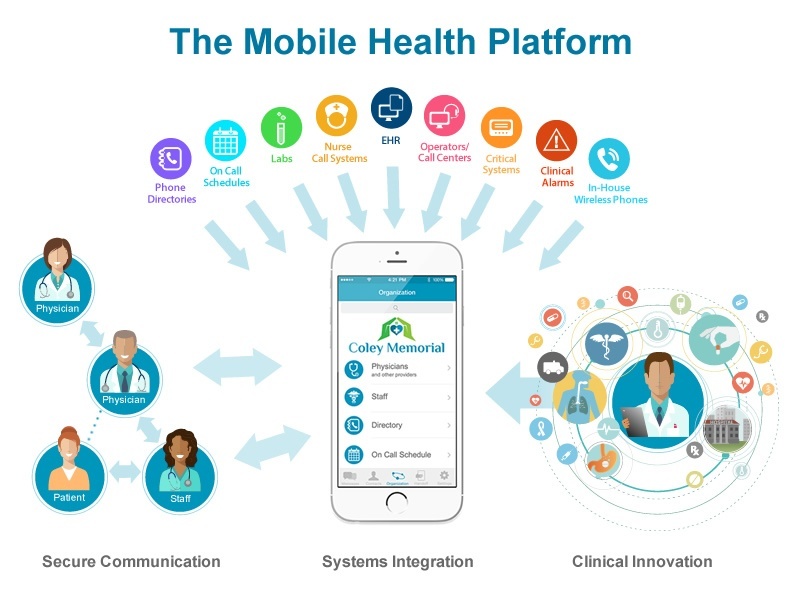
As more and more functionality is added to the smartphone, the fog surrounding mobile healthcare is starting to lift and what is emerging is the integrated mobile health platform. This includes a central hub where physicians, nurses and patients can access the necessary information to care for patients or stay healthy.

Smartphone operating systems like Apple and Android are giving more control to mobile engineers, resulting in the development of very smart mobile applications. These applications are highly secure while connecting to many different endpoints and communicating and organizing information between a variety of hospital systems.

Ultimately, the definition of a mobile health platform is a hub that receives information from all corners of a hospital system and organizes it in one place for the mobile end user to view. Whether it’s securely texting with a physician, nurse or patient, receiving a laboratory result or exchanging patient information, the platform is at the center of it all.

 Hospital CIOs and their team will never be able to stay up-to-date on every emerging technology that could impact patient care, but with a mobile health platform, they don’t have to. Implementing a mobile health platform gives a CIO the ability to integrate a new technology when they are ready and have an existing mobile endpoint to receive the information from an operator console, a pager, a medical device, active directory, EHR or a call scheduling system.

An effective mobile health platform has three pillars:

1. Enhanced secure texting and communication

2. Systems integration

3. Clinical innovation

In this sponsored white paper from DocHalo, you will learn how an ideal mobile health platform addresses these three pillars and includes built in flexibility so organizations can adopt new technology at their desired pace.


Download Now

  • LinkedIn
  • Twitter
  • Facebook
  • Email
  • Print

Tagged With: Secure Text Messaging in Healthcare

Tap Native

Get in-depth healthcare technology analysis and commentary delivered straight to your email weekly

Reader Interactions

Primary Sidebar

Subscribe to HIT Consultant

Latest insightful articles delivered straight to your inbox weekly.

Submit a Tip or Pitch

2026 Predictions & Trends

Healthcare 2026 Forecast: Executives on AI Survival, Financial Reckoning, and the End of Point Solutions

2026 Healthcare Executive Predictions: Why the AI “Pilot Era” Is Officially Over

Most-Read

NYC Health + Hospitals to Acquire Maimonides in $2.2B Safety Net Overhaul

NYC Health + Hospitals to Acquire Maimonides in $2.2B Safety Net Overhaul

KLAS Report: Why Hospitals Are Choosing Efficiency Over 'Agentic' AI Hype in 2025

KLAS Report: Why Hospitals Are Choosing Efficiency Over ‘Agentic’ AI Hype in 2025

Advanced Primary Care 2026: Top 6 Investments for Health Systems According to Harvard Medical School

Advanced Primary Care 2026: Top 6 Investments for Health Systems According to Harvard Medical School

AI Nutrition Labels: The Key to Provider Adoption and Patient Trust?

AI Nutrition Labels: The Key to Provider Adoption and Patient Trust?

Kristen Hartsell, VP of Clinical Services, RedSail Technologies

The Pharmacy Closures Crisis: How Independent Pharmacies Are Fixing Pharmacy Deserts

HHS Launches 'OneHHS' AI Strategy to Integrate AI Across CDC, CMS, and FDA for Efficiency and Public Trust

HHS Launches ‘OneHHS’ AI Strategy to Integrate AI Across CDC, CMS, and FDA for Efficiency and Public Trust

From Overwhelmed to Optimized: How AI Agents Address Staffing Challenges and Burnout in Healthcare

From Overwhelmed to Optimized: How AI Agents Address Staffing Challenges and Burnout in Healthcare

The VBC Paradox: Why Hospitals Are Doubling Down on Value-Based Care While Revenue at Risk Lags

The VBC Paradox: Why Hospitals Are Doubling Down on Value-Based Care While Revenue at Risk Lags

Tebra Secures $250M to Challenge Legacy EHRs with AI-Powered Automation

Tebra Secures $250M to Challenge Legacy EHRs with AI-Powered Automation

AstraZeneca Selects Salesforce Agentforce Life Sciences to Deploy AI-Powered Global Customer Engagement

AstraZeneca Selects Salesforce Agentforce Life Sciences to Deploy AI-Powered Global Customer Engagement

Secondary Sidebar

Footer

Company

  • About Us
  • Advertise with Us
  • Reprints and Permissions
  • Op-Ed Submission Guidelines
  • Contact
  • Subscribe

Editorial Coverage

  • Opinion
  • Health IT
    • Care Coordination
    • EMR/EHR
    • Interoperability
    • Population Health Management
    • Revenue Cycle Management
  • Digital Health
    • Artificial Intelligence
    • Blockchain Tech
    • Precision Medicine
    • Telehealth
    • Wearables
  • Startups
  • Value-Based Care
    • Accountable Care
    • Medicare Advantage

Connect

Subscribe to HIT Consultant Media

Latest insightful articles delivered straight to your inbox weekly

Copyright © 2026. HIT Consultant Media. All Rights Reserved. Privacy Policy |