
• Skip to main content
  • Skip to secondary menu
  • Skip to primary sidebar
  • Skip to secondary sidebar
  • Skip to footer

  • Opinion
  • Health IT
    • Behavioral Health
    • Care Coordination
    • EMR/EHR
    • Interoperability
    • Patient Engagement
    • Population Health Management
    • Revenue Cycle Management
    • Social Determinants of Health
  • Digital Health
    • AI
    • Blockchain
    • Precision Medicine
    • Telehealth
    • Wearables
  • Life Sciences
  • Investments
  • M&A
  • Value-based Care
    • Accountable Care (ACOs)
    • Medicare Advantage

Survey: 54% of Patients Would Switch Providers After Data Breach

by Fred Pennic 03/13/2015 4 Comments

  • LinkedIn
  • Twitter
  • Facebook
  • Email
  • Print

Survey: 54% of Patients Would Switch Providers After Data Breach

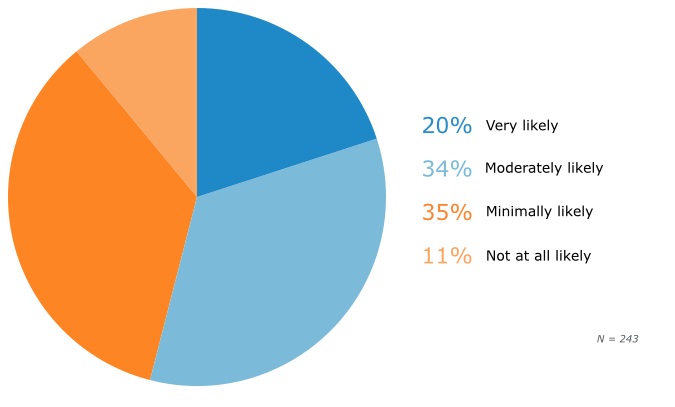
54 percent of patients say they would be “very” or “moderately likely” to change providers after a security data breach impacting their personal health information, according to a recent survey conducted by Software Advice. In light of recent high-profile security breaches at medical organizations such as Anthem, Software Advice surveyed patients on their fears of a breach, and explored how software solutions can minimize data security risks. 

Patients Most Likely to Switch Providers if Breach Caused by Staff

The survey also assessed how likely patients would be to change providers as a result of various security-breach scenarios:

– Staff misconduct: Unauthorized health care workers access patient records;

– Staff carelessness: Health care workers misplace patient records;

– Cyberattack: Hackers exploit security deficiencies in the provider’s medical records system;

– Theft: A thief physically steals materials containing medical information, such as paper-based patient records or mobile devices used to access digital records; and,

– Third-party breach: A third party associated with the provider, such as a company hired to dispose of patients’ old medical records, is attacked or otherwise responsible for the breach.

The likelihood of switching providers depends considerably on the type of breach. A combined 69 percent of patients say they would be “extremely” or “moderately likely” to change providers if staff misconduct were to blame for a breach, compared to just 45 percent who say the same if a cyberattack were the cause.

Key Findings

Other key finding of the report include: 

– Forty-five percent of patients are “moderately” or “very concerned” about a security breach involving their personal health information.

– Nearly one-quarter of patients (21 percent) withhold personal health information from their doctors due to data security concerns.

– Only 8 percent of patients “always” read doctors’ privacy and security policies before signing them, and just 10 percent are “very confident” they understand them.

– Only 10 percent of patients say they are “very confident” they understand their health care providers’ privacy and security policies 

  • LinkedIn
  • Twitter
  • Facebook
  • Email
  • Print

Tagged With: Health Care Data Breaches

Tap Native

Get in-depth healthcare technology analysis and commentary delivered straight to your email weekly

Reader Interactions

Primary Sidebar

Subscribe to HIT Consultant

Latest insightful articles delivered straight to your inbox weekly.

Submit a Tip or Pitch

2026 Predictions & Trends

Healthcare 2026 Forecast: Executives on AI Survival, Financial Reckoning, and the End of Point Solutions

2026 Healthcare Executive Predictions: Why the AI “Pilot Era” Is Officially Over

Most-Read

NYC Health + Hospitals to Acquire Maimonides in $2.2B Safety Net Overhaul

NYC Health + Hospitals to Acquire Maimonides in $2.2B Safety Net Overhaul

KLAS Report: Why Hospitals Are Choosing Efficiency Over 'Agentic' AI Hype in 2025

KLAS Report: Why Hospitals Are Choosing Efficiency Over ‘Agentic’ AI Hype in 2025

Advanced Primary Care 2026: Top 6 Investments for Health Systems According to Harvard Medical School

Advanced Primary Care 2026: Top 6 Investments for Health Systems According to Harvard Medical School

AI Nutrition Labels: The Key to Provider Adoption and Patient Trust?

AI Nutrition Labels: The Key to Provider Adoption and Patient Trust?

Kristen Hartsell, VP of Clinical Services, RedSail Technologies

The Pharmacy Closures Crisis: How Independent Pharmacies Are Fixing Pharmacy Deserts

HHS Launches 'OneHHS' AI Strategy to Integrate AI Across CDC, CMS, and FDA for Efficiency and Public Trust

HHS Launches ‘OneHHS’ AI Strategy to Integrate AI Across CDC, CMS, and FDA for Efficiency and Public Trust

From Overwhelmed to Optimized: How AI Agents Address Staffing Challenges and Burnout in Healthcare

From Overwhelmed to Optimized: How AI Agents Address Staffing Challenges and Burnout in Healthcare

The VBC Paradox: Why Hospitals Are Doubling Down on Value-Based Care While Revenue at Risk Lags

The VBC Paradox: Why Hospitals Are Doubling Down on Value-Based Care While Revenue at Risk Lags

Tebra Secures $250M to Challenge Legacy EHRs with AI-Powered Automation

Tebra Secures $250M to Challenge Legacy EHRs with AI-Powered Automation

AstraZeneca Selects Salesforce Agentforce Life Sciences to Deploy AI-Powered Global Customer Engagement

AstraZeneca Selects Salesforce Agentforce Life Sciences to Deploy AI-Powered Global Customer Engagement

Secondary Sidebar

Footer

Company

  • About Us
  • Advertise with Us
  • Reprints and Permissions
  • Op-Ed Submission Guidelines
  • Contact
  • Subscribe

Editorial Coverage

  • Opinion
  • Health IT
    • Care Coordination
    • EMR/EHR
    • Interoperability
    • Population Health Management
    • Revenue Cycle Management
  • Digital Health
    • Artificial Intelligence
    • Blockchain Tech
    • Precision Medicine
    • Telehealth
    • Wearables
  • Startups
  • Value-Based Care
    • Accountable Care
    • Medicare Advantage

Connect

Subscribe to HIT Consultant Media

Latest insightful articles delivered straight to your inbox weekly

Copyright © 2026. HIT Consultant Media. All Rights Reserved. Privacy Policy |