

What You Should Know
Global clinical AI platform Heidi raises $340M in total new capital, comprising a $100M Series C equity round at a $900M valuation and a $240M growth investment from General Catalyst’s Customer Value Fund (CVF).The Series C equity financing was led by long-term investor Blackbird, with continued participation from Phoenix Court (LocalGlobe, Latitude, and Solar funds), Point72 Private Investments, and Headline, bringing Heidi’s cumulative funding to $436.6M.The $240M CVF
Read More
Artificial Intelligence in Healthcare | News, Analysis, Insights - HIT Consultant
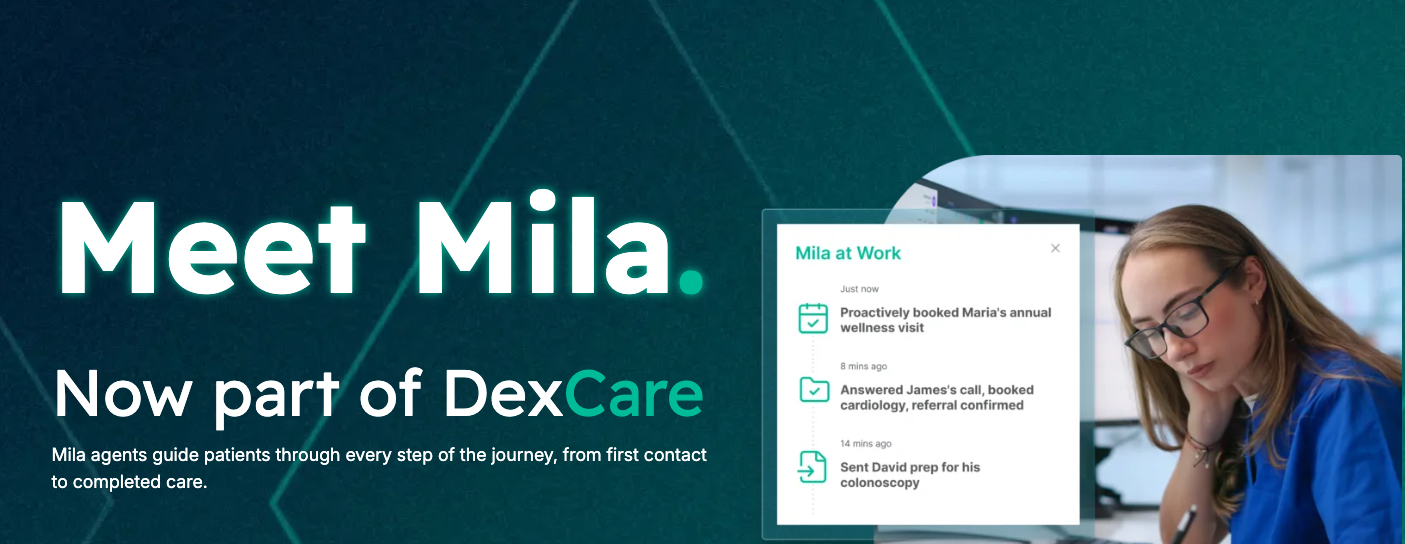
DexCare Acquires AI Care Coordination Platform Mila Health to Unify Patient Access and Conversational Scheduling
What You Should Know
Patient access and navigation leader DexCare, Inc. announced the acquisition of Mila Health, an AI-driven care coordination company whose conversational agents autonomously call, text, and chat with patients to manage scheduling, pre-visit preparation, and post-discharge follow-ups.The transaction represents DexCare’s second corporate acquisition, building on its 2022 purchase of Womp, Inc., and expands its capital-backed platform that has raised $146 million to date
Read More
Healthcare’s Semantic AI Blind Spot: Why LLMs Cannot Replace Deterministic Data Infrastructure

Healthcare AI has reached an inflection point. AI is rapidly moving from isolated demonstrations to production systems embedded in clinical, operational, and research workflows. A new generation of AI applications is emerging to support nearly every aspect of healthcare delivery, operations, and research.
As organizations deploy these capabilities at scale, they are exposing an invisible semantic challenge that has quietly existed for decades. Clinical information is translated
Read More
Ferry Health Emerges from Stealth with $9M to Automate Patient Appointment Scheduling

What You Should Know
Ferry Health emerged from stealth, securing $9M in seed funding to deploy an autonomous, agentic AI personal assistant that handles complex healthcare logistics for patients.The seed financing round was co-led by Andreessen Horowitz (a16z) and Index Ventures, with participation from Avid Ventures, Layout Ventures, SV Angel, BoxGroup, Asymmetric Capital Partners, and prominent angel investors including Jay Desai (co-founder of Bamboo Health) and the founders of Grow
Read More
Kairon Health Secures $5M to Build the AI Execution Layer for Value-Based Care

What You Should Know
Kairon Health, the AI-native execution layer for value-based care (VBC) that it has raised $5M in venture funding to automate day-to-day operations for risk-bearing provider organizations.The financing round was led by Flare Capital Partners, with participation from Tau Ventures and existing investors Lightbank, General Advance, and Pave Health Ventures.The platform addresses the "visibility versus execution" deficit in population health, replacing legacy analytics tools
Read More
Why Calibrated Uncertainty and Deliberate Abstention Drive True Clinical AI Adoption

Most teams building AI systems treat confidence as a solved problem. The model produces a probability, the interface displays it, and the reliability requirement gets checked off. Within weeks, the number becomes furniture. Anyone who has watched a clinician work through a queue of suggested codes, each stamped with a confidence percentage, knows the pattern: when the scores cluster near the top of the range, a 92 gives the reviewer little more reason to act than an 89, and they fall back on
Read More
M&A: Sword Acquires Headspace in All-Cash Deal Worth Up to $300M to Unify Physical and Mental AI Care
What You Should Know
Sword, the $4B AI health company, signed a definitive agreement to acquire digital mental health and mindfulness leader Headspace in an all-cash transaction valued at up to $300 million, with closing expected by the beginning of Q4 2026.The transaction unites Sword’s clinical AI Care platform with Headspace’s global reach of 100 million lives across 200 countries, 20,000 corporate enterprise clients, and health plan integrations including Cigna Healthcare and Kaiser
Read More
R1 Unveils Phare Utilization Management on Phare OS to Eliminate Medical Necessity Denials

What You Should Know
Healthcare revenue cycle management leader R1 announced the launch of Phare Utilization Management (Phare UM), an AI-enabled solution moving hospital utilization management from retrospective chart auditing to proactive, real-time decisioning.The Guthrie Clinic—a non-profit, integrated health system serving northern Pennsylvania and upstate New York—is among the first health systems to deploy Phare UM across its acute care operations.Built directly on Phare OS, R1’s core
Read More
FDA Awards Cognita Imaging $1.29M to Validate LLM-as-a-Jury Evaluation Across 1 Million Radiology Reports

What You Should Know
Cognita Imaging, Inc. (a wholly owned subsidiary of Mosaic Clinical Technologies, Inc., operating within the broader Radiology Partners ecosystem) was awarded a $1.29 million research contract by the U.S. Food and Drug Administration (FDA) to pioneer new methodologies for evaluating autonomous, generative AI radiology reports.The 18-month contract, effective June 22, 2026, was funded under the FDA’s Broad Agency Announcement (BAA) program for advanced research and
Read More
Rutgers, RWJBarnabas Health, and AWS Launch Innovation Hub at HELIX
What You Should Know
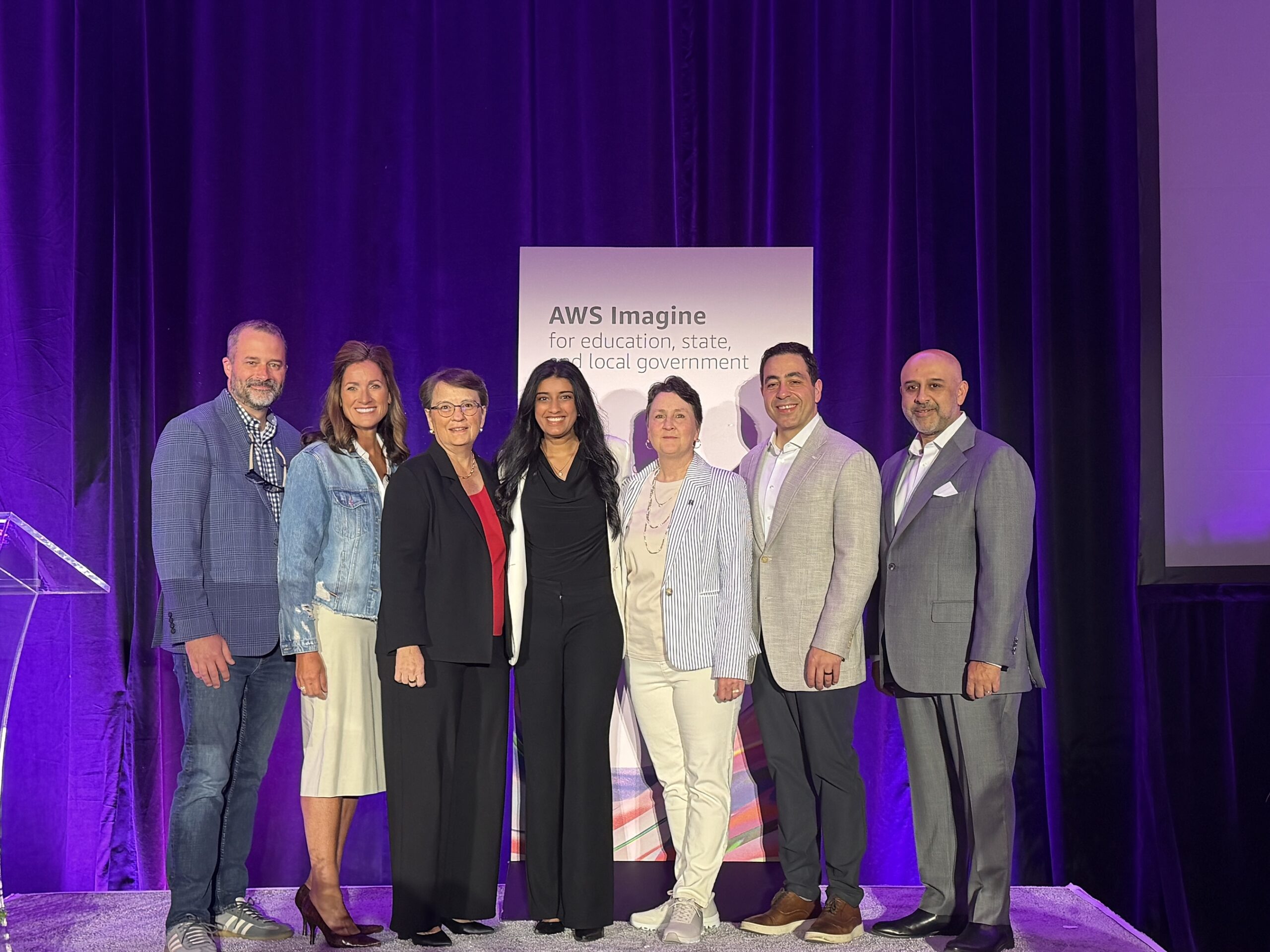
Rutgers University and RWJBarnabas Health—New Jersey’s largest academic health system spanning 14 hospitals and over 5 million annual patients—have partnered with Amazon Web Services (AWS) to launch the Rutgers/RWJBarnabas Health Innovation Hub.Housed inside the Health and Life Science Exchange (HELIX) in New Brunswick, N.J., which serves as the physical home for the unified Rutgers School of Medicine (merging Robert Wood Johnson Medical School and New Jersey Medical
Read More
