
What You Should Know
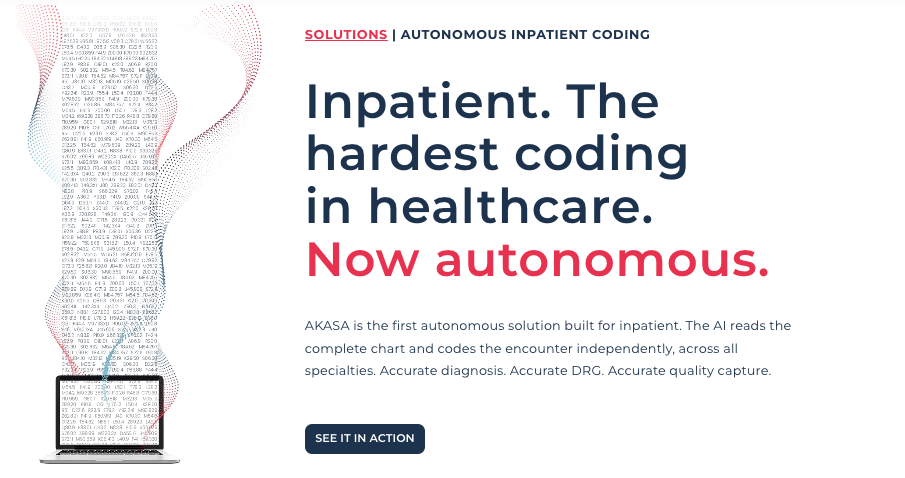
Healthcare revenue cycle generative AI company AKASA announced the commercial launch of its autonomous AI platform for the revenue cycle mid-cycle, expanding beyond AI-powered prebill review into fully autonomous execution for inpatient medical coding and clinical documentation integrity (CDI).Addresses the most complex, resource-intensive operational bottleneck in acute care: while human medical coders typically require 30 to 60 minutes per inpatient chart (with
Read More
Artificial Intelligence in Healthcare | News, Analysis, Insights - HIT Consultant
Kontakt.io Releases Guide to Implementing AI in Healthcare Operations: Predictive Models vs. LLM Hallucinations
What You Should Know
Indoor IoT and healthcare ambient intelligence provider Kontakt.io released an enterprise strategy whitepaper titled The Ultimate Guide to Implementing AI in Healthcare Operations, analyzing real-world implementations, 20+ peer-reviewed studies, and operational telemetry from more than 100 hospital deployments.Documents an adoption paradox across health system IT: while 65% of U.S. hospitals currently utilize predictive AI models (predominantly supplied by incumbent EHR
Read More
Ortet Launches with $500M from Thoreau to Build Frontier AI Lab for Healthcare

What You Should Know
Ortet, a frontier artificial intelligence laboratory focused on healthcare, officially launched, backed by a landmark $500M investment commitment from Thoreau, the technology holding platform engineered to build core compute, clinical rules, and research infrastructure across healthcare markets.The startup is building a patient-centered, multi-dimensional foundation model that spans compute infrastructure, proprietary data networks, frontier research, model training, and
Read More
EliseAI Secures $350M to Scale Agentic Workflows Across Healthcare Operations
What You Should Know
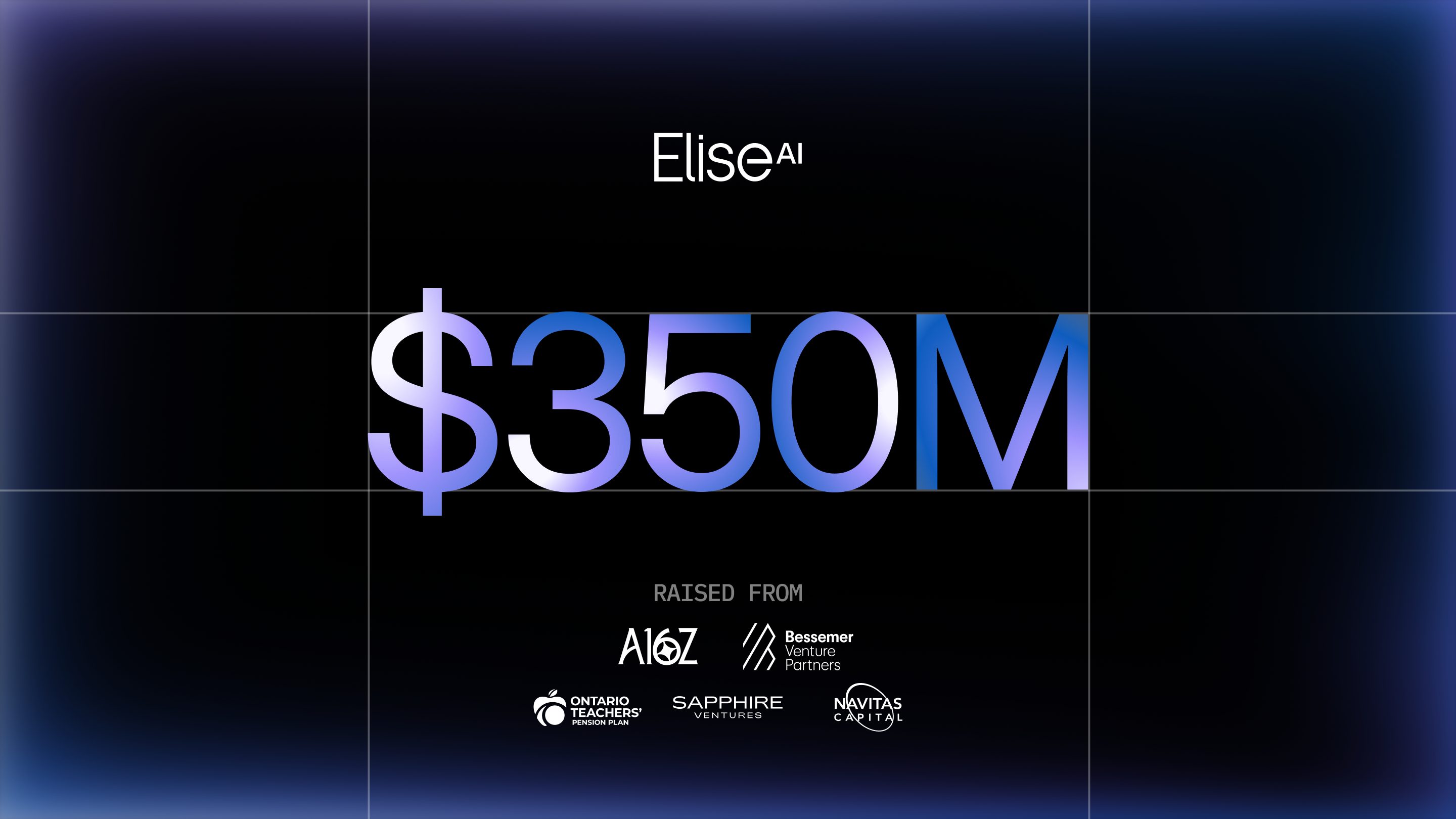
Workflow automation company EliseAI announced that it has raised $350M in new financing at a $4B valuation to deepen its operational automation platform across the housing and healthcare industries.The financing was co-led by Andreessen Horowitz (a16z) and Bessemer Venture Partners, with participation from major institutional and growth investors including Ontario Teachers' Pension Plan, Sapphire Ventures, and Navitas Capital.EliseAI’s platform currently powers one in six
Read More
Capstone Partners Reports 93.8% Surge in AI-Enabled Healthcare IT M&A
What You Should Know
Middle-market investment banking firm Capstone Partners (a subsidiary of Huntington Bancshares Incorporated) released its September 2026 Healthcare Information Technology (IT) Market Update, documenting an acceleration in healthcare artificial intelligence dealmaking and B2B workflow automation.Overall Healthcare IT merger and acquisition (M&A) deal volume reached 179 announced or completed transactions year-to-date (YTD) 2026 (a 22.6% increase year-over-year),
Read More
Ensemble Health Partners with Penelope to Shift Real-Time Policy Intelligence Upstream
What You Should Know
End-to-end revenue cycle management leader Ensemble Health Partners announced at its Healthcare Leadership Exchange, a strategic enterprise partnership with Penelope Health ("Penelope"), a real-time healthcare policy intelligence platform.The collaboration natively embeds Penelope’s structured clinical policy engine directly into Ensemble’s proprietary revenue cycle intelligence layer, shifting policy and medical necessity verification upstream before clinical care is
Read More
UltraSight Secures $24M to Scale Point-of-Care Cardiac Ultrasound Across Health Systems

What You Should Know
UltraSight™, a pioneer in AI-guided cardiac ultrasound workflows, announced it raised $24M in Series B2 financing.Alive HealthTech Growth Fund led the funding round, with co-investment from Deep Insight, Star51 Capital, Connecticut Innovations, and eHealth Ventures, and participation from existing clinical and venture stakeholders, including Mayo Clinic Ventures, NYU, and Iron Nation.Proceeds will fund the U.S. commercial expansion of the UltraSight Echosystem and
Read More
Healthcare AI Governance: Moving from Data-Sensitivity Tiers to Reversibility Controls in Agentic Systems

Ashok Benial is right. His argument in these pages last week — that most hospitals are buying AI faster than they can govern it, that "the tools go live while the guardrails are still on a slide deck" — is the most useful thing anyone has said about healthcare AI governance this quarter. His three controls are the correct ones: validate locally against your own population, monitor for drift after go-live, and fund the human review layer as a control system rather than overhead. Every health
Read More
Heidi Secures $340M to Transition from Clinical Documentation to Supervised Agentic Execution

What You Should Know
Global clinical AI platform Heidi raises $340M in total new capital, comprising a $100M Series C equity round at a $900M valuation and a $240M growth investment from General Catalyst’s Customer Value Fund (CVF).The Series C equity financing was led by long-term investor Blackbird, with continued participation from Phoenix Court (LocalGlobe, Latitude, and Solar funds), Point72 Private Investments, and Headline, bringing Heidi’s cumulative funding to $436.6M.The $240M CVF
Read More
DexCare Acquires AI Care Coordination Platform Mila Health to Unify Patient Access and Conversational Scheduling
What You Should Know
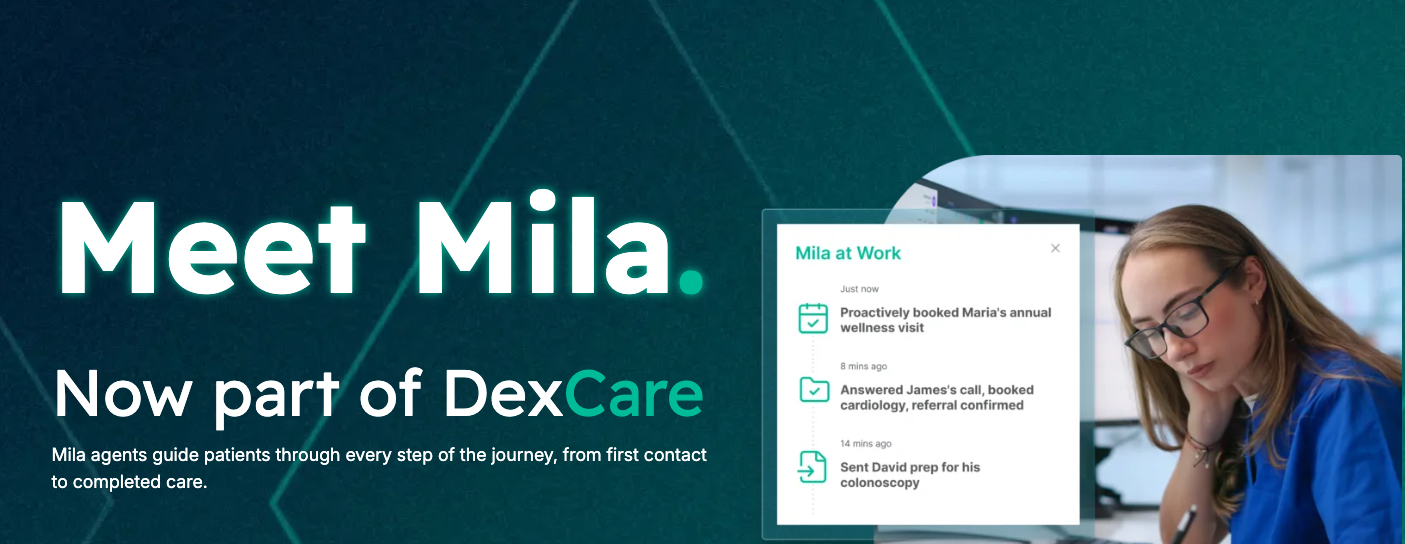
Patient access and navigation leader DexCare, Inc. announced the acquisition of Mila Health, an AI-driven care coordination company whose conversational agents autonomously call, text, and chat with patients to manage scheduling, pre-visit preparation, and post-discharge follow-ups.The transaction represents DexCare’s second corporate acquisition, building on its 2022 purchase of Womp, Inc., and expands its capital-backed platform that has raised $146 million to date
Read More
