

What You Should Know
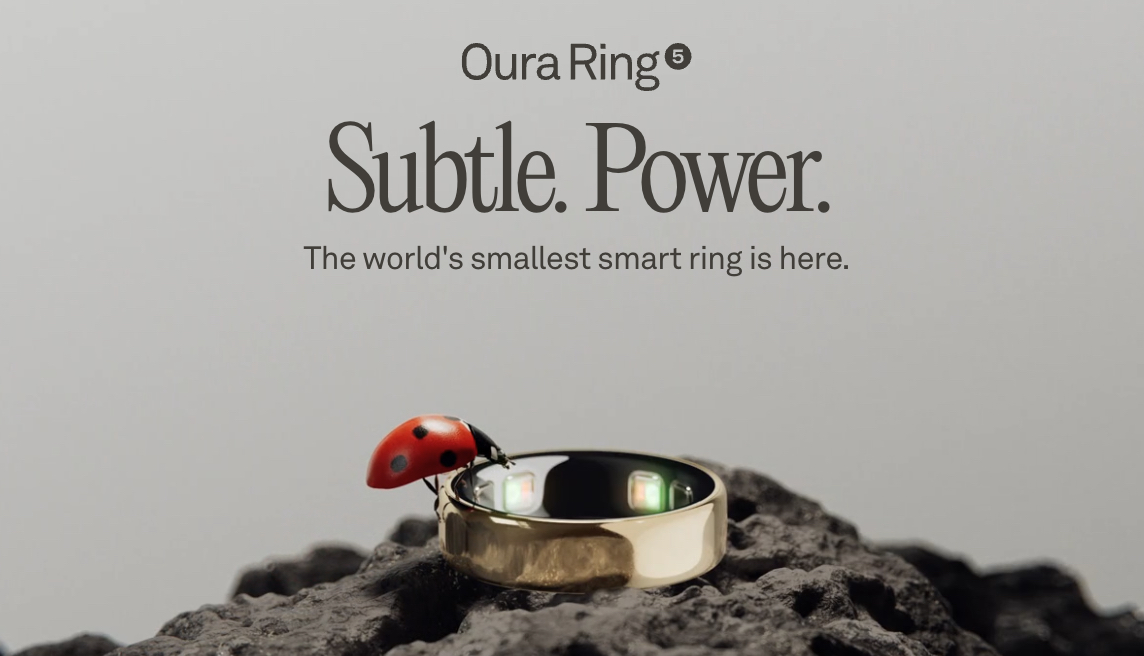
- Wearable technology leader ŌURA has officially launched Oura Ring 5, re-engineering its mechanical and electrical architecture to create a device that is 40% smaller than its predecessor.
- Moving past passive metrics, the latest software update introduces Health Radar, a clinical expansion featuring background tracking of blood pressure signals, nighttime blood pressure drops, and 30-day rolling respiratory data.
- For individuals managing anti-obesity medications, the application debuts GLP-1 Insights, unifying dosing schedules, subjective side-effect metrics, and weight profiles with continuous sleep and biometric tracking.
- The company is building out a connected care infrastructure by integrating an on-demand, AI-enabled clinical triage layer via Counsel Health, allowing users in 43 U.S. states to text licensed physicians directly inside the app.
- Oura Ring 5 is constructed from non-allergenic titanium with an extra-strong physical vapor deposition scratch coating, retails starting at $399, and begins shipping globally on June 4, 2026.
Beyond Awareness to Action: Oura Ring 5 Unveils Proactive Health Radar and Connected Care Pathways
The global consumer wearable sector has reached a critical structural turning point. For the past decade, the market has been dominated by wrist-worn smartwatches that primarily functioned as descriptive biometric scorecards—tracking raw daily step counts, capturing broad heart rate zones, and archiving basic sleep metrics. However, as consumers grapple with complex chronic conditions, rising healthcare costs, and expanding insurance navigation hurdles, the demand for technology has fundamentally shifted.
Modern users are no longer satisfied with passive digital tracking that simply tells them they slept poorly or exercised frequently. They demand proactive, predictive intelligence capable of converting raw biometric noise into structured, clinical systems of action. Furthermore, as behavioral medicine increasingly merges with medical weight management therapies, the hardware housing these insights must evolve past bulky screens to deliver highly discreet, continuous, and lifestyle-integrated forms.
To dismantle the traditional boundaries separating consumer electronics from proactive health optimization, smart ring pioneer ŌURA has announced the global launch of Oura Ring 5. Built on twelve years of categorical engineering, the device combines a massive architectural miniaturization with a comprehensive ecosystem of clinical health records, real-time activity tracking, and on-demand physician integration.
Miniaturizing the Pulse: The Re-Engineered Architecture
The core engineering triumph of Oura Ring 5 centers on a comprehensive overhaul of its underlying hardware parameters, achieving a 40% reduction in total size compared to Oura Ring 4 to establish itself as the world’s smallest smart ring. To construct this thinned, lightweight, non-allergenic titanium silhouette without sacrificing structural data accuracy, ŌURA re-engineered its mechanical, electrical, optical, and battery geometries from the ground up.
The ring’s upgraded biometric signal layer integrates low-profile sensor domes for optimal skin contact, high-efficiency LEDs, and twelve dedicated signal pathways. This advanced hardware baseline guarantees a clean, continuous optical reading across diverse finger structures and skin tones. Crucially, the finger remains the optimal location for consumer biometric sensing. The local digital arteries deliver a clear pulse signal that is up to 100 times stronger than signals captured at the wrist, enabling Oura Ring 5 to track real-world cardiovascular indicators with a level of precision that legacy smartwatches cannot replicate.
Pricing & Availability
Crafted to withstand uninterrupted daily wear, the device features an extra-strong physical vapor deposition (PVD) coating for advanced scratch resistance, along with a dust- and waterproof rating up to 100 meters. Pre-orders open immediately, starting at $399 for base finishes (Silver and Black) and $499 for premium finishes (including modern Gold and Deep Rose), with global shipping scheduled to commence on June 4, 2026.
Activating the Health Radar: Blood Pressure Signals and Sleep Regularity
Alongside the miniaturized hardware, ŌURA has rolled out a sophisticated suite of preventative clinical software applications. Leading this transformation is Health Radar, a proactive monitoring matrix engineered in collaboration with more than 40 in-house medical doctors and Ph.D. scientists. Health Radar continuously analyzes background biometric signals to surface anomalous physiological patterns long before they escalate into acute medical issues.
The primary clinical focus of the radar is the trackable measurement of Blood Pressure Signals. Cardiovascular strain is notoriously invisible during daily activity, obscured by stress, movement, and caffeine consumption. Oura Ring 5 solves this tracking dilemma by monitoring blood pressure patterns during sleep, a critical resting state when the human cardiovascular system outlines its truest condition. The app monitors nighttime dipping trends—alerting users when their biometrics point to a persistent lack of nocturnal blood pressure reduction, which serves as a vital early indicator of long-term cardiovascular risk. Users can also log manual cuff measurements directly into the interface to align real-world diagnostic numbers with their ongoing physiological data streams.
To further expand its sleep and respiratory diagnostics, the platform integrates a 30-day rolling analysis of Nighttime Breathing disturbances. To transition these insights into direct medical care, ŌURA has partnered with home-health respiratory giant ResMed. Members documenting elevated respiratory interruptions can instantly access trusted diagnostic education, complete validated sleep assessments, and connect directly with independent medical professionals to evaluate potential home care pathways.
Hardwiring Care Delivery and GLP-1 Adherence Tools
Oura Ring 5 is positioning itself to serve as a primary, interoperable data link for connected care. Through its newly deployed Health Records module, the platform merges clinical data with daily wearable signals into a single, privacy-first longitudinal record. In the United States, members can securely sync eligible provider portals to import verified diagnoses, active medications, lab metrics, and allergen profiles. This function delivers a direct preview of ŌURA’s commitment under the Centers for Medicare & Medicaid Services (CMS) Health Technology Ecosystem pledge to seamlessly link interoperable clinical infrastructure with everyday biological signals.
To bridge the gap between algorithmic insight and direct medical intervention, the app has embedded an on-demand, AI-enabled clinical triage layer in partnership with Counsel Health. The integration combines specialized medical language models with a dedicated network of licensed physicians. Members can ask complex health questions and receive clinical guidance from certified providers within minutes natively inside the app, a capability launching across 43 U.S. states.
Concurrently, the platform has launched GLP-1 Insights to address the rapid rise of metabolic medication self-management. Instead of forcing patients to manage their therapy across disconnected apps, Oura integrates dosing records, user side-effect logs, and weight tracking directly with core biometric signals like sleep, readiness, activity, and metabolic stress. Through subsequent Lab Uploads, members can import blood biomarker results straight into the app, positioning hard lab data alongside continuous wearable trends for an exhaustive view of metabolic health.
