

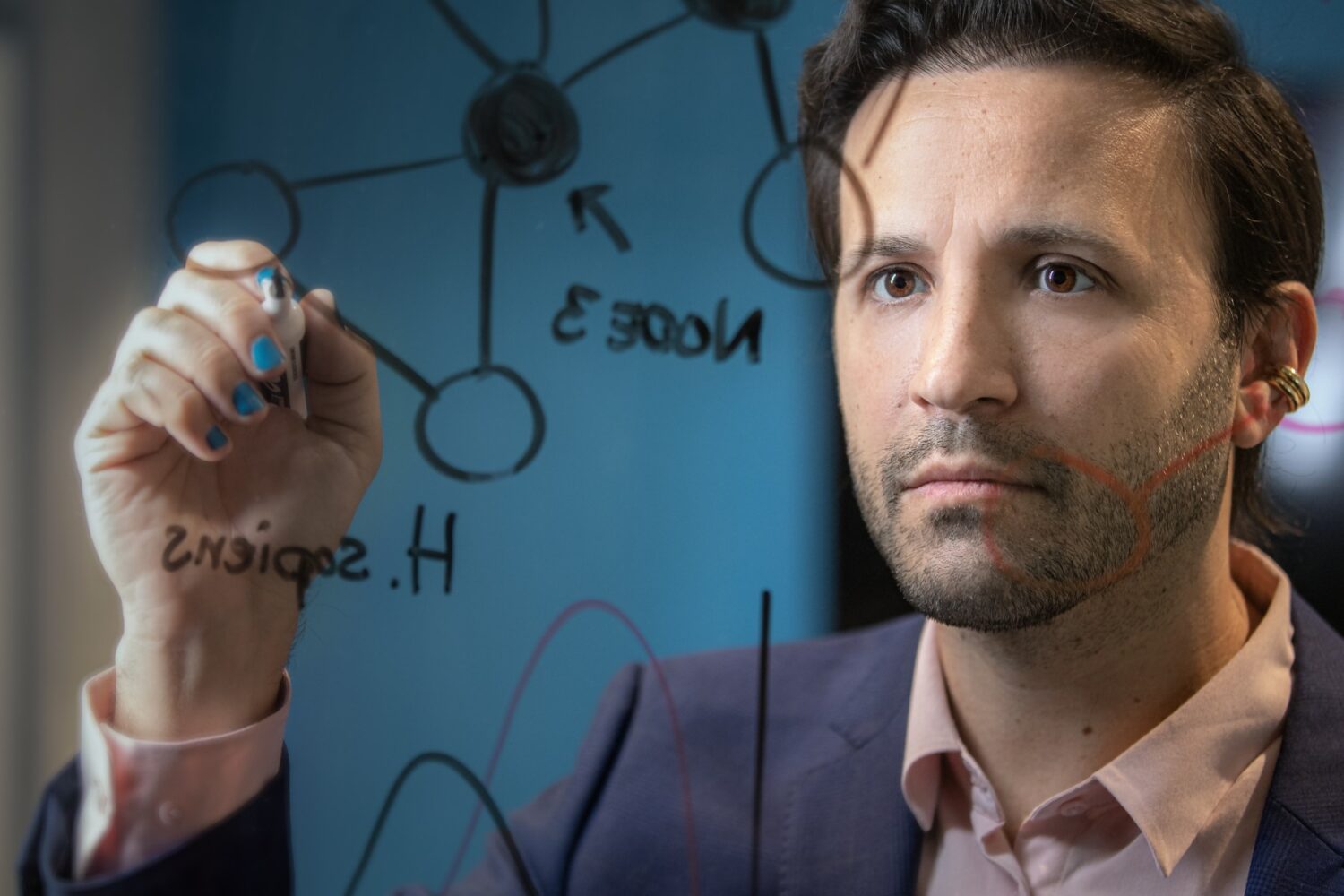
What You Should Know
– Cedars-Sinai has secured a $5.05M ARPA-H contract to build KronosRx, an AI platform that predicts drug toxicity by pairing millions of electronic health records with “patient avatars”—human stem-cell-derived organoids.
– The strategic initiative aims to solve the 30% failure rate of clinical trials caused by adverse drug reactions that animal models fail to detect, potentially slashing drug development costs and accelerating patient access to safe therapies.
Combatting the “Valley of Death” in Drug Development
The “valley of death” in drug development is often paved with promising molecules that looked perfect in a lab rat but proved toxic in a human. Today, Cedars-Sinai announced a major offensive against this billion-dollar bottleneck. Under an up to $5,054,235 contract from the Advanced Research Projects Agency for Health (ARPA-H), the institution is developing KronosRx, a platform designed to replace animal proxies with “patient avatars” and deep-learning computational models.
The stakes are high. Current estimates suggest that more than 30% of clinical trials fail solely due to adverse drug reactions (ADRs). By the time these toxicities are discovered in Phase I or II human trials, pharmaceutical companies have often already spent hundreds of millions of dollars.
The Technical Architecture: Avatars Meets Big Data
KronosRx isn’t just another predictive algorithm; it is a multi-modal integration of biological hardware and computational software.
- The Hardware (Patient Avatars): Utilizing induced pluripotent stem cells (iPSCs), the team creates organoids and organ-on-chip systems. These “avatars” are tiny, functioning cellular models of human organs—such as the heart and brain—that mimic real-time responses to experimental drugs.
- The Software (AI & EHR Integration): These biological responses are fed into AI models trained on millions of longitudinal, anonymous data points from Cedars-Sinai’s vast Electronic Health Record (EHR) network.
According to Nicholas Tatonetti, PhD, the project’s lead investigator and Vice Chair of Computational Biomedicine at Cedars-Sinai, the goal is “dynamic” modeling. Unlike static animal tests, KronosRx accounts for variables like age, comorbidities, and polypharmacy (how a drug interacts with other medications a patient is already taking).
The Team Behind the Tech
The project brings together a “who’s who” of regenerative and computational medicine:
- Clive Svendsen, PhD: Focusing on neurotoxicity using stem cell technology.
- Arun Sharma, PhD: Utilizing cardiac organoids to assess cardiotoxicity (a leading cause of drug withdrawal).
- Graciela Gonzalez-Hernandez, PhD: Managing the complex task of mining unstructured text in EHRs to find “molecular phenotypes.”
“Each year, many promising drugs fail in trials because animal tests and short-term lab studies cannot predict how medicines behave in real people over time,” said Nicholas Tatonetti, PhD, vice chair of Computational Biomedicine at Cedars-Sinai and the project’s lead investigator. “These failures delay lifesaving treatments and drive up drug development costs.”
