

• Skip to main content
  • Skip to secondary menu
  • Skip to primary sidebar
  • Skip to secondary sidebar
  • Skip to footer

  • Opinion
  • Health IT
    • Behavioral Health
    • Care Coordination
    • EMR/EHR
    • Interoperability
    • Patient Engagement
    • Population Health Management
    • Revenue Cycle Management
    • Social Determinants of Health
  • Digital Health
    • AI
    • Blockchain
    • Precision Medicine
    • Telehealth
    • Wearables
  • Life Sciences
  • Investments
  • M&A
  • Value-based Care
    • Accountable Care (ACOs)
    • Medicare Advantage

Precision Medicine: Is Personalized Care Really Here?

by Jasmine Pennic 06/29/2022 Leave a Comment

  • LinkedIn
  • Twitter
  • Facebook
  • Email
  • Print
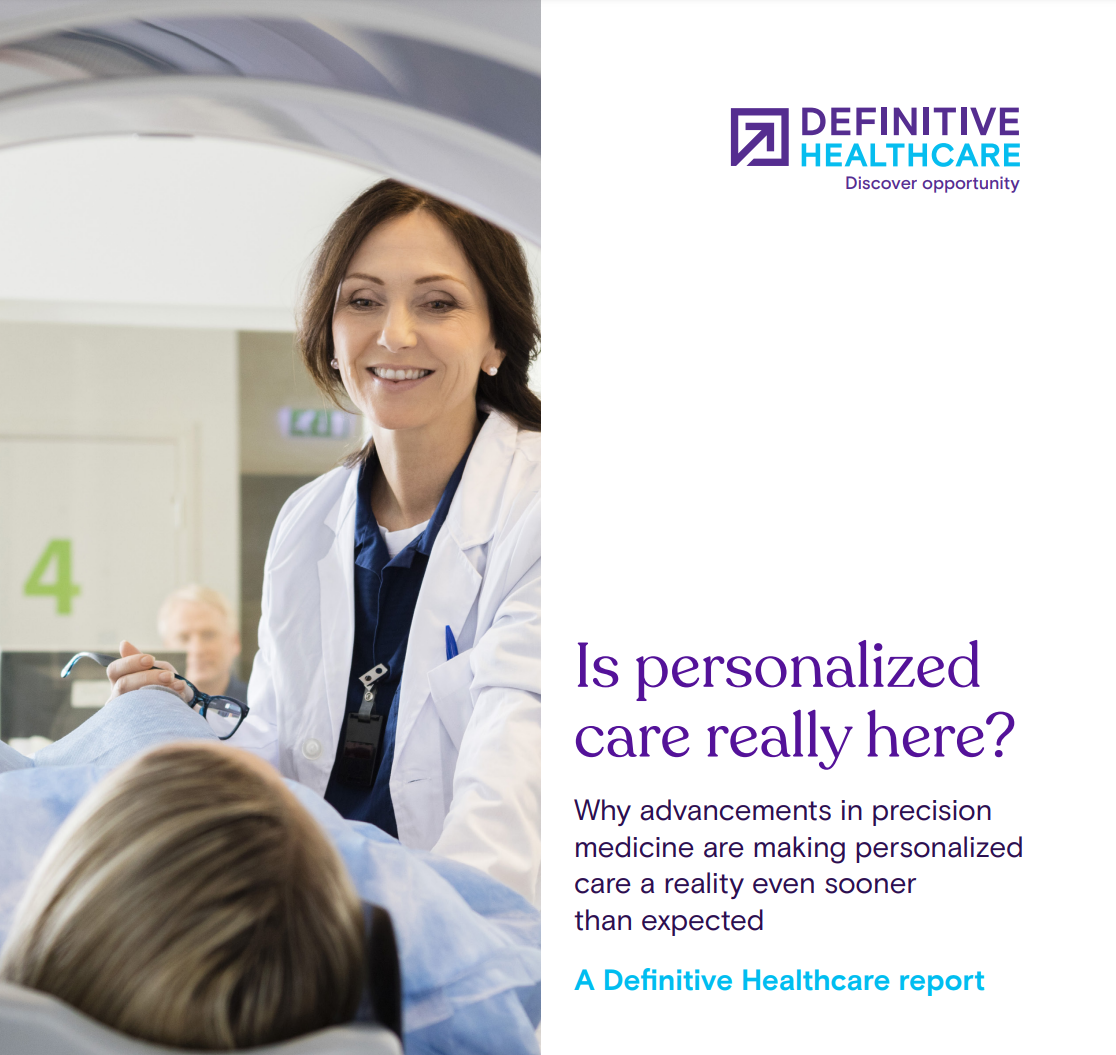
Is Personalized Care Really Here

What You Should Know:

– New Definitive Healthcare report, Is Personalized Care Really Here? analyzes the US claims data to review how precision medicine has been used in recent years for cancer, transplant matching, genetic testing during pregnancy and more.

– Trends within — and adjacent to — precision medicine suggests that consumer preferences for more effective, convenient and affordable care are driving rising rates of precision medicine procedures. Furthermore, the data reveal the ways that consumers are bucking norms and claiming greater agency over their lives: they’re having children later, skipping both necessary and elective treatments when they deem costs too high and are generally placing less trust in their providers, often turning to the internet for crowd-sourced clinical guidance.

Report Background

The relationship between consumer interest and technological development has always been a question of chickens and eggs. As new technologies are developed, the surrounding media cycle generates consumer interest. And yet, simultaneously, organizations spend massive sums tracking that interest to focus their development efforts on the most marketable tech. Precision medicine, a healthcare model centered on highly personalized care (that is, personalized down to the patient’s genetic makeup), seems to sit perfectly at that uncomfortable intersection. On one hand, most people probably wouldn’t even know to ask their doctor for a genomic sequencing test to identify a potential tumor. On the other hand, millions of consumers are eagerly mailing their saliva to Silicon Valley in hopes of learning about their health and ancestry from companies using the same technology

Popular methods in precision medicine, according to claims data from Definitive Healthcare, a healthcare commercial intelligence company, include:

Molecular pathology: With a total of 1,533,894 procedures performed during the three-year period of 2019 to 2021, molecular pathology is the biggest precision medicine subcategory by volume

Genomic sequencing: In 2021, procedure volumes skyrocketed to a total of 89,946 (a 23.5% increase from 2019)

Multianalyte assays with algorithmic analyses (MAAAs): In 2021, 101,633 MAAA procedures were performed, demonstrating the greatest volume increase in precision medicine overall

  • LinkedIn
  • Twitter
  • Facebook
  • Email
  • Print

Tagged With: cancer, Definitive Healthcare, Genomic Sequencing, model, Precision Medicine, Silicon Valley

Tap Native

Get in-depth healthcare technology analysis and commentary delivered straight to your email weekly

Reader Interactions

Primary Sidebar

Subscribe to HIT Consultant

Latest insightful articles delivered straight to your inbox weekly.

Submit a Tip or Pitch

Featured Research Report

2026 Best in KLAS Awards: The Full List of Software & Services Winners

Most-Read

The "Platform" Squeeze: Epic Releases Native AI Charting, Putting Venture-Backed Scribes on Notice

The “Platform” Squeeze: Epic Releases Native AI Charting, Putting Venture-Backed Scribes on Notice

Analysis: Oracle Cerner’s Plans for a National EHR

Oracle May Cut 30k Jobs and Sell Cerner to Fund $156B OpenAI Deal

The $1.9B Exit: Why CommonSpirit is Insourcing Revenue Cycle and Tenet is Betting Big on Conifer AI

The $1.9B Exit: Why CommonSpirit is Insourcing Revenue Cycle and Tenet is Betting Big on Conifer AI

KLAS 2026 Rankings: Aledade and Guidehealth Named Top VBC Enablement Firms

KLAS 2026 Rankings: Aledade and Guidehealth Named Top VBC Enablement Firms

Beyond the Hype: New KLAS Data Validates the Financial and Clinical ROI of Ambient AI

Beyond the Hype: New KLAS Data Validates the Financial and Clinical ROI of Ambient AI

Anthropic Debuts ‘Claude for Healthcare’ and Opus 4.5 to Engineer the Future of Life Sciences

Anthropic Debuts ‘Claude for Healthcare’ and Opus 4.5 to Engineer the Future of Life Sciences

OpenAI Debuts ChatGPT Health: A ‘Digital Front Door’ That Connects Medical Records to Agentic AI

OpenAI Debuts ChatGPT Health: A ‘Digital Front Door’ That Connects Medical Records to Agentic AI

From Genes to Hackers: The Hidden Cybersecurity Risks in Life Sciences

From Genes to Hackers: The Hidden Cybersecurity Risks in Life Sciences

Utah Becomes First State to Approve AI System for Prescription Renewals

Utah Becomes First State to Approve AI System for Prescription Renewals

NYC Health + Hospitals to Acquire Maimonides in $2.2B Safety Net Overhaul

NYC Health + Hospitals to Acquire Maimonides in $2.2B Safety Net Overhaul

Secondary Sidebar

Footer

Company

  • About Us
  • 2026 Editorial Calendar
  • Advertise with Us
  • Reprints and Permissions
  • Op-Ed Submission Guidelines
  • Contact
  • Subscribe

Editorial Coverage

  • Opinion
  • Health IT
    • Care Coordination
    • EMR/EHR
    • Interoperability
    • Population Health Management
    • Revenue Cycle Management
  • Digital Health
    • Artificial Intelligence
    • Blockchain Tech
    • Precision Medicine
    • Telehealth
    • Wearables
  • Startups
  • Value-Based Care
    • Accountable Care
    • Medicare Advantage

Connect

Subscribe to HIT Consultant Media

Latest insightful articles delivered straight to your inbox weekly

Copyright © 2026. HIT Consultant Media. All Rights Reserved. Privacy Policy |