

• Skip to main content
  • Skip to secondary menu
  • Skip to primary sidebar
  • Skip to secondary sidebar
  • Skip to footer

How eClinicalWorks Agentic AI Is Helping Revenue Cycle Leaders Improve Financial Performance
  • Opinion
  • Health IT
    • Behavioral Health
    • Care Coordination
    • EMR/EHR
    • Interoperability
    • Patient Engagement
    • Population Health Management
    • Revenue Cycle Management
    • Social Determinants of Health
  • Digital Health
    • AI
    • Blockchain
    • Precision Medicine
    • Telehealth
    • Wearables
  • Life Sciences
  • Investments
  • M&A
  • Value-based Care
    • Accountable Care (ACOs)
    • Medicare Advantage

Innovative Technologies Are the Future of Respiratory Care and Treatment

by HITC Staff 10/13/2020 Leave a Comment

  • LinkedIn
  • Twitter
  • Facebook
  • Email
  • Print
Innovative Technologies Are the Future of Respiratory Care and Treatment

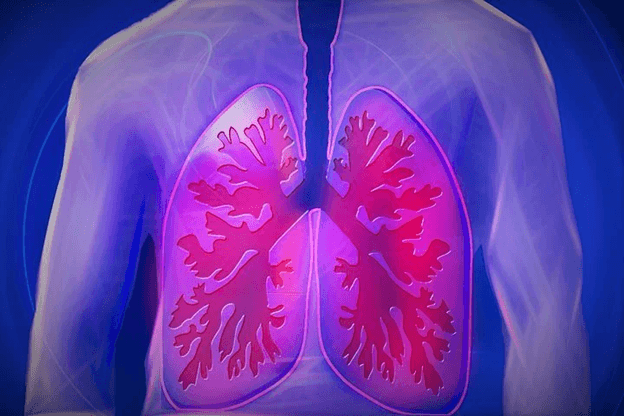
Breath measuring algorithms, smart inhalers, and wearable analytics are at the forefront of respiratory care technology. Lung cancers, including mesothelioma and asthma, account for 70% of the country’s breathing issues. Technological advancements are making it easier for specialists to diagnose and patients to administer self-care.

As the COVID-19 pandemic rages forward, the advancement of pulmonary technology has gotten a boost. There is no way for the medical field to prepare for the long-term issues that many COVID patients may have to deal with in the future. 

For the past decade, as air pollution continues to plague cities worldwide, breathing problems have become the number one cause of hospitalizations. Patients, including those dealing with mesothelioma and represented by Bergman Legal, can now take advantage of some of these innovative technologies. 

Over 300 million people around the world are now battling respiratory illness and disease, and the numbers continue to grow each year. These patients include anyone dealing with lung cancer, asthma, COPD, chronic bronchitis, and cystic fibrosis. The World Health Organization (WHO) predicts that with the rising levels of air pollution and the continued habit of smoking cigarettes, these cases will continue to multiply over the next decade. 

The need for intuitive technology to help doctors diagnose and treat respiratory issues has never been so high. Let’s take a look at some of the current advancements and innovative technologies that will make the future for patients with respiratory illnesses a bit brighter.

Diagnostic Algorithms

Researchers can now take advantage of artificial intelligence to make a clearer, more precise accurate diagnosis. Intelligent machines using sophisticated algorithms can now analyze breathing sounds and accurately interpret pulmonary test results. 

When it comes to lung cancer, early diagnosis is the key to effective treatment. In a study from Northwestern Medicine found that by using artificial intelligence created algorithms, signs of malignant lung nodules were easier to detect. These algorithms will be able to process chest scans and flag any signs of a problem and alert both the technician and the doctor remotely. This can save time in the diagnostic process and allow for appropriate treatments to start more quickly.

Smart Inhalers

Inhalers administer nearly 90% of the medications prescribed for respiratory illness. Smart inhalers are the newest tool that can help respiratory disease patients get their medications and relay vital information back to doctors.

Smart inhalers are embedded with AI technology that can collect data and monitor a patient’s condition. Technology is being tested that will alert users to potential environmental triggers and a reminder to take their medication on time. The data collected by these smart inhalers can be used by clinicians and doctors to better understand the needs of each patient.

Wearable Devices

One of the largest barriers to proper treatment is the patients’ own adherence to their treatment. Not all patients are great at taking their medications on the right schedule. With new technology like smart shirts or stickers that are worn on the body, patients can be monitored and reminded when it’s time for their treatment. 

  • LinkedIn
  • Twitter
  • Facebook
  • Email
  • Print

Tagged With: AI, algorithms, Artificial Intelligence, Asthma, cancer, COPD, lung, Lung Cancer, medication, respiratory disease, Vital

Tap Native

Get in-depth healthcare technology analysis and commentary delivered straight to your email weekly

Reader Interactions

Primary Sidebar

Subscribe to HIT Consultant

Latest insightful articles delivered straight to your inbox weekly.

Submit a Tip or Pitch

Featured Insights

How eClinicalWorks Agentic AI Is Helping Revenue Cycle Leaders Improve Financial Performance

Most-Read

Innovaccer-CHIME 2030 Survey Reveals AI Will Automate Nearly Two-Thirds of Administrative Work and Do 3x the Work With the Same Staff

Innovaccer-CHIME 2030 Survey Reveals AI Will Automate Nearly Two-Thirds of Administrative Work and Do 3x the Work With the Same Staff

CB Insights’ 2026 Digital Health 50 Reveals How Agentic AI Is Becoming the Clinical Provider and Medication Access Engine

Oura Acquires Counsel Health for $625M: Scaling Continuous Biometrics into On-Demand Medical Care

M&A: Oura Acquires Counsel Health for $625M: Scaling Continuous Biometrics into On-Demand Medical Care

WittKieffer 2026 Healthcare CIO Survey: 82% Sit on Executive Teams, Yet Only 36% Have Formal Succession Plans

WittKieffer 2026 Healthcare CIO Survey: 82% Sit on Executive Teams, Yet Only 36% Have Formal Succession Plans

CVS Rebrands Health Services Segment, Launches Model for Retail Pharmacy Reimbursement

CVS Health Formalizes Tax-Free Split-Off to Carve Out CVS Pharmacy by 2028

SAMHSA and ONC Invest $20M in Behavioral Health IT Initiative

ONC Finalizes HTI-5 Deregulatory Rule to Cut $1.55B in Health IT Compliance and Accelerate FHIR APIs

Redesign Health Merges with Sheba Medical Center’s ARC Global and Agrees to Acquire AVIA

Redesign Health Merges with Sheba Medical Center’s ARC Global and Agrees to Acquire AVIA

Sword Acquires Headspace in All-Cash Deal Worth Up to $300M to Unify Physical and Mental AI Care

M&A: Sword Acquires Headspace in All-Cash Deal Worth Up to $300M to Unify Physical and Mental AI Care

M&A: Francisco Partners to Acquire Weave in $650M Take-Private Deal

M&A: Francisco Partners to Acquire Weave in $650M Take-Private Deal

Epic Launches One-Click Care Everywhere Diagnostic Image Exchange

Epic Launches One-Click Care Everywhere Diagnostic Image Exchange

Secondary Sidebar

Footer

Company

  • About Us
  • 2026 Editorial Calendar
  • Advertise with Us
  • Reprints and Permissions
  • Op-Ed Submission Guidelines
  • Contact
  • Subscribe

Editorial Coverage

  • Opinion
  • Health IT
    • Care Coordination
    • EMR/EHR
    • Interoperability
    • Population Health Management
    • Revenue Cycle Management
  • Digital Health
    • Artificial Intelligence
    • Blockchain Tech
    • Precision Medicine
    • Telehealth
    • Wearables
  • Startups
  • Value-Based Care
    • Accountable Care
    • Medicare Advantage

Connect

Subscribe to HIT Consultant Media

Latest insightful articles delivered straight to your inbox weekly

Copyright © 2026. HIT Consultant Media. All Rights Reserved. Privacy Policy |