

• Skip to main content
  • Skip to secondary menu
  • Skip to primary sidebar
  • Skip to secondary sidebar
  • Skip to footer

  • Opinion
  • Health IT
    • Behavioral Health
    • Care Coordination
    • EMR/EHR
    • Interoperability
    • Patient Engagement
    • Population Health Management
    • Revenue Cycle Management
    • Social Determinants of Health
  • Digital Health
    • AI
    • Blockchain
    • Precision Medicine
    • Telehealth
    • Wearables
  • Life Sciences
  • Investments
  • M&A
  • Value-based Care
    • Accountable Care (ACOs)
    • Medicare Advantage

Telemedicine Bill Could Save $1.8B Over 10 Years

by HITC Staff 02/03/2016 Leave a Comment

  • LinkedIn
  • Twitter
  • Facebook
  • Email
  • Print

Telemedicine

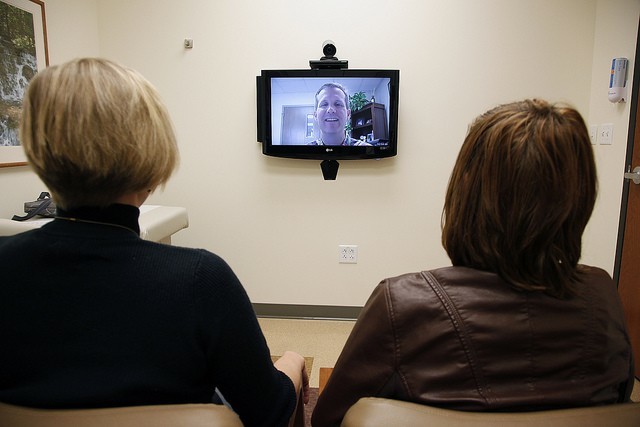
The American Medical Association (AMA) today supported the bipartisan Creating Opportunities Now for Necessary and Effective Care Technologies (CONNECT) for Health Act to expand the use of telemedicine to achieve quality care for patients. The CONNECT for Health Act would:

– Create a bridge program to help providers transition to the goals of the Medicare Access and CHIP Reauthorization Act (MACRA) and the Merit-based Incentive Payment System (MIPS) through using telehealth and RPM without most of the aforementioned 1834(m) restrictions

– Allow telehealth and RPM to be used by qualifying participants in alternative payment models, without most of the aforementioned 1834(m) restrictions

– Permit the use of remote patient monitoring for certain patients with chronic conditions; o Allow, as originating sites, telestroke evaluation and management sites; Native American health service facilities; and dialysis facilities for home dialysis patients in certain cases

– Permit further telehealth and RPM in community health centers and rural health clinics

– Allow telehealth and RPM to be basic benefits in Medicare Advantage, without most of the aforementioned 1834(m) restrictions

– Clarify that the provision of telehealth or RPM technologies made under Medicare by a health care provider for the purpose of furnishing these services shall not be considered “remuneration.”

Provisions in current statute (42 U.S.C. 1834(m)) constrain telehealth reimbursement by:

– Originating site restrictions – the patient may only be located at certain clinical sites

– Geographic limitations – the patient may only be located in certain rural areas

– Restrictions on store-and-forward technologies – only permitted in Alaska and Hawaii

– Limitations on distant site providers – only Medicare-defined “physicians” and “practitioners” may provide telehealth services, but not, for example, physical or occupational therapists

– Limitations on covered codes –CMS must define reimbursable telehealth codes. 

The bill reflects the AMA’s belief that that the appropriate use of telemedicine can greatly improve access to quality care while maintaining patient safety. According to an independent study, the bill could save $1.8 billion over 10 years.

“This legislation has the potential to remove barriers to new health care delivery models that promote coordinated and patient-centered care.  Importantly, the bill aims to maintain high standards whether a patient is seeing a physician in an office or via telemedicine,” said AMA President Steven J. Stack, M.D. “Telemedicine can strengthen the patient-physician relationship and improve access for patients with chronic conditions and limited access to quality care. The AMA’s guiding principles on telemedicine seek to foster innovation while promoting quality care.”

The bipartisan sponsors see telemedicine as a way to broaden health care, reaching populations that struggle with access.

“This bill shows Congress at its best – combining deep thinking, hard work, compromise and bipartisanship. In the end, the bill could improve health outcomes and save money. We look forward to working with other supporters to advance this important legislation in Congress,” Stack said.

 

  • LinkedIn
  • Twitter
  • Facebook
  • Email
  • Print

Tagged With: CONNECT for Health Act

Tap Native

Get in-depth healthcare technology analysis and commentary delivered straight to your email weekly

Reader Interactions

Primary Sidebar

Subscribe to HIT Consultant

Latest insightful articles delivered straight to your inbox weekly.

Submit a Tip or Pitch

2026 Predictions & Trends

Healthcare 2026 Forecast: Executives on AI Survival, Financial Reckoning, and the End of Point Solutions

2026 Healthcare Executive Predictions: Why the AI “Pilot Era” Is Officially Over

Most-Read

HHS Launches 'OneHHS' AI Strategy to Integrate AI Across CDC, CMS, and FDA for Efficiency and Public Trust

HHS Launches ‘OneHHS’ AI Strategy to Integrate AI Across CDC, CMS, and FDA for Efficiency and Public Trust

Kristen Hartsell, VP of Clinical Services, RedSail Technologies

The Pharmacy Closures Crisis: How Independent Pharmacies Are Fixing Pharmacy Deserts

From Overwhelmed to Optimized: How AI Agents Address Staffing Challenges and Burnout in Healthcare

From Overwhelmed to Optimized: How AI Agents Address Staffing Challenges and Burnout in Healthcare

The VBC Paradox: Why Hospitals Are Doubling Down on Value-Based Care While Revenue at Risk Lags

The VBC Paradox: Why Hospitals Are Doubling Down on Value-Based Care While Revenue at Risk Lags

Tebra Secures $250M to Challenge Legacy EHRs with AI-Powered Automation

Tebra Secures $250M to Challenge Legacy EHRs with AI-Powered Automation

AstraZeneca Selects Salesforce Agentforce Life Sciences to Deploy AI-Powered Global Customer Engagement

AstraZeneca Selects Salesforce Agentforce Life Sciences to Deploy AI-Powered Global Customer Engagement

Aidoc Partners with NVIDIA MONAI to Scale Open-Source Clinical AI

Aidoc Partners with NVIDIA MONAI to Scale Open-Source Clinical AI

RapidAI Secures FDA Clearance for Five New Deep Clinical AI Modules, Expanding Enterprise Imaging Platform

RapidAI and AWS Deepen Partnership to Scale Clinical AI in Healthcare

Greece and Sword Health to Build AI-Powered Healthcare Front Door

Greece and Sword Health to Build AI-Powered Healthcare Front Door

GE HealthCare Acquires Intelerad for $2.3B to Create Cloud-First, AI-Enabled Imaging Ecosystem

GE HealthCare Acquires Intelerad for $2.3B to Create Cloud-First, AI-Enabled Imaging Ecosystem

Secondary Sidebar

Footer

Company

  • About Us
  • Advertise with Us
  • Reprints and Permissions
  • Op-Ed Submission Guidelines
  • Contact
  • Subscribe

Editorial Coverage

  • Opinion
  • Health IT
    • Care Coordination
    • EMR/EHR
    • Interoperability
    • Population Health Management
    • Revenue Cycle Management
  • Digital Health
    • Artificial Intelligence
    • Blockchain Tech
    • Precision Medicine
    • Telehealth
    • Wearables
  • Startups
  • Value-Based Care
    • Accountable Care
    • Medicare Advantage

Connect

Subscribe to HIT Consultant Media

Latest insightful articles delivered straight to your inbox weekly

Copyright © 2025. HIT Consultant Media. All Rights Reserved. Privacy Policy |