
• Skip to main content
  • Skip to secondary menu
  • Skip to primary sidebar
  • Skip to secondary sidebar
  • Skip to footer

  • Opinion
  • Health IT
    • Behavioral Health
    • Care Coordination
    • EMR/EHR
    • Interoperability
    • Patient Engagement
    • Population Health Management
    • Revenue Cycle Management
    • Social Determinants of Health
  • Digital Health
    • AI
    • Blockchain
    • Precision Medicine
    • Telehealth
    • Wearables
  • Life Sciences
  • Investments
  • M&A
  • Value-based Care
    • Accountable Care (ACOs)
    • Medicare Advantage

Report: Value-based Care Driving Remote Patient Monitoring Adoption

by HITC Staff 12/15/2015 Leave a Comment

  • LinkedIn
  • Twitter
  • Facebook
  • Email
  • Print

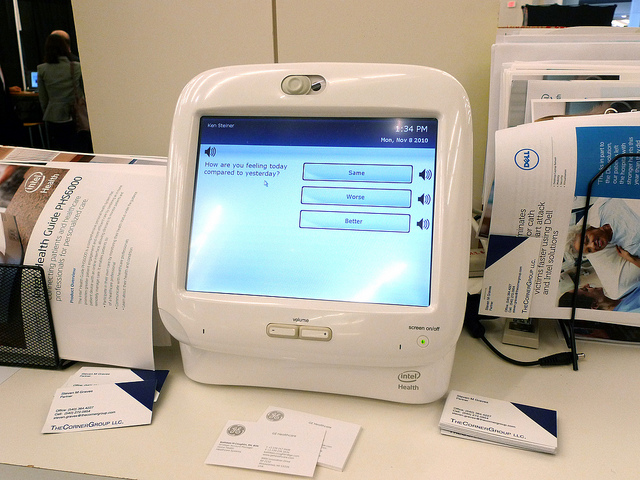
Remote Patient Management Platforms

The healthcare industry’s transition to value-based care and the regulatory penalties associated with readmissions are driving the adoption of remote patient monitoring. According to a recent report from Frost & Sullivan, remote patient monitoring is increasingly becoming a critical tool to support the new value-based care environment. As a result, the remote patient monitoring market is expected to grow at a rate of 13.2 percent through 2020. 

Defining Remote Patient Monitoring

Remote patient monitoring is used to define clinical-grade monitors, peripherals, software and gateways deployed to provide precision monitoring of known indicators associated with diseases and chronic conditions. The report finds that in order for remote patient monitoring to succeed, the vendors must embrace the value of health data and analytic including the ability to transform raw data into actionable intelligence. 

Next Phase of Remote Patient Monitoring Growth

The next phase of growth in the report patient monitoring market will derive from the need to manage seniors, and other patients who have serious chronic conditions. Additionally, there will be continued utility in post-acute care to optimally manage patients in the home over a defined period of time, preventing readmissions and other near-term adverse events. Eventually, RPM opportunities could extend to the broader population as part of the commonplace connected healthcare experience, as well as integrate with connected home concepts. 

“We appear to be at an opportune time for RPM systems to thrive. The convergence of biometric monitoring and sensors, along with a wider end-user base of technology-comfortable patients will create an environment where clinical grade RPM will expand incrementally,” noted Frost & Sullivan Transformational Health Industry Principal Victor Camlek.. “A move from an episodic model towards a dynamic continuous care model will enable the possibility of early detection and response of healthcare stakeholders to preventable crisis events.”

  • LinkedIn
  • Twitter
  • Facebook
  • Email
  • Print

Tagged With: remote patient monitoring

Tap Native

Get in-depth healthcare technology analysis and commentary delivered straight to your email weekly

Reader Interactions

Primary Sidebar

Subscribe to HIT Consultant

Latest insightful articles delivered straight to your inbox weekly.

Submit a Tip or Pitch

Featured Insights

Aligning IT & Clinical Teams: How to Reduce Friction and Improve Communication

Most-Read

CB Insights Q2 2026 State of Digital Health Report: Fewest Deals in Over a Decade as Median Sizes Rise

CB Insights Q2 2026 State of Digital Health Report: Fewest Deals in Over a Decade as Median Sizes Rise

mount-sinai-launches-epic-chart-with-art-nursing-ambient-ai

Mount Sinai Medical Center Extends Epic’s Ambient AI to Inpatient Nursing

M&A: Tempus AI to Acquire Personalis for $1.5B to Expand Precision Oncology and MRD Monitoring

M&A: Tempus AI to Acquire Personalis for $1.5B to Expand Precision Oncology and MRD Monitoring

Why Brain Health Is Entering Its Infrastructure Era

Brain Health’s Infrastructure Era: Proving Clinical Outcomes with Integrated Neuromotor Tracking

Why Catholic Health Inked a $500M Care Alliance with GE HealthCare to Automate Outpatient Triage

Catholic Health Inks $500M Care Alliance with GE HealthCare to Automate Outpatient Triage

KLAS Global HIT Trends 2026 Report: Artificial Intelligence Becomes the Top Investment Priority

KLAS Global HIT Trends 2026 Report: Artificial Intelligence Becomes the Top Investment Priority

Optum Partners with Anthropic to Deploy Claude Across Healthcare Claims and Revenue Workflows

Optum Partners with Anthropic to Deploy Claude Across Healthcare Claims and Revenue Workflows

Rock Health H1 2026 Digital Health Funding Recap: Startups Hit $7.4B in Venture Rebound

Rock Health H1 2026 Digital Health Funding Recap: Startups Hit $7.4B in Venture Rebound

M&A: ResMed to Sell MatrixCare Business to Frazier Healthcare Partners for $450M

M&A: ResMed to Sell MatrixCare Business to Frazier Healthcare Partners for $450M

The Real Risk in Healthcare AI Isn’t the Model. It’s the Data. 

Clinical Data Fidelity: The Real Blindspot in Healthcare AI Strategy

Secondary Sidebar

Footer

Company

  • About Us
  • 2026 Editorial Calendar
  • Advertise with Us
  • Reprints and Permissions
  • Op-Ed Submission Guidelines
  • Contact
  • Subscribe

Editorial Coverage

  • Opinion
  • Health IT
    • Care Coordination
    • EMR/EHR
    • Interoperability
    • Population Health Management
    • Revenue Cycle Management
  • Digital Health
    • Artificial Intelligence
    • Blockchain Tech
    • Precision Medicine
    • Telehealth
    • Wearables
  • Startups
  • Value-Based Care
    • Accountable Care
    • Medicare Advantage

Connect

Subscribe to HIT Consultant Media

Latest insightful articles delivered straight to your inbox weekly

Copyright © 2026. HIT Consultant Media. All Rights Reserved. Privacy Policy |