

What You Should Know
- GE HealthCare announced ahead of the Radiological Society of North America (RSNA) 2026 Annual Meeting in Chicago, two new operational capabilities for its Imaging 360 platform: the Imaging 360 AI assistant and embedded AI-assisted protocoling.
- Targeting a major administrative drain—observational studies estimate radiologists spend an average of 1.3 hours per day selecting and managing exam protocols—the new features streamline CT and MR protocol governance across multi-site radiology departments.
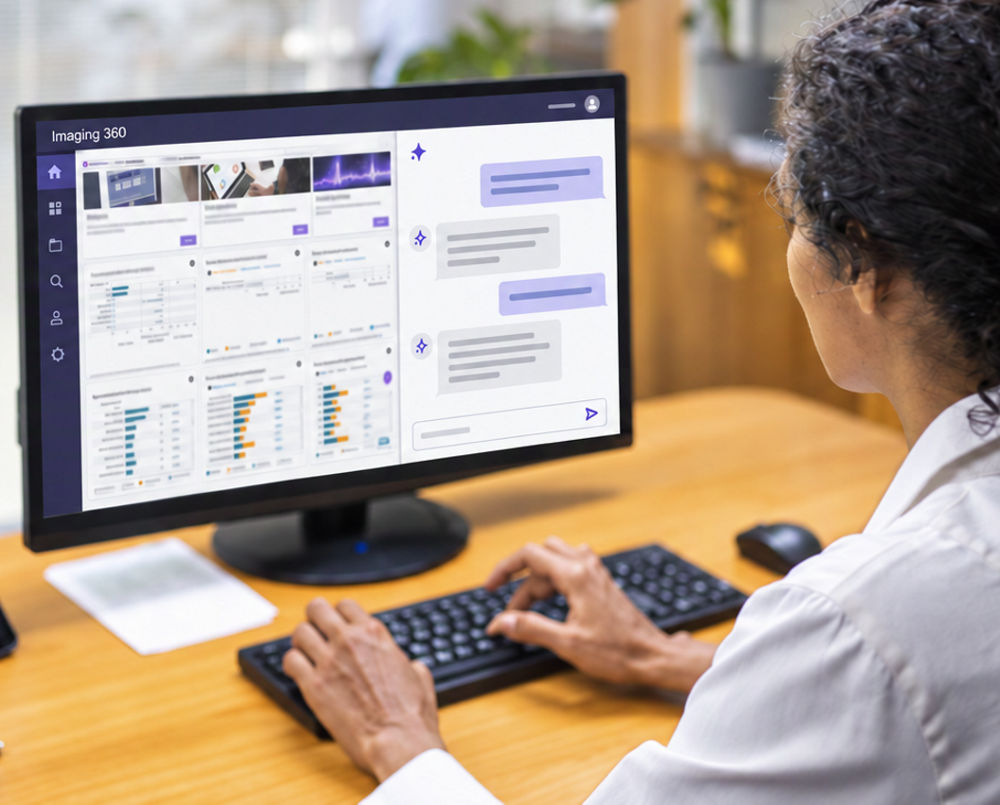
- The embedded Imaging 360 AI assistant enables imaging leaders, administrators, and protocol managers to query protocol utilization and operational analytics using natural English language without navigating multiple dashboards.
Natural-Language Protocol Analytics and Vendor-Agnostic RIS Decision Support
Rather than requiring imaging leaders and radiologists to navigate complex business intelligence dashboards or toggle across separate protocol repositories, GE HealthCare engineered both tools to integrate seamlessly within existing enterprise imaging workflows:
- Imaging 360 AI Assistant: Embedded natively in the Imaging 360 platform, this conversational analytics tool lets radiology administrators, lead technologists, and protocol managers query enterprise protocol utilization and performance metrics in plain English. Built strictly with operational governance guardrails, the assistant operates in a read-only capacity—meaning it cannot alter live scanner protocols or underlying source records—and is explicitly scoped for operational analytics rather than clinical image interpretation or patient-specific diagnostic recommendations.
- AI-Assisted Protocoling: As a vendor-agnostic, multi-modality decision-support application across CT and MR fleets, this engine evaluates incoming exam orders and surfaces standardized protocol recommendations for radiologists and technologists to review before final protocol selection in the Radiology Information System (RIS). By presenting consistent recommendations before the patient reaches the scanner, the module reduces inter-site protocol variation while preserving full human-in-the-loop clinician sign-off.