

What You Should Know
- Paris-based TechBio company Orakl Oncology announced an oversubscribed $34M Series A financing round, bringing its total capital raised to $50M.
- The round was co-led by Norrsken VC and Singular, with participation from new institutional investors InfraVia, Serena, the Patient Autonome Fund managed by Bpifrance, teampact.ventures, and Plug and Play, alongside returning backers Verve Ventures, Speedinvest, and HCVC.
- Notable angel investors participating in the financing include Hugging Face co-founder Thomas Wolf, Stan Polu, Jacques Boitreaud, and Mostafa El Sayed.
- Just over a year after its commercial launch, Orakl Oncology has established a commercial pipeline spanning 18 of the world’s top 20 pharmaceutical companies and is converting initial engagements into multi-year collaborations.
Virtual Cancer Patients: Merging Tumor Organoids with Clinical AI
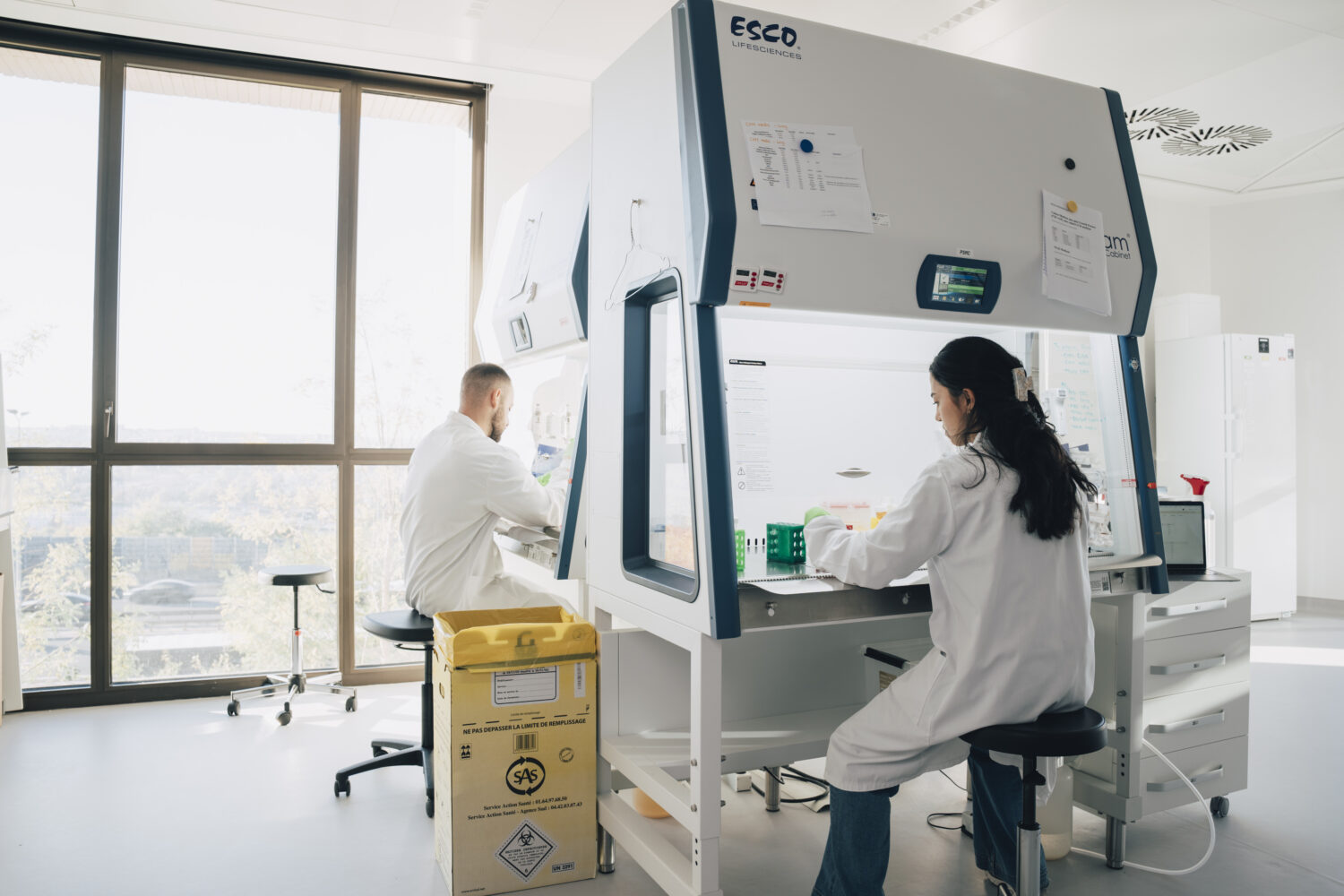
Founded in 2023 as a spin-out of the Gustave Roussy cancer campus in France, Orakl bridges wet-lab experimental biology and machine learning by constructing cohorts of virtual cancer patients. Rather than training algorithms exclusively on static, retrospective genomic databases, the company cultures real patients’ tumors in the laboratory as three-dimensional organoids, pairing experimental drug-response screening with deep multi-omic profiling and longitudinal clinical records. This architecture generates proprietary, causal biological evidence showing how specific tumor subtypes respond to therapeutic compounds years before human trials begin.
Orakl’s predictive engine has demonstrated 90 percent accuracy in predicting cancer clinical trial outcomes, including prospective predictions that closely anticipated recent pancreatic cancer trial results. Beyond forecasting aggregate clinical endpoints such as progression-free survival, the platform identifies predictive biomarkers to stratify likely responders and uncovers biological mechanisms of drug sensitivity and resistance. Candidate discoveries are continuously validated on Orakl’s patient-derived models through a closed, lab-in-the-loop feedback cycle that refines model accuracy with every experiment. To expand this dataset, Orakl is actively negotiating contracts with more than 15 additional cancer centers across Europe, North America, and Asia to build one of the most comprehensive multimodal repositories in oncology.
Scaling Beyond Prediction: New Indications and Target Discovery
With 18 of the world’s top 20 pharmaceutical companies already in its commercial pipeline—and early engagements converting into multi-year partnerships, including evaluating oncology assets for Sanofi—Orakl will deploy its Series A capital across four operational expansion fronts.
First, the company is expanding its proprietary dataset and growing its artificial intelligence research organization in Paris to deepen its foundational predictive models in cancer biology. Second, Orakl plans to increase its experimental lab data generation fivefold, expanding its biological footprint beyond colorectal and pancreatic cancers into non-small cell lung cancer and gastric cancers. Third, the company is establishing dedicated commercial and scientific deployment teams in the United States and the United Kingdom to support pharmaceutical partners across more than 10 active drug development programs. Fourth, Orakl is extending its platform from clinical trial prediction into upstream therapeutic discovery, using patient-derived biology and perturbational screening to identify and validate novel drug targets and combination co-targets.
Dr. Fanny Jaulin, Chief Executive Officer and Co-Founder of Orakl Oncology, noted that for decades the biopharmaceutical industry has developed cancer therapies without a reliable way to predict human clinical behavior until patients are enrolled in trials. Jaulin stated that the next major breakthrough in oncology will stem from making tumor and patient biology predictable prior to clinical testing, adding that the new financing enables Orakl to scale its validated capabilities across broader cancer indications and pharmaceutical pipelines.