
What You Should Know
- Angle Health, an AI-native healthcare benefits platform designed for small and midsize businesses (SMBs), announced a $600M equity financing transaction at a $2.7 billion valuation.
- The financing was led by global growth investor Vitruvian Partners, with participation from new backer Town Hall Ventures and existing investors Blumberg Capital, Portage Ventures, PruVen Capital, and Y Combinator.
- Angle Health currently serves more than 5,000 employer groups with customizable group health plans available across 47 states, supporting small businesses with as few as two employees.
Capital Structure and Transaction Details
- Primary Capital Inflow: The $200M Series C injection goes directly to Angle Health’s balance sheet to scale national distribution, deepen provider integrations, and enhance its AI underwriting infrastructure.
- Secondary Liquidity: The $400M tender offer provides substantial cash returns to early institutional seed and Series A investors as well as employees, coming less than 10 months after the company’s Series B round.
- Growth and Valuation Multiple: The $2.7 billion post-money valuation marks a major milestone for tech-enabled health plans, reflecting the company’s transition from an insurtech disrupter to a scaled, profitable payer.
Underwriting Economics and Operational Profitability
Founded in 2021 by CEO Ty Wang and Anirban Gangopadhyay (both former engineers at Palantir Technologies), Angle Health was engineered to replace manual small-group actuarial review with algorithmic underwriting:
- Profitability Milestones: Angle Health has achieved four consecutive quarters of EBITDA and GAAP net income profitability, expanding top-line revenue by 120% year-over-year.
- Scale and Premium Volume: Now manages nearly $1 billion in annualized premium-equivalents, serving over 5,000 employers across 47 states.
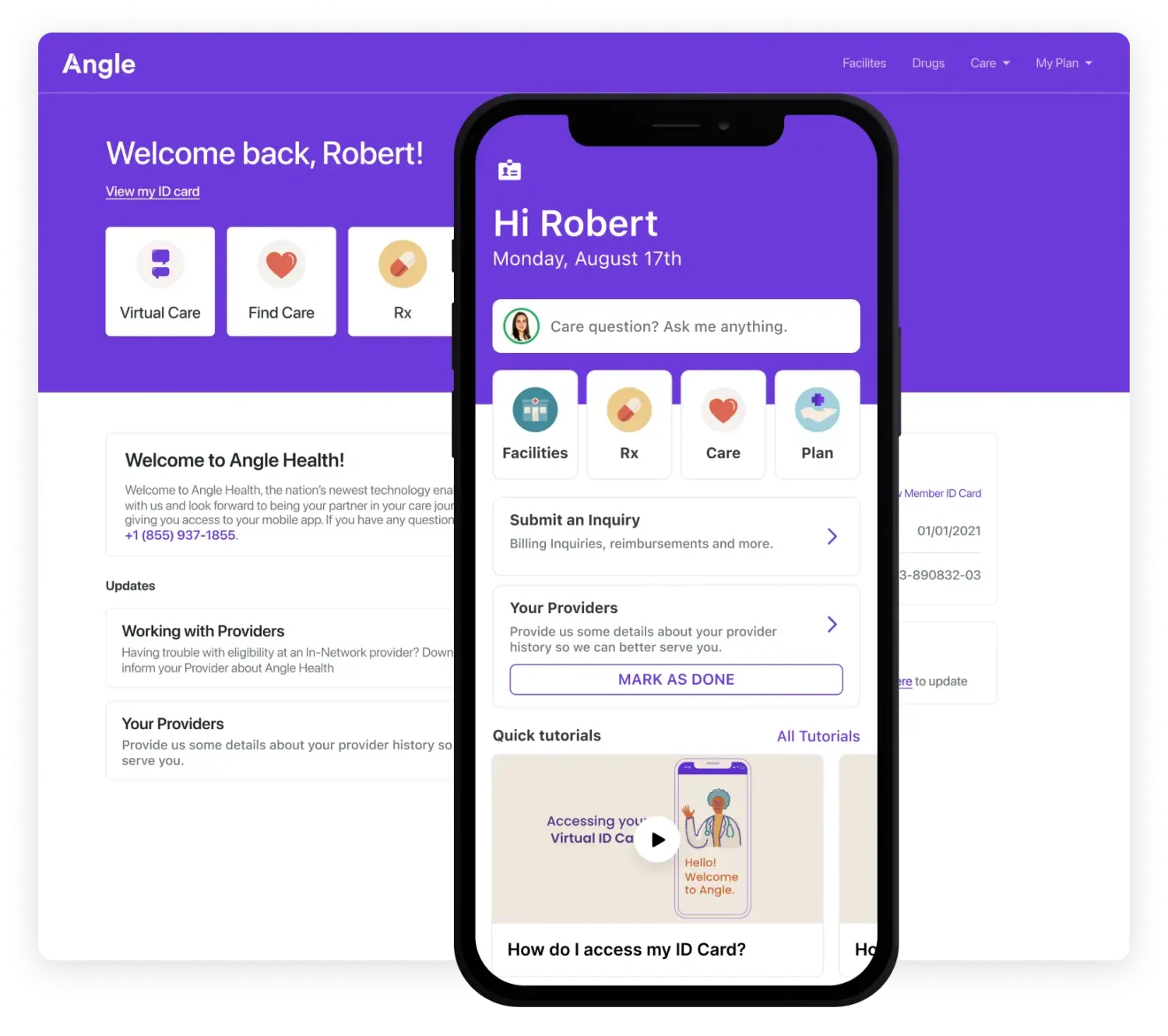
- Real-Time Group Underwriting: Angle’s Benefit Builder and Quote-to-Card engines allow commercial brokers to submit basic group censuses and generate firm, underwritten proposals within minutes—rather than the weeks typical of traditional carriers. Groups can onboard and issue digital insurance cards to employees almost instantly.
- Taming Renewal Increases: Leverages automated clinical steering and curated outpatient partnerships (covering high-cost specialty pharmaceuticals, home infusions, ambulatory surgery centers, and imaging) to keep median year-over-year renewal increases between 5% and 7%, compared to the 18% SMB market average.
Avoiding the Payer Pitfalls of Insurtech 1.0
First-generation venture-backed health insurers stumbled by chasing unprofitable, high-churn individual ACA exchange populations or aggressively bidding on Medicare Advantage risk pools where medical loss ratios (MLR) eroded margins.
Angle Health pivoted entirely away from that playbook by targeting the underserved commercial small-group segment (employers with as few as two lives). By packaging full-stack plan administration, level-funded risk arrangements, integrated telehealth, and AI navigation into a single package, Angle eliminates fragmented point-solution vendor bloat for small employers while maintaining strict underwriting discipline.
