
Ambient listening technologies now facilitate real-time summarization of patient-provider conversations layered within structured documentation.
With the 2026 World Cup having just wrapped up after spanning countries and cultures, it offers a timely reminder that we’re living in an increasingly connected, multilingual world. Fans move between languages, cultures, and expressions effortlessly, creating a shared experience that doesn’t rely on everyone speaking the same language, but everyone understanding the moment and the game.
Nearly 26 million people in the U.S. have limited English proficiency. To effectively serve such a diverse population across different geographies, it is essential to leverage technology that can understand multiple languages, accents, and dialects.
In healthcare, communication is about nuance—how symptoms are described, how discomfort is expressed, and how context shifts within a conversation. Patients don’t speak in perfectly segmented, single-language narratives. They move between languages, reaching for phrases that best capture what they’re experiencing. If the nuance is lost, documentation suffers—and so does clinical judgment.
Multilingual AI scribes change this dynamic in a subtle but important way. They don’t just transcribe. They interpret across languages, dialects, and accents, capturing the full context of the conversation as it happens. Clinicians remain in control of the final record, reviewing and approving draft notes without disrupting the natural flow of the visit.
The Exam Room is Where it Makes the Real Difference
In healthcare, communication has always been central but not always seamless. In the exam room, language is key for building comprehension and trust. The same must also be reflected in clinical documentation.
Imagine a visit that starts in English but naturally shifts into Spanish as a patient tries to better describe their symptoms. There’s no pause, no extra prompt, no disruption of the flow. The AI scribe continues to listen, understand, and generate a cohesive note in real time.
What changes? The clinician stays present, not toggling between screens or tools. The patient speaks more freely, without filtering languages, and the interaction becomes more natural.
Technology fades into the background, which is exactly where it should be.
AI is Reshaping Healthcare Infrastructure
AI is becoming a foundational part of care delivery. Clinical documentation has traditionally been a record of what was said. Increasingly, it is ensuring that the meaning behind those words is captured as well. Real-time summarization changes how care is documented and shared across the care journey.
That shift matters. Important clinical details are often embedded in how patients describe symptoms, concerns, and experiences. Capturing that context across languages produces documentation that is more complete and clinically accurate.
Multilingual AI scribes do not replace the role of human interpreters during a patient encounter; instead, they silently listen, understand, and summarize the entire patient-provider conversation in real-time within a patient’s progress note.
Beyond transcription, AI scribes help preserve clinical context that might otherwise be lost when conversations span multiple languages, accents, or communication styles. They are intuitive and non-intrusive, allowing providers to maintain a natural, focused interaction with patients without disruption.
The impact extends beyond documentation efficiency:
Benefits of Multilingual AI Scribes
- Care Access and Equity: Patients can communicate more effectively in their preferred language, leading to clearer understanding, stronger trust, and more inclusive care across diverse populations and geographies.
- Improved Patient Comfort and Engagement: When patients aren’t constrained by language, they speak more naturally and openly. This leads to more complete histories, better symptom descriptions, and more human, less transactional clinical interactions.
- Better Understanding of Care Plans: Multilingual AI scribes enable more accurate documentation of what patients speak, helping ensure diagnoses, treatment plans, and discharge instructions reflect the patient’s true concerns and context.
- Stronger Continuity of Care: Context-rich, accurately translated documentation travels across providers and care settings, reducing miscommunication and helping ensure smoother follow-ups, referrals, and long-term care management.
Addressing Potential Challenges
Like any technology used in clinical settings, multilingual AI scribes must earn trust. Accuracy is essential, particularly when documenting medical terminology, symptoms, and culturally specific language. Organizations also need clear standards around privacy, transparency, and regulatory compliance. Equally important is ensuring these tools are accessible across care settings so advances in documentation do not inadvertently widen existing gaps in care.
Every Patient Deserves to Be Fully Understood
As healthcare becomes more diverse and interconnected, the ability to accurately understand patients across languages will be an integral part of delivering high-quality care. AI scribes point toward a system where language is no longer a barrier, and where comprehension is not dependent on circumstance, geography, or available resources. The goal is simple and overdue: understanding, built in from the beginning, for every patient, in every interaction.
About Rakhee Langer
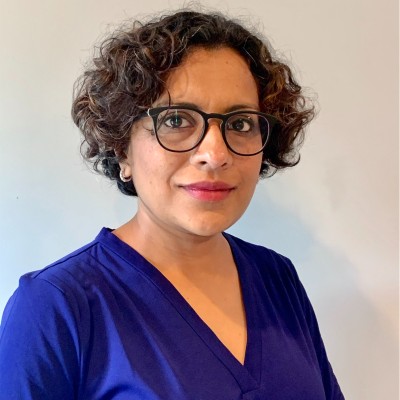
Rakhee Langer is the Vice President of healow and Sunoh.ai, where she leads business development, product strategy, implementation, and support for healow’s suite of products. She is deeply involved in the strategic direction and business objectives of the company. Currently, Langer is spearheading Sunoh.ai, an innovative AI medical scribe designed to transform clinical documentation and enhance patient care.
Prior to her current role, Langer led a team of project managers overseeing the implementation of eClinicalWorks EHR/PM solutions for large and medium-sized practices. She holds a master’s degree in biomedical engineering from the University of Texas at Arlington.
