
What You Should Know
- HHAeXchange published its 2026 Homecare Insights: Provider Voices survey, aggregating operational data from 465 home- and community-based services (HCBS) agencies.
- Compliance ranked as the #1 business priority for HCBS providers for the second consecutive year, with “ensuring a competitive advantage” ranking last, signaling a broader strategic focus on operational stability over outward growth.
- Regulatory pressures negatively impacted 52.1% of agencies over the last 12 months, driven by authorization changes, Medicaid rate cuts, payment delays, and enhanced Electronic Visit Verification (EVV) rules.
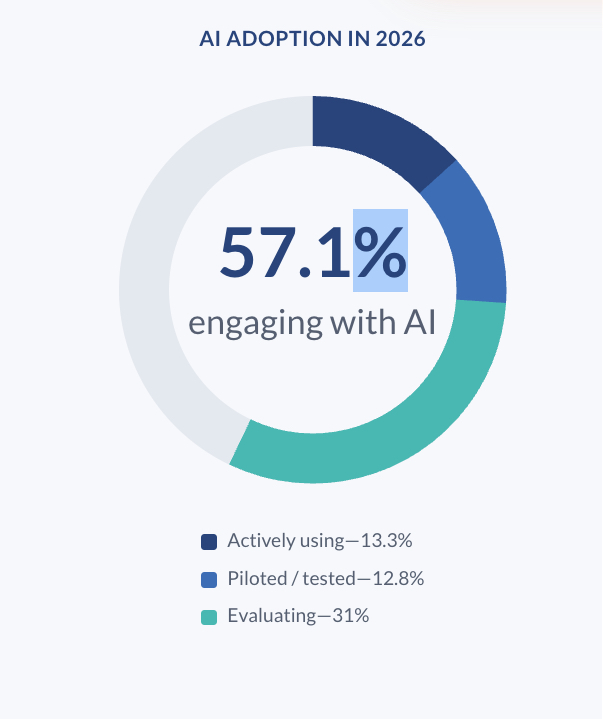
- Over half of providers (57.1%) are actively using, testing, or evaluating AI tools—primarily targeting scheduling/shift filling (37.8%), compliance tracking (34.5%), and claims processing (27.1%).
- Data reporting underutilization spiked: 42.2% of agencies do not leverage reporting tools for business decision-making (up from 22% in 2025), despite 27.8% marking analytics as a top investment priority.
Beyond Market Expansion: HCBS Providers Shift Inward to Operational Stability and Compliance
Home- and community-based services (HCBS) agencies are shifting focus away from aggressive market expansion, choosing instead to strengthen daily back-office operations and regulatory compliance, according to HHAeXchange’s 2026 Homecare Insights: Provider Voices survey.
Drawing from responses across 465 homecare agency leaders, the report reveals an industry adapting to tighter state Electronic Visit Verification (EVV) requirements, constrained Medicaid reimbursement rates, and ongoing administrative delays. Rather than pursuing broad geographical growth, providers are consolidating technology budgets to insulate core operations from regulatory and financial friction.
Software for EVV and compliance remains the top technology priority, cited by 63.9% of respondents. Notably, concerns over software costs fell to 33.2%—down from 43% in 2023 and 41.1% in 2025—indicating that agency leadership increasingly views core operational software as essential infrastructure rather than a discretionary expense.
Artificial intelligence adoption is also trending toward practical administrative tasks rather than clinical replacement. Over 57% of agencies are actively engaged with AI, focusing deployments on schedule building and shift filling (37.8%), compliance tracking (34.5%), and pre-claim exception checks (27.1%).
At the same time, the survey highlights a growing gap between data collection and business strategy. The percentage of agencies reporting that they do not leverage reporting data for business decisions grew to 42.2% in 2026, up from 22% in 2025, even as 27.8% identify analytics as a key upcoming investment target.
Workforce management continues to drive internal strategy. Faced with ongoing recruitment challenges (54%), wage pressures (51%), and last-minute call-outs (31.9%), agencies are attempting to stabilize turnover through higher pay rates (53%), flexible scheduling options (45.6%), and formal career development programs (35.5%).
“This year’s findings show that agencies are treating operational stability as essential to sustainable growth in a shifting landscape,” said Stephen Vaccaro, President of HHAeXchange. “At HHAeXchange, we’re focused on helping providers manage the workflows central to daily operations, from compliance and scheduling to billing and caregiver support.”
