
What You Should Know
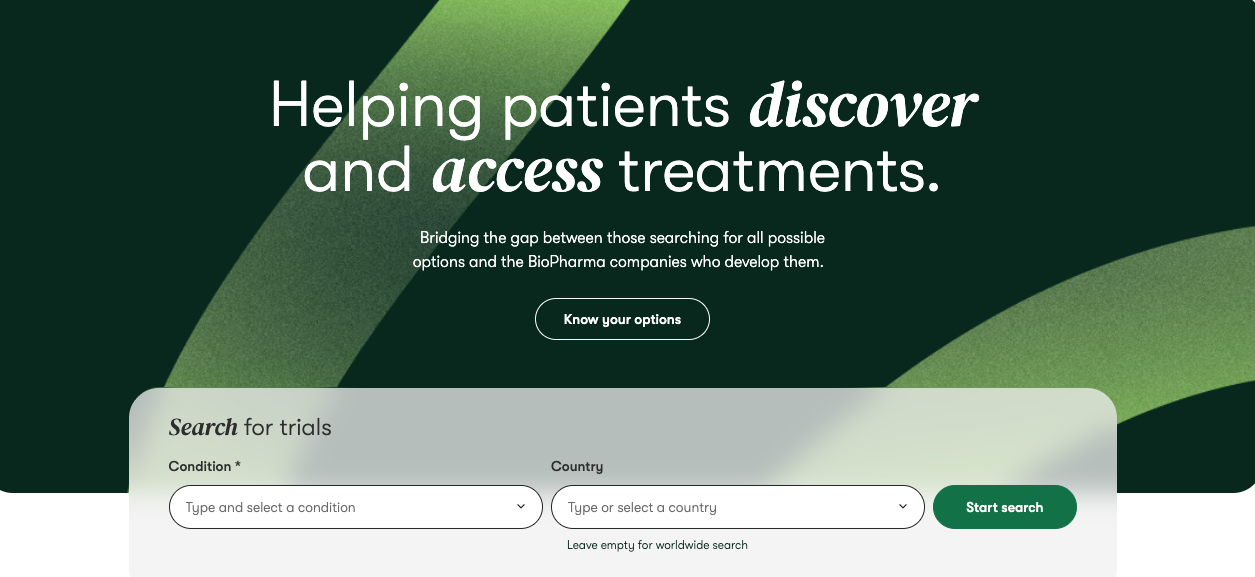
- Consumer health data platform b.well Connected Health has announced a strategic partnership with global health tech leader myTomorrows to automate and accelerate how patients are matched and enrolled into clinical trials.
- The collaboration combines b.well’s extensive, FHIR-based data network—which integrates longitudinal records from nearly 2.4 million providers, 330 health plans, and multiple state health information exchanges (HIEs)—with myTomorrows’ AI-powered clinical trial pre-screening engine.
- By pulling complete, verified health data natively from b.well’s proprietary Data Refinery, the platform eliminates manual chart reviews and duplicative intake forms for individuals navigating high-stakes illnesses.
- The unified framework enables pharmaceutical sponsors and trial sites to systematically reduce recruitment timelines, lower overall screening costs, and enroll more diverse, community-level patient populations.
- Grounded in consumer data ownership, the platform utilizes a transparent, permissioned consent architecture, allowing individuals to securely choose when and with whom to share their clinical context.
Beyond the Data Refinery: Why b.well and myTomorrows Are Unifying 2.4M Providers to Match Clinical Trials
The global biopharmaceutical sector is currently confronting an acute operational crisis within its clinical trial pipelines. Despite billions of dollars funneled annually into drug development and translational research, traditional clinical trial recruitment remains a slow, human-intensive, and profoundly fragmented bottleneck. Finding, screening, and successfully enrolling eligible candidates is notoriously inefficient, frequently extending drug development timelines by months or years and leaving life-saving therapies stranded in regulatory waiting rooms.
At the center of this recruitment crisis sits a massive data fragmentation problem. A patient’s complete clinical story rarely lives in a single database; instead, it is scattered across a chaotic web of disparate electronic health records, insurance claims, laboratory panels, pharmacy prescription histories, and consumer wearables. When a patient or family attempts to discover an emerging pre-approval treatment, they are forced to manually collect these records and repeatedly fill out redundant intake questionnaires. This administrative burden falls heavily on families during their most physically and emotionally overwhelming moments, creating an artificial barrier that keeps vulnerable patients from accessing trials that could fundamentally alter their clinical outcomes.
To dismantle these data walls and transition clinical recruitment into an automated, consumer-directed system of action, b.well Connected Health has announced a strategic partnership with myTomorrows. By layering myTomorrows’ advanced, AI-powered pre-screening and matching technology directly over b.well’s highly scaled data-unification footprint, the collaboration establishes an electronic trust layer capable of matching complex, multi-modal patient records to active clinical trials in real time.
Activating a Moat of 2.4 Million Providers via FHIR
The core technical differentiator of the b.well-myTomorrows integration is its reliance on a massive, verified health data lake. Rather than building another superficial patient-recruitment portal that depends on unverified consumer self-reporting, b.well utilizes its position as a dominant digital health aggregator to pull structured, real-world evidence straight from the source.
Operating on a scalable, Fast Healthcare Interoperability Resources (FHIR) framework, b.well’s platform unifies real-time health metrics spanning:
- Nearly 2.4 million distinct healthcare providers and medical clinicians.
- More than 330 enterprise health insurance plans and multiple state Health Information Exchanges (HIEs).
- Commercial laboratories, national pharmacy networks, and over 350 unique consumer wearables, health sensors, and molecular biomarkers.
This fragmented data is routed through b.well’s proprietary Data Refinery, where it is cleansed, standardized, and assembled into an AI-ready longitudinal health record. Under the newly launched partnership, myTomorrows’ matching algorithms ingest this high-fidelity data to instantly cross-reference a patient’s complete medical history against the intricate eligibility criteria of global pre-approval treatment protocols. This eliminates manual record gathering, immediately surfacing relevant clinical options for patients and their care teams.
Kristen Valdes, Founder and CEO of b.well, emphasized that while patients and families will move mountains to access a clinical trial that could alter their survival trajectory, the legacy system was never built to support them. The collaboration solves this friction by placing data ownership directly in the hands of the individual. Patients are empowered to share their verified data to proactively discover clinical trials, a shift that simultaneously helps pharmaceutical sponsors diversify their cohorts and bring novel therapeutics to market faster.
Eliminating Recruitment Friction at Scale
For pharmaceutical sponsors and localized clinical trial sites, the integration provides a turnkey infrastructure layer to address long-standing enrollment challenges. Traditional recruitment frameworks frequently fail to capture diverse patient populations, heavily over-indexing on candidates located near major academic medical centers.
By activating patient data at the community level, b.well and myTomorrows allow biopharma companies to expand their geographic reach and build more representative clinical trials. The platform’s automated pre-screening engine filters out ineligible candidates before they reach the clinical site, drastically reducing screen-failure rates, curbing site administrative overhead, and maximizing the overall return on clinical investment.
Michel van Harten, MD, CEO at myTomorrows, noted that combining their clinical matching capabilities with b.well’s data activation engine opens a new chapter for scaled trial recruitment. The platform removes the historic friction that kept patients isolated from emerging therapeutics, ensuring that individuals in any community can be guided to the right specialized services quickly.
