
What You Should Know
- UChicago Medicine has signed an enterprise agreement to deploy Artisight’s Smart Hospital Platform, implementing more than 1,800 devices across its clinical enterprise.
- The rollout covers diverse care settings, including patient rooms, operating rooms, PACUs, and a new 575,000-square-foot freestanding cancer facility opening in April 2027.
- The platform utilizes computer vision, voice recognition, and RTLS (Real-Time Location Services) to automate documentation and support Virtual Nursing and Virtual Sitting.
- Previous implementations of this technology have delivered significant clinical outcomes, including a 78 percent reduction in fall rates and a 4x increase in on-time discharges.
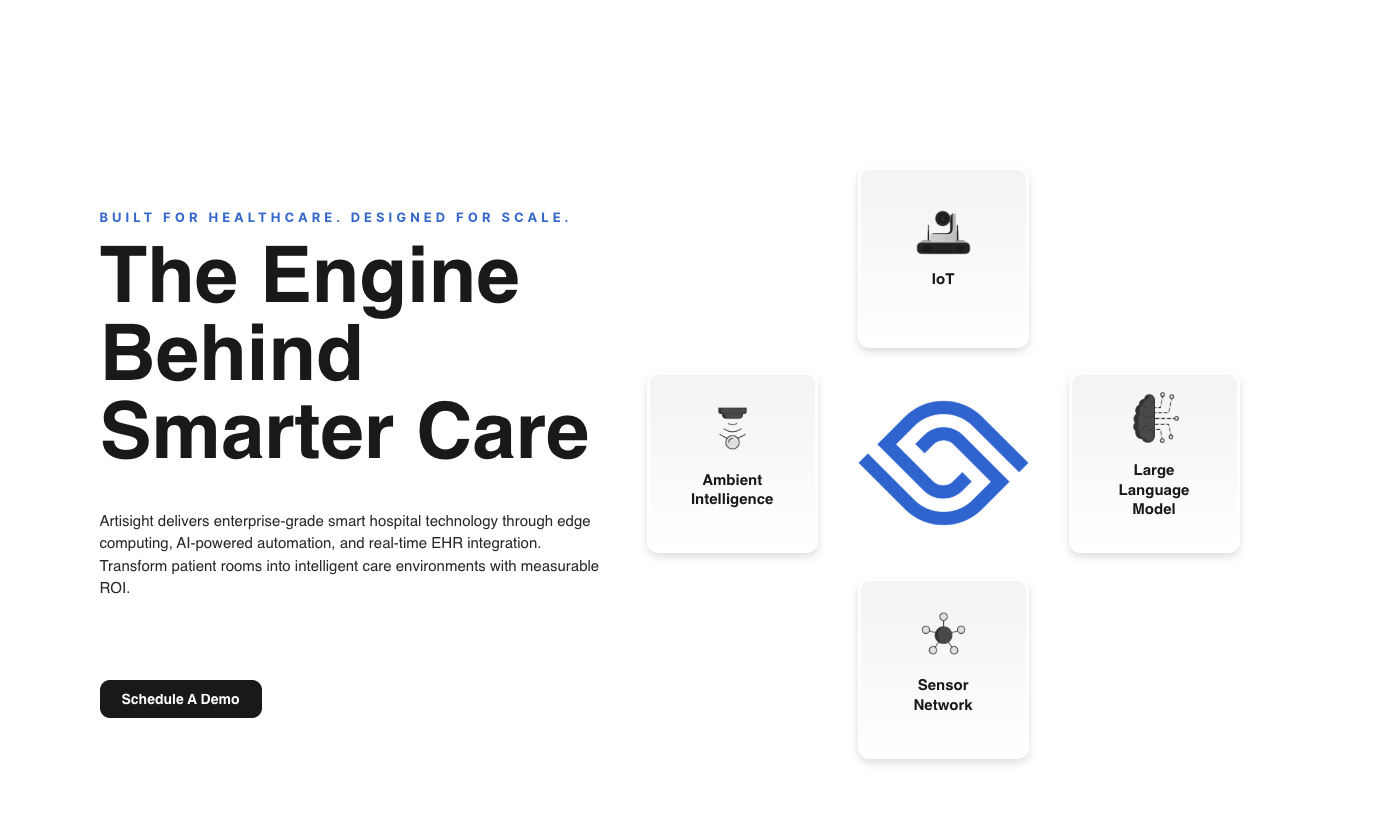
- The system operates on a shared sensor fabric, designed to eliminate fragmented point solutions and reduce administrative burden by over 30 minutes per nurse per shift.
The infrastructure of modern academic medicine is increasingly defined by the ability to unify data across complex, high-acuity environments. UChicago Medicine, a premier national health system, has moved to consolidate its digital clinical operations by entering into an enterprise agreement with Artisight. The implementation will see Artisight’s Smart Hospital Platform integrated into over 1,800 locations, providing a continuous intelligence layer that spans from standard patient rooms to high-complexity surgical suites.
This partnership addresses a foundational challenge in healthcare IT: the proliferation of “point solutions” that create data silos and increase the cognitive load on clinical staff. By utilizing a single platform for Virtual Nursing, Virtual Sitting, and workflow automation, UChicago Medicine is building a foundation that allows every clinical team to work from a shared infrastructure. This move is particularly critical as the system prepares to open its new, massive freestanding cancer care facility in 2027.
Automating the “In-Between” of Care Delivery
Artisight’s platform leverages advanced computer vision and voice-activated sensors—powered by NVIDIA GPUs—to bring intelligent awareness to the bedside. In the Operating Room (OR) and Post-Anesthesia Care Unit (PACU), the platform provides real-time visibility into procedural milestones, automating documentation directly into the EHR. This level of automation is designed to “reclaim” time for bedside nurses, who historically spend a significant portion of their shifts on administrative tasks rather than direct patient interaction.
Yeman Collier, Chief Information Officer at UChicago Medicine, emphasizes that the goal is to apply this technology in targeted ways that reinforce safety and enhance the patient experience. By integrating these tools directly into existing clinical workflows, the system aims to reduce the “administrative friction” that often leads to clinician burnout. The implementation ensures that as the health system expands its clinical footprint, its technology remains a support mechanism rather than a distraction.
Measurable Impacts on Safety and Throughput
The decision to scale Artisight across the enterprise is supported by significant performance metrics from existing deployments. Health systems utilizing Artisight’s Virtual Nursing capabilities have reported that bedside nurses save more than 25 minutes per patient admission or discharge. Perhaps more critically, the use of intelligent monitoring has been shown to reduce fall rates by as much as 78 percent, a metric that has a direct impact on both patient safety and hospital liability costs.
These outcomes reflect a shift toward “intelligent awareness” in the hospital environment. Dr. Andrew Gostine, CEO of Artisight, notes that the complexity of an academic medical center demands a cohesive platform rather than a collection of disparate tools. By deploying a unified sensor fabric, UChicago Medicine ensures that its future AI capabilities and new facilities are built on a consistent, scalable foundation that can adapt to the evolving needs of high-complexity patient care.
