
What You Should Know
- Zócalo Health has closed a $15 million Series A funding round led by EO Ventures, bringing its total capital raised to $22.75M.
- The company specializes in serving high-need members with complex medical, behavioral, and social needs, a segment that drives a disproportionate share of total healthcare costs.
- Its “promotoras de salud” (community health workers) model achieved 4x year-over-year revenue growth and expanded from two health plan partnerships in 2024 to more than a dozen in 2025.
- The platform utilizes AI-enabled technology to extend the capacity of frontline teams and help members navigate Medicaid redetermination and eligibility requirements.
- Strategic partnerships include major Medicaid managed care organizations like Anthem Blue Cross and Health Net, aligning with state initiatives such as CalAIM.
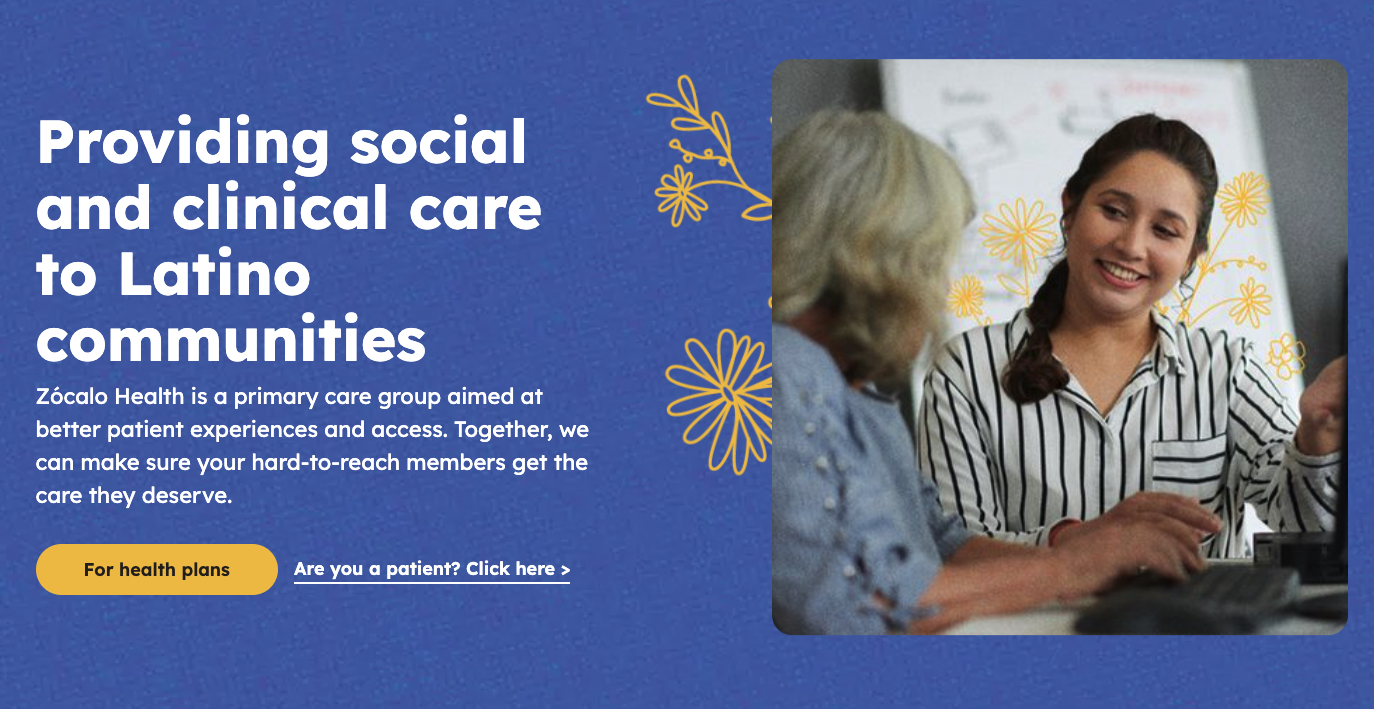
The U.S. healthcare system has long struggled to effectively engage the small percentage of members who account for the majority of healthcare spending. These individuals often navigate a fragmented landscape of medical, behavioral, and social challenges that traditional clinical settings are ill-equipped to handle. Zócalo Health, a community-based primary care provider, has secured $15M in Series A funding to prove that the solution lies in moving care out of the clinic and directly into the neighborhood.
By combining virtual clinical services with a workforce of “promotoras de salud” (community health workers), Zócalo Health has built a model specifically for sustained engagement. The company’s oversubscribed funding round, led by EO Ventures, underscores a growing market conviction that trust-based, local relationships are the most effective lever for reducing the total cost of care within value-based frameworks.
A Model Built for Engagement and Retention
At the heart of Zócalo Health’s operations is the integration of medical and behavioral health through community-embedded teams. These health workers serve as the primary point of contact, building long-term relationships that drive adherence and reduce avoidable emergency utilization. As stress and anxiety levels rise among underserved populations, Zócalo has proactively embedded behavioral health screenings and support into every workflow, ensuring mental health is treated with the same urgency as chronic medical conditions.
This integrated approach is yielding measurable results. Over the past year, the company expanded its health plan partnerships sixfold while maintaining patient satisfaction scores that significantly exceed industry benchmarks. By focusing on proactive outreach and frequent touchpoints, Zócalo is successfully reaching the “historically difficult to reach,” demonstrating that a disciplined operating model can make community care both scalable and impactful.
Technology as a Scale Lever for Underserved Populations
While Zócalo Health is defined by its personal touch, its operations are underpinned by a sophisticated, AI-driven technology platform. This platform is designed to support and extend the capacity of frontline teams, allowing community health workers to manage larger member panels without a decrease in care quality. For the members themselves, the technology provides a transparent window into their coverage, which has become increasingly vital as they navigate complex Medicaid redetermination processes and evolving eligibility rules.
Zócalo’s growth is currently focused on deep partnerships with Medicaid managed care organizations, including Anthem Blue Cross and Health Net. In California, the company’s alignment with the CalAIM initiative provides a blueprint for how whole-person care can be delivered at scale. This next phase of expansion will see the company taking this community-driven “blueprint” into new states, scaling with a focus on capital efficiency and disciplined growth.
Why This Matters
The company’s 4x revenue growth suggests that payers are finally ready to invest in social determinants of health (SDoH) as a core financial strategy rather than a secondary pilot program. If Zócalo can maintain its stellar retention rates as it expands nationwide, it will prove that the future of primary care for complex populations isn’t just high-tech—it’s high-trust.
